
Digital twins and virtual power plants paving the way for global energy transition
By James Yau
SP Group’s Director, Grid Technology and Digitalisation, Gary Ang explains the latest tech being piloted to enhance Singapore’s grid resilience.
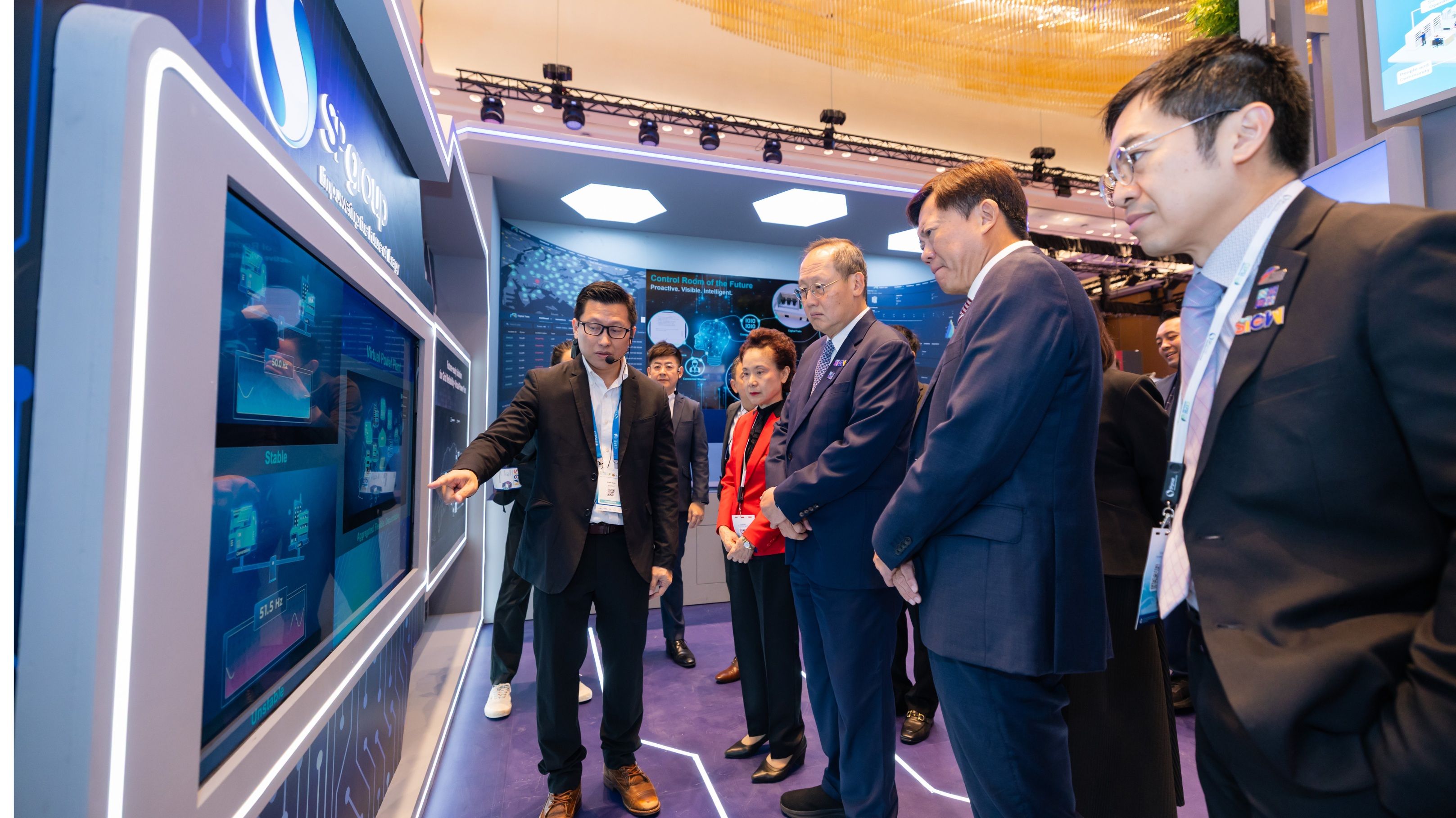
(From left) Gary Ang, Director, Grid Technology and Digitalisation at SP Group; Leong Wai Leng, Chairman, SP Group; Dr Tan See Leng, Minister for Manpower and Minister-in-charge of Energy and Science & Technology in the Ministry of Trade and Industry; Stanley Huang, President of AESIEAP and Group CEO of SP Group; Puah Kok Keong, Chief Executive, Energy Market Authority at the SP showcase at CEPSI 2025. Image: SP Group
As countries globally race to decarbonise their economies, power grids will need to keep up.
The increasing integration of renewables and growing system complexities means that traditional power grids are limited in capacity and will need to be expanded and upgraded to accommodate increased electricity flow and sources.
Singapore’s national grid operator SP Group (SP) currently helms two projects, the Grid Digital Twin and Virtual Power Plant, which are the operator’s latest digital innovations to manage the future needs of the electricity grids.
Speaking to GovInsider, SP’s Director, Grid Technology and Digitalisation, Gary Ang, explains the expected impacts when these projects are fully deployed.
“They will enable SP to better plan, operate and maintain the national power grid through modelling and simulations so that the actual works can be carried out in a more effective and efficient way,” says Ang.
To subscribe to the GovInsider bulletin, click here.
Managing energy complexity and resilience
The Grid Digital Twin is a virtual replica of SP’s electricity network assets that enables network operators to not only monitor and analyse the real-time condition and performance of the grid but also mitigate potential issues and optimise operations.
By collaborating with government agencies like the Energy Market Authority (EMA) and the other public utility industry players, Ang says that the Grid Digital Twin creates an “energy metaverse” that supports scenario planning.
This enables engineers and operators to collaborate, visualise, and optimise grid operations in a virtual environment.
“The learnings gathered from these simulations can then be applied effectively to the actual environment to enhance grid reliability,” he explains.
The rise of distributed solar and decentralised resources also adds to a new level of uncertainty in grid operations.
Singapore’s 2030 Green Plan outlines a roadmap to boost solar capacity to two gigawatt (GW) and build up to four GW of interconnections to import clean electricity from countries like Indonesia, Vietnam and Cambodia.
As a result, the share of renewable energy in the Singapore grid is expected to increase 10 fold from around four per cent in 2022 to 40 per cent by 2035.
The digital twin helps to integrate operational data with asset health analytics, providing a holistic view of asset conditions and renewable interactions, enabling SP’s teams can carry out maintenance tasks with greater speed and precision.
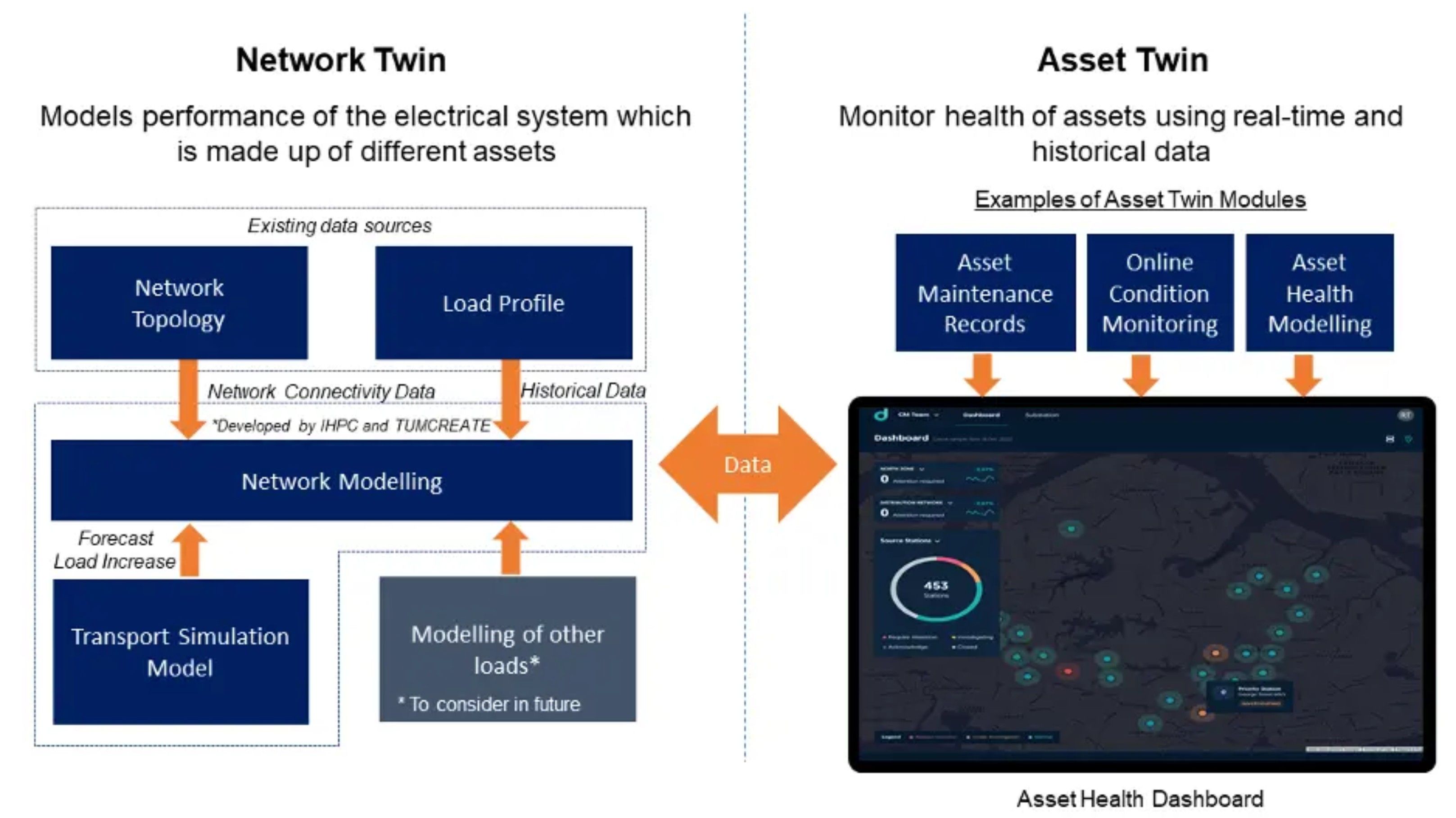
Currently in the pilot stage, the Grid Digital Twin is set to evolve into a fully developed solution to be scaled up across Singapore as necessary over time.
In addition to enabling proactive maintenance and decision-making, Ang adds that SP is also exploring artificial intelligence (AI) and machine learning to forecast degradation, review asset lifecycles and stress-test the grid.
Virtual powers plants
The surge in distributed energy resources (DERs) - such as rooftop solar, Battery Energy Storage Systems (BESS), and EV chargers - introduce significant volatility into grid operations.
To manage this, SP also launched one of the first Virtual Power Plants (VPP) in Singapore with online capability.
Operating within a regulatory sandbox, the VPP acts as a digital conductor, aggregating these decentralised resources to function as a single, reliable power plant.
The VPP focuses on validating proof-of-concept scenarios for grid services like frequency regulation and contingency reserves, according to Ang.
“This pilot sets the stage for broader adoption of VPP technologies across the region, advancing both technical readiness and regulatory frameworks for DER integration,” he adds.
The current integrated capacity is up to 15 MW, with plans to expand coverage and asset diversity as technical readiness, commercial structures and regulatory pathways mature.
What’s needed for Singapore’s future energy demands
Technology alone won’t be enough in energy transition, Ang adds, requiring a fundamental workforce shift in the workforce.
He highlights that SP Group has invested more than S$44 million in job transformation and training over the last five years.
“To date, over 400 roles have been redesigned to align with a digitalised, green energy economy.
“From mobile dashboards that enable "on-the-go" decision-making to predictive models that allow for faster situational response, SP’s engineers are being equipped with a new digital toolkit.”
Ang adds that SP’s Technical Experts programme was also established to recognise engineers with deep technical knowledge and a passion for advancing their field, where experts also provide technical advisory, lead investigations, and drive operational improvements.
“Young engineers will have the opportunity to be mentored by leaders in their fields to become the next generation of experts.
“These capabilities are key to an efficient, sustainable, and resilient energy future. This culture of continuous learning ensures the group remains well-prepared for future challenges.”