
Dyana Jatnika, Lecturer, Universitas Padjadjaran, Indonesia
Meet the young public sector officials in the inaugural Young & Official Report 2026.
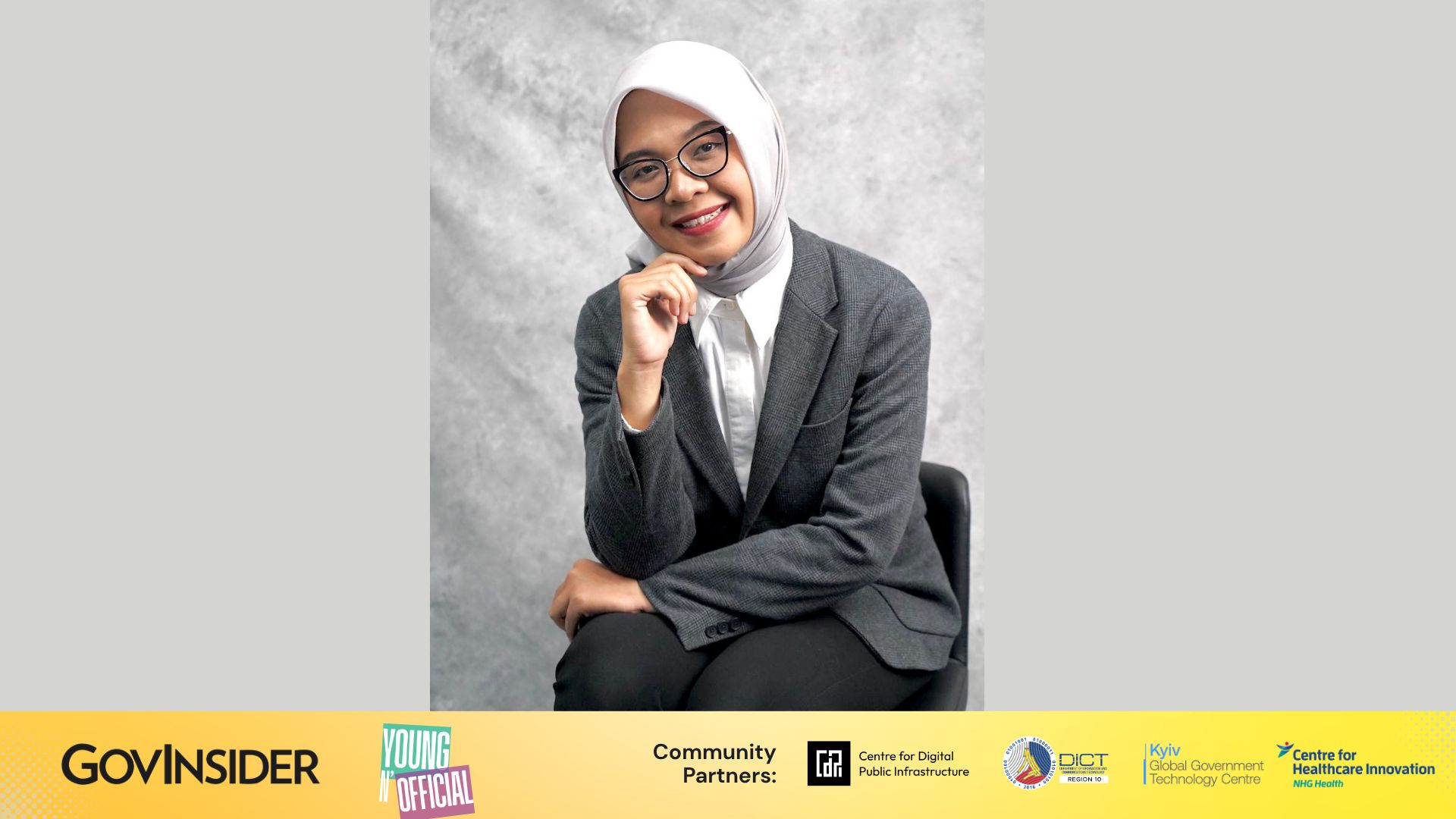
Dyana Jatnika, Lecturer, Universitas Padjadjaran, Indonesia. Image: Dyana Jatnika
1) What does public service mean to you? Can you share more about your role in the public sector?
Public service is where citizens experience the true impact of government. This, to me, is fundamentally about placing human beings at the centre of everything we design and deliver. This might sound obvious, but in practice, it is one of the hardest commitments to maintain.
From 2019 to 2024, I dedicated myself as the Head of Implementation and Tribe Lead of Citizen Engagement and Services at a digital transformation unit under the Department of Communication and Information of West Java Province, better known as Jabar Digital Service.
I oversaw the delivery and improvement of citizen-centred public services, ensuring that innovation translated into meaningful benefits for communities, particularly those who have often been left behind by digital and social progress.
2) Tell us about a project you championed. What impact did it have on the community?
During my time leading the Tribe of Citizen Engagement and Services at Jabar Digital Service, my team and I championed several flagship programmes for West Java Province: Digital Village, Jabar Digital Academy, and Jabar Command Centre.
Desa Digital (Digital Village) is a programme that brings digital access and capability to rural communities across West Java. More than 2,000 villages have been reached through this initiative, with diverse activities tailored to each community's needs: from digital literacy training and online marketplace onboarding for local artisans, to deploying digital solutions that optimise local commodity value chains, including precision agriculture, digital farm management, and technology-driven fisheries development.
Secondly, Jabar Digital Academy is a digital literacy programme for the general public of West Java, now known as Jabar Istimewa Digital Academy. Beyond serving the general population, my team and I made it a personal priority to ensure the programme was genuinely inclusive. This meant designing specific tracks and participation pathways for pre-welfare communities, people in rural and remote areas, persons with disabilities, and women. Inclusion was not an afterthought. It was built into the programme architecture from the start.
The third is the Jabar Command Centre. This is a data monitoring platform that aggregates real-time information to support evidence-based decision-making for West Java's executive leadership. This gave senior government officials a live view of key indicators across the province, enabling faster, more informed responses to emerging issues.
3) As a young professional, how has your unique background or perspective allowed you to identify a solution that others in your organisation might have overlooked?
My academic background is not in STEM. I hold a Master of Social Work from the University of Bristol, where I developed a deep understanding of how people, communities, and institutions interact to create social change.
During my studies, I also served as a Digital Champion within Bristol City Council whilst undertaking my field placement. That experience was transformative. It showed me that the success of digital transformation is not determined solely by technology itself, but by how well it responds to people's needs, capabilities, and everyday realities.
My academic background has shaped how I approach digital transformation. It taught me that people are not static users. This means that their needs, capacities, and interactions with technology evolve throughout their lives. Therefore, I need to ensure that digital innovations are designed with inclusion, accessibility, and real human impact in mind.
Equally important is a commitment to inclusion: constantly asking who might be excluded and what barriers could prevent them from benefiting from digital services.
For me, technology is not the end goal. It is a tool to improve lives and expand opportunities for those who are often left behind.
4) What is your personal strategy for maintaining your creative energy when faced with bureaucracy?
My first strategy is to understand what bureaucracy actually is, and why it exists. At its best, it is a set of mechanisms designed to ensure accountability, equity, and due process.
My practical approach begins with alignment. Before implementing any programme, I make it a priority to deeply understand the primary goals and targets of the government institution I am working with. What are they accountable for? What does success look like in their reporting framework? What pressures are they under?
Because if my programme's direction and their institutional direction are not aligned, my programme would become merely an additional burden, and no one sustains a productive partnership when one party feels as though they are carrying extra weight.
The next step is ensuring that the government partners we work with genuinely understand our programme's purpose and intended beneficiaries, and that there is a real overlap between who we are trying to reach and who they are already focused on serving. We are not asking them to do something extra; we are helping them do what they already care about, more effectively.
At its core, my strategy can be distilled into this: collaboration is only possible when there is shared purpose.
5) If you had just one area to invest in to accelerate transformation in the public sector, which would you choose and why?
Talent. Specifically, talent that understands both communities and systems.
The bottleneck to digital transformation in government is rarely technology. It is the shortage of people who are technically literate, administratively fluent, and socially empathetic at all times.
Investing in talent means creating learning pathways inside government, building bridges between academia and public sector practice, and normalising lateral entry so that people with diverse expertise can serve without feeling like outsiders.
In 2020, I initiated a programme called Jawara Data to accelerate the implementation of West Java's Data Ecosystem Programme. The initiative was designed to strengthen data governance across the province by developing a network of government officials who serve as agents of change within their respective institutions.
These officials play a critical role in collecting and managing data for West Java's key data initiatives, including One Data (Satu Data), Open Data, and One Map (Satu Peta Jawa Barat). Beyond data collection, they receive continuous capacity building and technical assistance to improve data interoperability, which is one of the longstanding challenges preventing effective data sharing and integration across government agencies.
6) What is your greatest ambition as you grow in your public service career?
My path has taken an interesting turn. Although I no longer work directly within the provincial government, as I am now a lecturer at Universitas Padjadjaran, my deepest commitment remains unchanged: digital inclusion.
From where I now sit, I see clearly how the acceleration of digital transformation, when not deliberately designed to be inclusive, risks deepening the very inequalities it promises to solve.
Certain groups, including women, persons with disabilities, communities in rural and remote areas, and pre-welfare households, are not merely being left behind. They are actively at risk of social exclusion, pushed further to the margins precisely because the digital world is expanding around them without them.
This is the concern that now anchors my work. Through research, community engagement, and education, I dedicate myself to the intersection of digital inclusion. To this day, I continue to collaborate with both national and regional governments to ensure that digital transformation policies are formulated with inclusion at their core, not as an add-on, but as a foundational principle.
7) What is a "universal value" that connects everyone in your department – from interns to directors – and how do you use that to drive collaboration?
In my experience, the value that cuts across all ranks and roles is the belief that the person on the receiving end of our work deserves dignity.
Whether you are writing a procurement document, debugging a mobile app, or presenting to the governor, that belief reframes from your work: it is not a task to complete, it is a commitment to someone who trusted the government enough to show up.
8) What is the best piece of advice you have for the next generation of public servants?
Learn the system well enough to change it from within. Stay uncomfortable and keep one foot in the world outside the government.
9) What is a myth you wish to debunk about young public servants?
The most common assumption my team and I face is that our ideas are too ambitious, whilst the realities of working within bureaucratic systems are too complex.
We understand its complexity. We are not blind to how difficult it is to adapt systems that have been running in a particular way for decades. Having said that, knowing that something is complex is not the same as accepting that it cannot be improved.
When young public servants push for change, it is not because we do not see the obstacles. It is because we see them clearly, and we also see the cost of waiting.
10) Write a letter to your future self in 2035.
Dear Dyana,
I hope the work on digital inclusion we started is still alive, and carried forward by people who believe, as we do, that no one should be left behind simply because the digital world moved too fast for them.
I hope that by 2035, the gaps we spent years trying to close have narrowed, that more women, more people with disabilities, more communities in rural areas are not just connected, but genuinely participating in the digital world on their own terms.
Also, I hope you can look back and see more people living more meaningful lives because of what we built together.
That was always the point.