
Finland’s weapon against misinformation is foundational literacy, not tech-specific training
By Valeryn Liaw
Tech keeps changing all the time, but it doesn't change the fundamental elements of becoming more media literate, says government leaders from the Finnish National Agency for Education, Arts and Culture Agency and the EU IP Office.
-1790304496794.jpg)
Instead of building a curriculum for every emerging tech, Finland adopts a different approach by strengthening students’ foundational skills in understanding information from the outset. Image: Canva
For decades, Finland has drawn global attention for its top-ranking education system.
Beyond academic knowledge, Finnish children are taught to navigate real-world information, including the digital content they encounter.
As artificial intelligence (AI) reshapes how information is produced and consumed, many education systems worldwide are rushing to build AI literacy curriculums.
Instead of building a curriculum for every emerging technology, Finland adopts a different approach by strengthening students’ foundational skills in understanding information from the outset.
Leo Pekkala, Director for Media Education and Age Ratings at the Finnish Arts and Culture Agency, believes that the fundamentals remain stable.
“Technology keeps changing all the time, and the environment keeps changing, but it doesn't really change the fundamental elements of becoming more media literate,” he tells GovInsider.
Keeping the fundamentals as technology changes
Finland's latest Media Literacy Education Policy, published in May 2026, has been kept broad so that it remains relevant as technologies change.
Media and Information Literacy (MIL) is built into education from the early years, equipping children with the tools to question, compare and evaluate information they encounter every day.
-1790304343872.jpg)
“We should not forget the fundamentals of media education, which is very closely connected to basic education, so we need to teach children to read, write, understand and produce content themselves," Pekkala says.
“In that way, they are able to adapt to the new technologies, applications and platforms,” he adds.
The policy shapes how Finland copes with misinformation and AI content, as the country relies on a broader information ecosystem spanning education, journalism, public broadcasting, and trusted institutions.
“There’s fact-checking being done by journalistic media, and we have a dedicated fact-checking organisation,” Pekkala says.
Finland’s success in combating misinformation is also shaped by its small population, high levels of education, and strong civic awareness.
The public trust reduces the need to rely heavily on government-led campaigns to counter every piece of misinformation.
“Most people are rather well-educated, and they have learned through their education how our system and politics work. And they have learned to trust our system.”
Likewise, the government provides the flexibility for schools to design their own literacy curriculum.
Making media literacy as part of everyday learning
At the school level, Finland does not treat media literacy as a standalone subject, but it is embedded across different subjects.
The media literacy concepts taught to children become more sophisticated as they grow up.
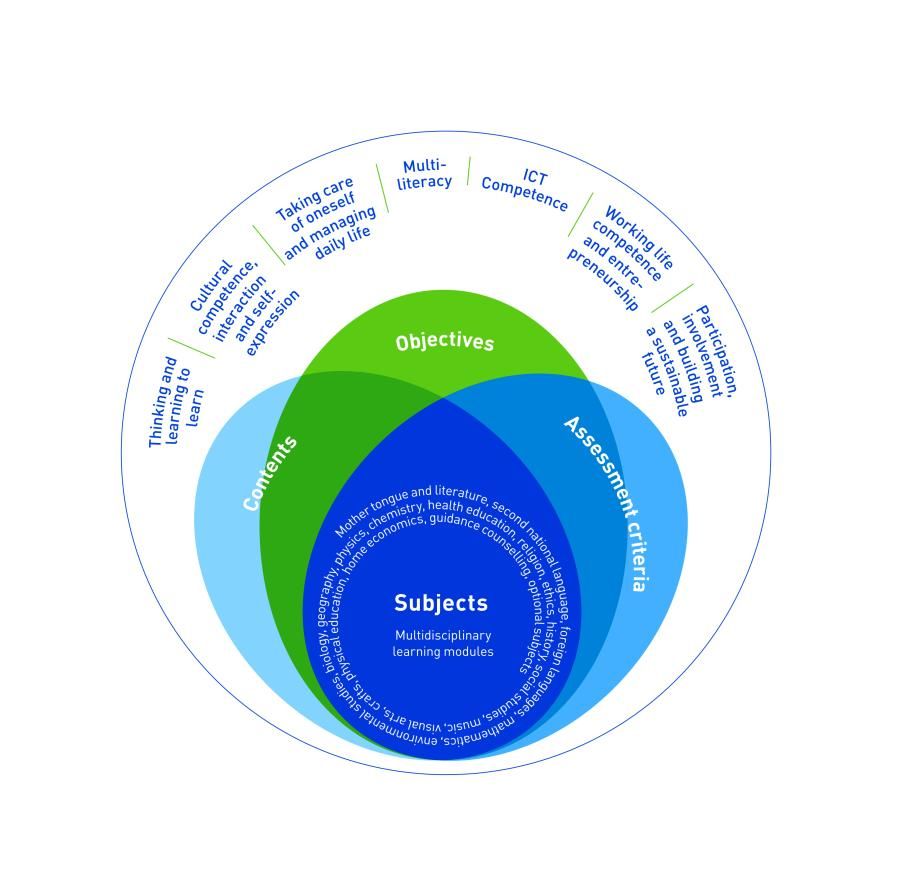
The progression starts early. Children are taught media literacy at the age of three, where the curriculum is grounded in their own experiences: what they see, play, and discuss.
Teachers can ask how they feel about the information and who they should turn to for guidance.
“One very basic skill is to learn how to evaluate sources and how to recognise information that you can trust, and those basic skills need to be practised in school,” Päivi Leppänen, Lead Adviser for Education at the Finnish National Agency for Education, tells GovInsider.
“The younger the children are, the more it's about what they see in their life, and what they discuss when they are together. They wonder about things, and the idea is that teachers listen to children,” she adds.
As students get older, they learn source criticism, asking who published something, why it was published, when it appeared, and what else was being published at the time.
In primary years one and two, children are guided to search for information using digital tools, with teachers helping them navigate what they find.
From years three to six, they learn to assess reliability, cross-check sources and explain why one source is more credible than another.
Rather than restricting media literacy within concepts and theories, teachers use real-world content from news and social media, educating students to identify the data source while developing their analytical skills to evaluate information in context.
“If there is something going on globally or in Finland in the media, like in news or on social media platforms, teachers need to take the topics from them, because we think that they learn through authentic content.” Leppänen says.
Equipping educators with practical support
The education system has several layers.
The Ministry of Education and Culture sets the national direction and core curriculum, while the Finnish National Agency for Education works more directly with education providers, issuing recommendations and organising training.
The broad expectations for digital competence set in the national curriculum give room for educators to decide how the expectations can be translated into practice.
“We are building a more equal education by that,” Leppänen says. “No matter where in Finland you live, you learn the same things.”
This also creates space for organisations to work directly with schools.

“We are completing the work done by the Ministry of Education and the National Board for Education,” Kari Kivinen, Education Outreach Expert at the European Union Intellectual Property Office says.
“We have a core curriculum and over 300 separate localised curricula in the municipalities” “We have equal opportunities… the outcome is that we have very little differences between the schools,” he adds.
Kivinen is part of Faktabaari, a Finnish organisation working on factchecking and media literacy, where he provides teacher training, materials and practical support.
“We have published 286 task cards for teachers, covering everything from early childhood education to higher education,” Kivinen shares.
The organisation has now developed AI learning outcomes and AI Guide for Teachers, allowing them to better acquire AI skills in everyday teaching.
The work draws on broader frameworks including the European Digital Competence Framework and the Organisation for Economic Co-operation and Development’s (OECD)’s AI literacy framework, adapting the latter to Finnish curricula and classroom practice.
AI changes tech landscape, but literacy determines what citizens do with them
Finland builds information literacy around four abilities: the citizens’ ability to understand where information comes from, how media systems work, why institutions communicate as they do, and how to question what they encounter.
The long-term objective is to develop a society where people can read, question, contextualise and think for themselves, even as the information environment changes.
“You first need to have a good understanding of how society works, and then how the media works.” Pekkala shares. “Only then, can AI literacy sit on top of something durable.”
“My advice would be to start early. The foundations of critical thinking and critical online reading are developed during the primary years.
“There is evidence that these skills can already be developed in primary education and that they develop only quite slowly after that,” Kivinen says.
“It helps when you have very good basic reading skills and skills to evaluate the information,” Leppänen shares.