
Four lessons from Uzbekistan government on achieving impactful innovation
By Sol Gonzalez
The country’s Delivery Unit under the Agency for Strategic Development and Reforms leverages data, citizen experience, and holistic stakeholder engagement to deliver meaningful projects and real results in the public sector.
-1772076780401.jpg)
Delivery Unit’s Project Management Specialist Nariman Akhatov and Data Analyst Farhod Omonov share about Uzbekistan’s journey to achieve the national development objectives set to support and enhance the quality of life of its population. Image: Canva.
The road from design to implementation is not easy, and the Uzbek Government has understood this.
That is why the Delivery Unit emerged in 2023 as part of the country’s Agency for Strategic Development and Reforms, under the President of Uzbekistan, as the outcomes-driven body responsible for implementing and delivering real results.
The Delivery Unit focuses on priority targets where delivery is critical, helping to turn targets into clear plans and tracked progress, as well as solving implementation bottlenecks with other ministries and regions.
GovInsider talks with the Delivery Unit’s Project Management Specialist Nariman Akhatov and Data Analyst Farhod Omonov to learn more about Uzbekistan’s journey to achieve the national development objectives set to support and enhance the quality of life of its population.
They share key takeaways for public servants who seek to deliver better citizen services and impactful innovation.
1. Start with the citizen journey
“Innovation is not only about new technology. It is about solving real problems for people in a faster, fairer, and more reliable way,” says Akhatov.

Having grown up in a remote part of the country, Akhatov says he values projects that “change daily life in a visible way”. This has been an inspiration for him to work in the Delivery Unit, headed by Aziza Umarova.
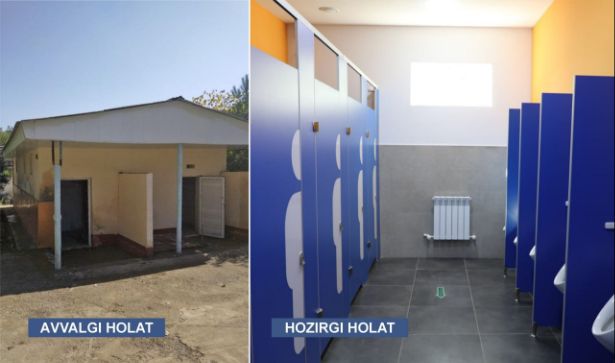
Some of the Unit’s first projects focussed on improving sanitation and hygiene in schools, as well as supporting public health priorities like providing safe and clean drinking water projects.
Key to making these projects work was to start with the citizen journey, he notes.
“Ask where people lose time, trust, or money. Fix one pain point, then scale what works. Use small pilots and clear success measures. Do not wait for a perfect plan.”
With this approach, the Unit has been able to improve sanitation in schools.
Using data-driven insights, the Unit piloted “soakaway” to improve school sanitation and hygiene.
What started as a small-scale pilot has since been officially adopted by the Ministry of Construction as a proven solution, shares Akhatov.
2. Data is your best friend
“Data helps us set clear priorities, track progress, and make better decisions. We use it to move from assumptions to evidence,” notes Akhatov.
Beyond administrative data, the Unit began to collect geospatial information with the purpose of converting it “into actionable intelligence”, shares Data Analyst Omonov.
He specialises in geospatial data analytics and developing monitoring systems that connect national strategy with measurable outcomes.
Omonov shares that the first prototype of the geoportal started with the 2023 Mapathon in Yangiyul district, where they collected raw geographic data on water supply and sewage systems and transformed it into structured geospatial datasets.
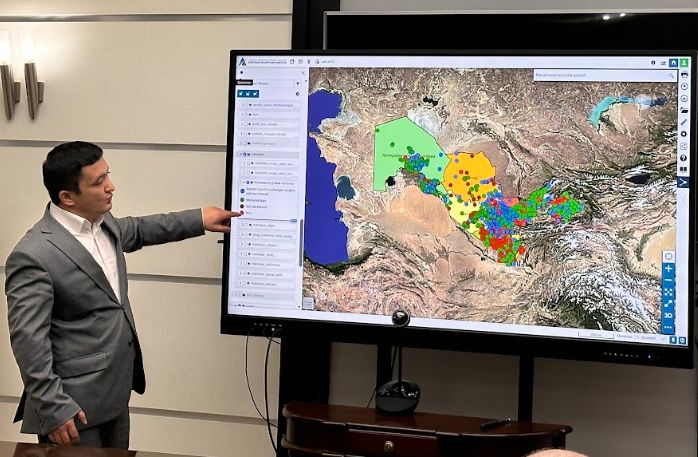
“For the first time, infrastructure was not just listed in spreadsheets — it was visualised, spatially analysed. Geospatial information became more powerful because it was visible, measurable, and decision-oriented,” notes Omonov.
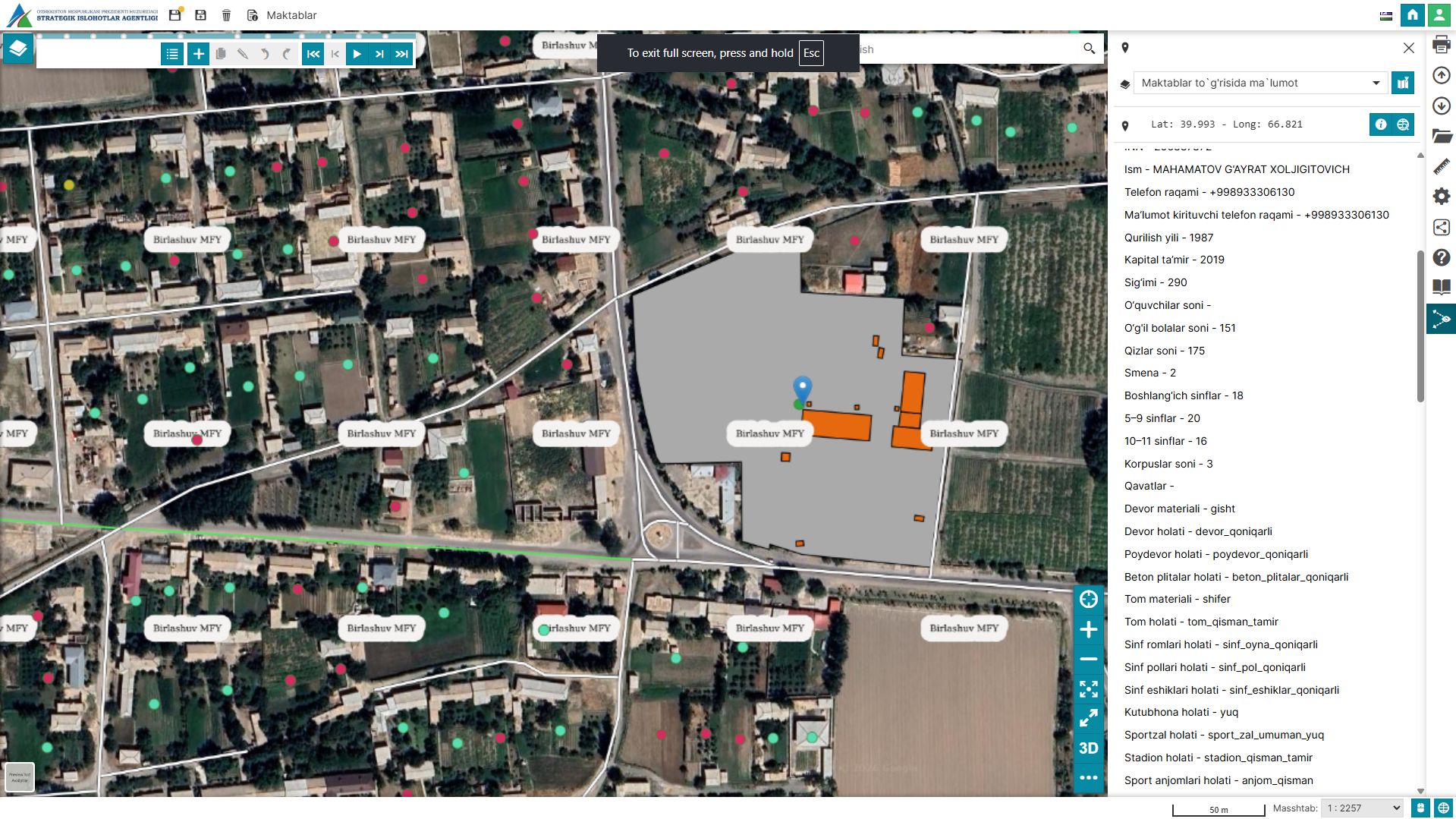
The Unit then organised a second Mapathon that assessed infrastructure conditions, collecting road condition data and geotagging photos of schools, clinics, and other facilities to visually verify their state.
“[This] Mapathon strengthened the geoportal by adding a new layer of accountability, showing where infrastructure and its condition and accessibility,” says Omonov.
From then on, the geoportal evolved into a broader strategic monitoring system as the Unit noticed that data turned into geospatial intelligence impacted policy discussions.
“Maps create clarity, and spatial evidence reduces ambiguity,” says Omonov.
Data also shows where needs are highest, which helps in prioritising actions and resources – what Omonov calls “proactive governance rather than reactive corrections”.
However, challenges still exist, particularly around data quality, access, and availability.
Akhatov shares that some projects have been slowed down as a result of poor data quality and consistency.
“We spent too much time debating numbers instead of solving the problem. That was a hard lesson: without clear standards and governance, data cannot support delivery,” he notes.
This lesson led them to apply a “minimum viable dataset” approach where they start with a small set of reliable indictors and improve step by step, agreeing on simple definitions and indicators, and documenting data sources and owners, Akhatov adds.
“This helped us move faster, build trust with partners, and make decisions based on the same facts.”
3. Prioritise partnerships and constant alignment
Akhatov highlights that implementation goes beyond just “doing the work”.
“Delivery is a constant process of coordination and problem-solving. You need to align many actors, budgets, data, procurement, and local realities.
Small issues, like unclear roles, weak data, or slow approvals, can delay results even when the policy is correct,” he notes.

For this reason, constant alignment among stakeholders is critical, he says.
The other side of engaging with multiple actors and seeking different perspectives is that designs sometimes could change based on the reception on the ground.
Akhatov shares an example of a public campaign during World Breastfeeding Week.
“The campaign used the Uzbek phrase “Onasini emsin”. Our intention was positive: ‘Let the child be breastfed.’
“But when we tested the message with stakeholders and citizens, we learned that some people understood it differently, and in certain contexts it could sound confusing or even inappropriate.”
The team then gathered this feedback to change the design of the campaign, adding clear explanations and adjusting the wording in key materials to bring forward the focus on health.
“We also involved doctors, midwives, and mothers more actively. Their input helped us choose better visuals and simple, practical messages about breastfeeding support.
This improved trust and reach, helping to create stronger momentum for policy action.
After the campaign, the issue received higher attention, and Uzbekistan adopted a national strategy to support breastfeeding up to 2030,” explains Akhatov.
This way, citizens can be real partners in delivery, he says.
For meaningful citizen engagement and participation to happen, clear information is critical.
“If people do not know what programmes exist, what the targets are, and who is responsible, it is hard for them to engage and give useful feedback.”
That is where trust comes in.
4. Protect citizen trust
Akhatov voices out the wish to speak more openly about public programmes, plans, funding, deliveries, and problems faced.
“With better information, it becomes easier to build trust and involve citizens in monitoring and evaluation, especially in priority areas that affect daily life,” he explains.
One way that the Unit is working to enhance transparency and drive further citizen engagement is through a national dashboard, designed as a single digital platform to monitor the key Uzbekistan-2030 indicators.
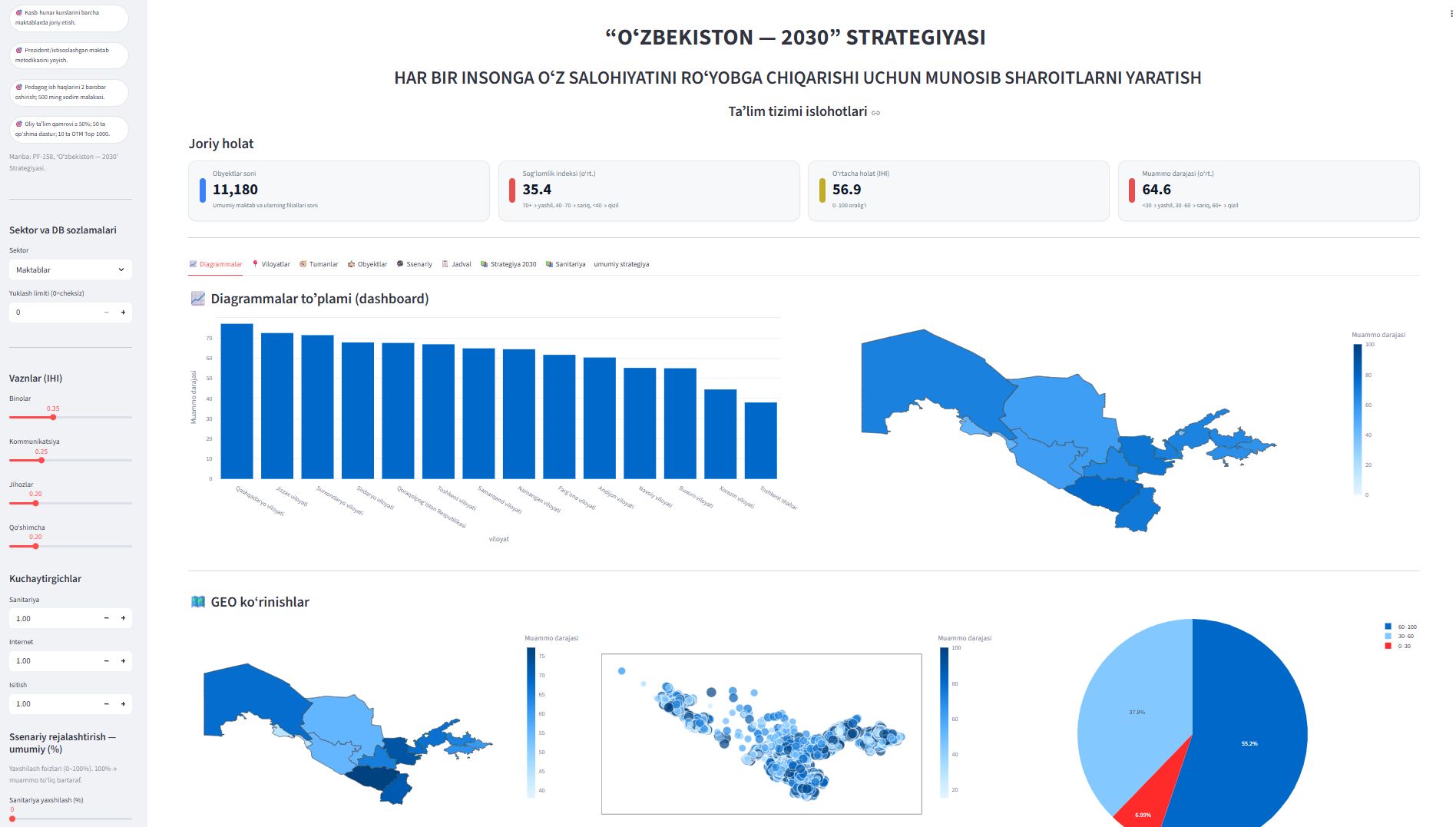
“The goal is to make performance data more consistent, timely, and transparent across government. This helps leaders see progress early, identify risks, and act faster,” says Akhatov.
The new Strategy Dashboard and Geoportal will integrate data directly from ministries through API connections and structured data exchange, says Omonov.
The geoportal also includes an open module for citizen engagement.
“The public version of the dashboard allows citizens to view selected indicators, infrastructure data, and reform progress transparently. In simple terms, we make strategy visible both for decision-makers and for society,” he concludes.
Akhatov and Omonov are speakers at this year's Festival of Innovation happening in Singapore on 3 & 4 March. You may register here.
Note: The article has been updated to include higher quality images.