
From chatbots to IoT, Krandegan village redefines rural Indonesia
The village in Central Java has transformed itself into a smart village, digitally catering to the needs of its residents.
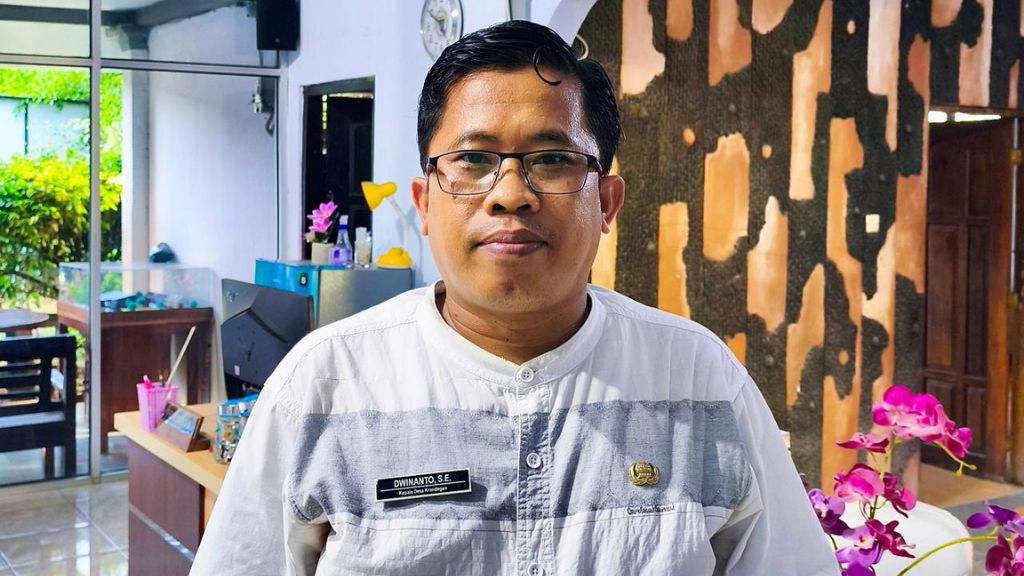
Dwinanto, Head of Krandegan Village, Central Java, Indonesia, is leading the transformation of Krandegan into a smart village. Image: GovInsider
Krandegan Village, spanning 800 hectares in Purworejo Regency, Central Java, Indonesia, has proven that innovation is not the monopoly of big cities, nor is technology adoption simply about following trends.
With citizen-centric leadership, digitalisation can help village officials to enhance the services they deliver.
“Digitalisation is not about showing off. It is an inevitability we must embrace and face,” says Head of Krandegan Village, Dwinanto.
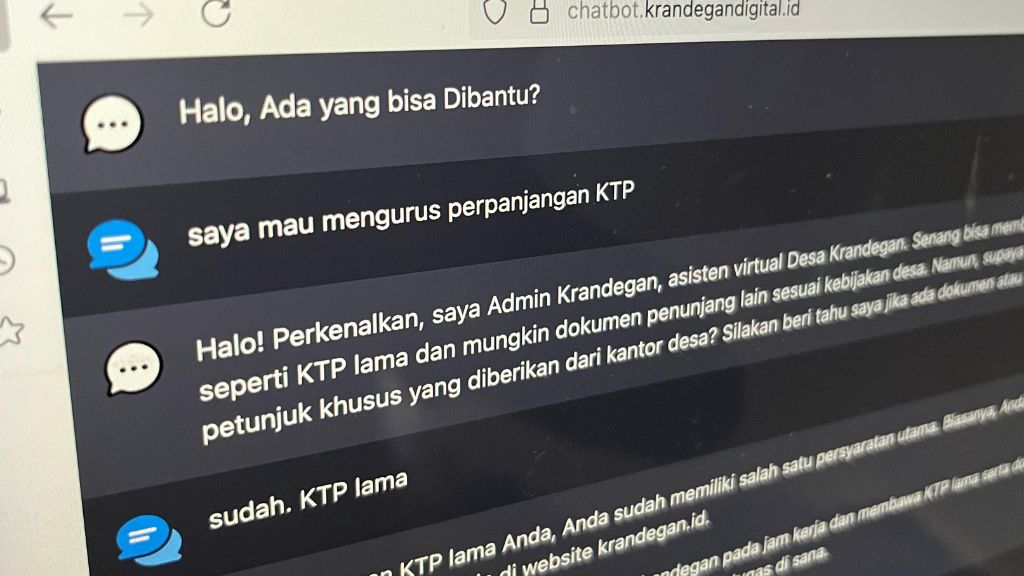
In February 2025, the village launched an artificial intelligence (AI)-powered chatbot, which responding in real time to residents’ questions about administrative services, document status, and village profiles and operates round-the-clock, seven days a week. The chatbot is accessible via WhatsApp, the official Krandegan website, and the Sipolgan Android app.
According to Dwinanto, the chatbot was developed to address the daily challenge of limited human resources that the village faced, which provided to be a challenge in meeting the constant stream of residents’ needs.
“At first, many residents would send messages asking about lost ID cards, how to process family cards, or requesting document assistance. But with limited village staff, it’s impossible to be available 24/7. So why not use technology?” he says.
Over the past four months, the village’s internal dashboard has shown that hundreds of users have accessed chatbot services daily, both from within and outside the village.
“This really helps us as residents. I work outside the village but can still manage my documents without having to keep travelling back home, saving time and money,” says Rina, a Krandegan resident.
Dwinanto shares with GovInsider how he leverages technology to improve the lives of the over 3,000 residents in his village.
Village funds as a tool for change
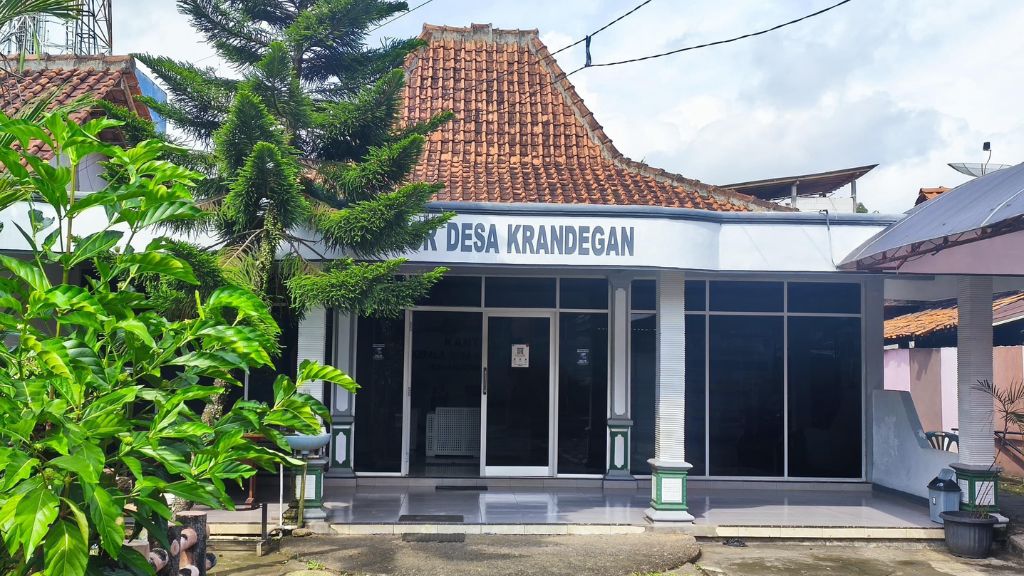
Like other villages, Krandegan receives IDR1.6 billion (S$125,000) in village funds – money provided by the central government annually to over 84,000 villages across Indonesia to stimulate the rural economy.
However, for Dwinanto, these funds are not merely routine budgets. They should serve as a tool for change.
“If we only use village funds to build roads, in five years they’ll need repairing again, and the cycle repeats. But if we build digital systems, the impact will be a long-term investment. Villagers become more tech-literate and increase their overall literacy,” he says.
From these funds, most are used to develop the village economy, with around IDR100 million specifically allocated for the digitalisation of public services.
He highlighted that the cost required to drive digital transformation was not as high as people might imagine, provided the village managed its finances well, maximised its human resources, and collaborated with private entities and universities.
As an example, the chatbot, which is connected to the entire digital ecosystem of the village, costs less than IDR5 million to develop with the help of local youths studying technology.
To subscribe to the GovInsider bulletin, click here.
Leading tech experiments in the village
Since 2020, Dwinanto has been leading technological experiments in his village. He has utilised an Internet of Things (IoT) to develop a solar-powered irrigation system which is controllable via a mobile phone, replacing diesel machines that cost up to IDR800,000 (S$63) per day to operate.
This system was supported by the provincial government and Universitas Negeri Sebelas Maret Surakarta (UNS).
“With solar-powered water pumps, the cost we incur is nearly zero. The environment is cleaner, and farmers are happy,” he says.
Krandegan has also installed ultrasonic pest repellers, which are safe for humans and effectively protect farmers’ harvests from birds.
In physical infrastructure development, Krandegan village is now surrounded by a fibre optic network, built in collaboration with private service providers and partially funded by village funds.
Supported by its own internet backbone, Krandegan can operate CCTV and an early warning system accessible to residents from their homes, complete with emergency buttons in case of disasters or theft.
“The entire system is integrated into the main village dashboard, which is publicly accessible via krandegan.id,” Dwinanto explained.
He has also established the Krandegan Village-Owned Enterprise (BUMDes), named Karya Muda, which focuses on developing and selling village service applications to other villages across Central Java and Indonesia.
“Our BUMDes can now afford its own operational vehicle from app sales, not from village funds ... This is the independence we have built,” Dwinanto shares.
Changing residents’ mindsets
Although infrastructure and technology are in place, Dwinanto acknowledged that the greatest challenge was shifting the mindset of the residents.
“Some still prefer handling documents manually, even though it can be completed within 15 minutes via smartphone,” he says.
To address this, he and his village officials regularly provide education, training, and socialisation sessions, involving residents in learning how to use and benefit from the AI chatbot and other services.
As a result, out of 900 households in Krandegan, 800 have downloaded and are using the Sipolgan app.
“Now, almost every household has an Android phone. The next step is to build a digital culture and equip them with the literacy skills needed to use these tools safely and comfortably,” he adds.
Krandegan Village has ranked in the top 10 of the 2025 National Digital Village Competition held by the Ministry of Villages, Development of Disadvantaged Regions, and Transmigration (PDTT), competing with thousands of other villages across Indonesia.
The Ministry has also designated Krandegan as a model for national energy-independent villages.