
From silos to strategy: How logical data unlocks AI-ready public services
By Denodo
From data fragmentation to AI readiness, the Public Sector Day Data event in Singapore offered public sector leaders a strategic roadmap for leveraging trusted, real-time data to deliver more efficient and innovative citizen services.
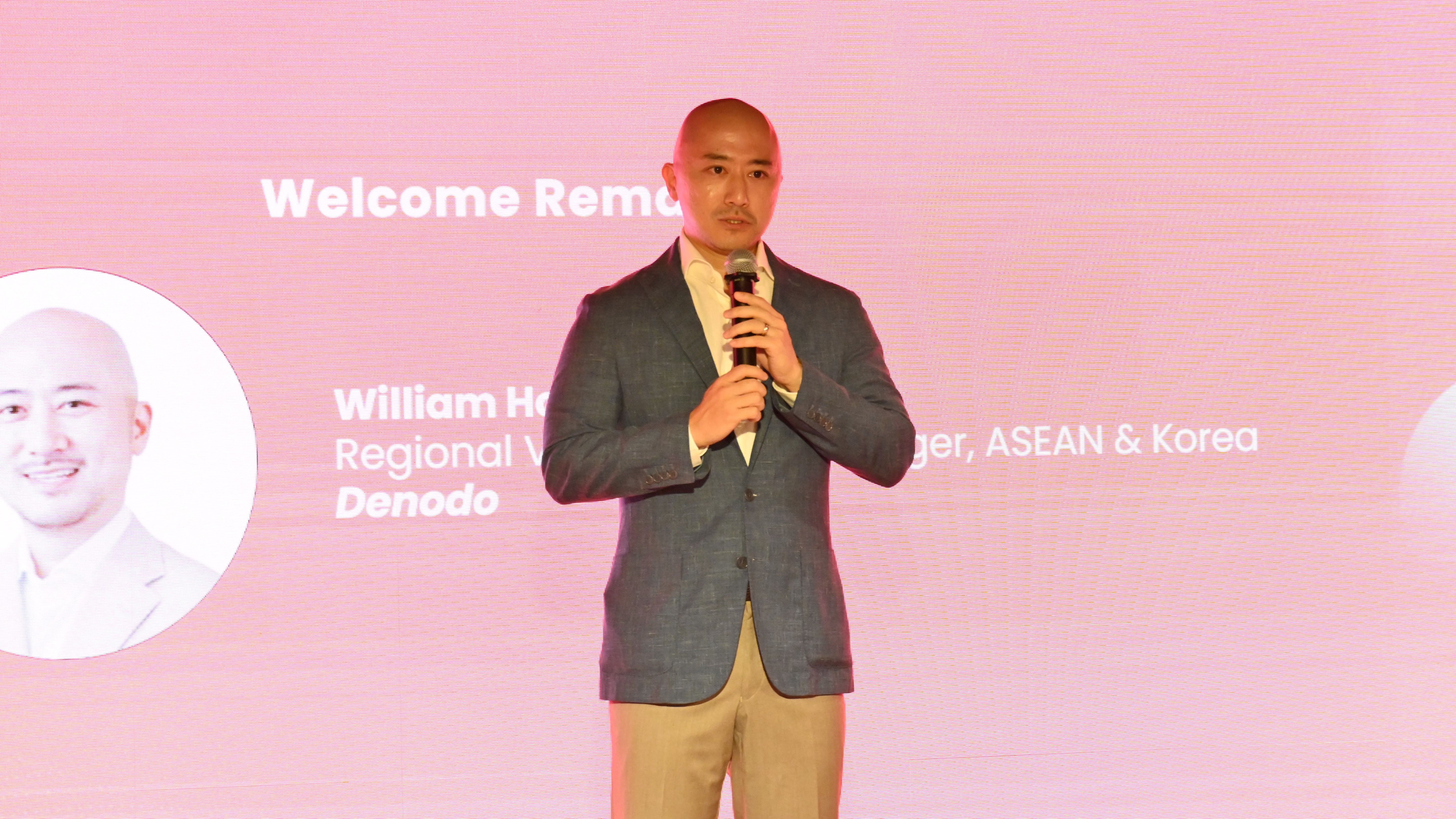
Denodo’s Regional VP & General Manager, ASEAN & Korea, William Hong. Image: GovInsider
Have you ever been stuck waiting for a government service, only to find out that different departments can't share information with each other?
This frustrating experience points to a common public sector challenge - managing vast amounts of data that are locked in separate systems.
These were some of the concerns raised by speakers at the Public Sector Day Data event on July 24 in Singapore that explored how a logical data strategy can help agencies unify their information and prepare for the future of public service.
“If there is no data strategy, there is no AI success,” said Denodo’s Regional VP & General Manager, ASEAN & Korea, William Hong, stressing the importance of data as the foundation for efficient government services.
“Today is about one big idea - better government with smarter data. From healthcare to citizen services to AI, success starts with trusted, connected, and well-governed data,” said Hong in the opening remarks.
Data readiness fuels AI
For AI to be successful, organisations must first get their data in order. This starts with the basics, such as data quality and a clear understanding of data maturity.
NUS-ISS's Chief of Data Science & Digital Sustainability Practices, Clara Lee, shared that "quick wins" from basic practices like data cleaning can help an organisation progress along the data maturity curve, from descriptive to predictive and prescriptive stages.
“It’s one thing leading to another success, leading others to follow. That is how maturity comes about. As a big organisation, it's probably not easy to get through to everybody, but let's start with some steps and low hanging fruits,” said Lee.
Despite Singapore's high public service standards, she noted that many organisations still struggle with implementing widespread AI solutions due to fundamental issues with system readiness and data fragmentation.

Echoing this, Synapxe's Assistant Director, Data Analytics & AI-Engineering & Ops, Geok Pei Tan, highlighted that data quality - specifically, accuracy, completeness, and consistency - was crucial for successful AI use cases.
She shared that her agency uses a "medallion architecture," a data design pattern that incrementally improves data quality as it moves through different layers, from a raw "bronze" stage to a use-case-driven "gold" stage.
NHG Health’s Assistant Director, Lead of Data Scientist, Dr Zhao Wanting, added that data owners must be proactive in identifying and taking responsibility for data quality issues, such as inconsistencies in data labeling from manual entry processes.
This mindset would be key for data owners who she said should “take responsibility” of the data as it would allow for more advanced insights in the future with more AI use cases.
Denodo's logical data management approach addresses these challenges by providing a complementary layer that unifies siloed data and enables governed, AI-ready access.
To subscribe to the GovInsider bulletin, click here.
Balancing speed with governance
Government agencies face increasing pressure to deliver services faster, but they must also maintain strong data governance.
The Monetary Authority of Singapore (MAS)’s Director & Head, Cybersecurity, Data and Technology Department, Eric Chee, emphasised that his users want data quickly, and getting insights often requires bringing together data from many different sources.
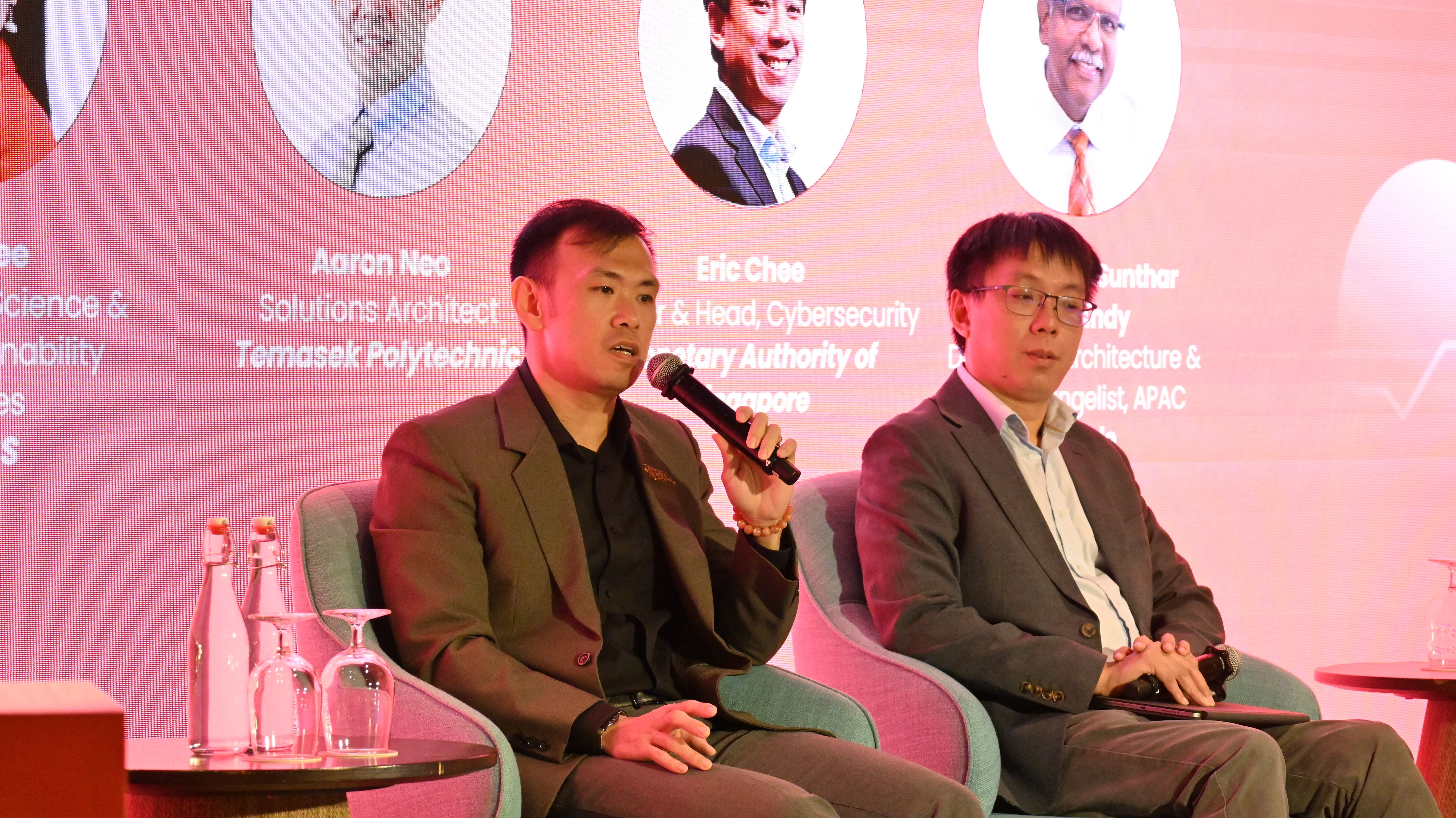
“All of my users want data fast. In most of our ecosystems for example, we have a lot of applications in the warehouse and a lot of times when we talk about data insights, it's about putting all this data together, referring to them, and getting an insight,” Chee explained.
He noted that a "master design" and a logical data management approach can enable real-time connections to data both within and across various sources.
This was a major benefit for Temasek Polytechnic when it modernised its applications and data infrastructure.
“We had a lot of data interfaces coming from the database that eventually ended up in an external body which required a certain kind of retirement. The effort to come up with that design interface is quite substantial,” explained Aaron Neo, Solutions Architect at the polytechnic.
The ability to “grab data from multiple databases easily”, “individually transform it” and then “exposing them to the external parties” enabled Neo to achieve cost and timing savings with a logical data management approach.
From experiments to impact
The conversation turned to the future of AI and the impetus of AI-enabled rapid experimentation for better public services.
Denodo’s Director of Architecture & Chief Evangelist, APAC, Shanmuga Sunthar Muniandy noted that the evolution of data strategies - from data warehouses to data lakes and data lake houses - showed how architectures have adapted to meet growing citizen needs and technological advancements.
The essence of logical data management, he said, is not to “reap and replace” the current data environment, but to provide a layer of “complementary architecture”.
This unique proposition served not only to support operational needs but also demanding AI use cases that required unified real-time data.
This focus on agile innovation, powered by a logical data fabric, enables agencies to quickly move from pilot projects to scaled-up solutions that have a real impact on citizens.
Denodo's Director of Product Management, APAC, Felix Liao demonstrated their AI SDK (Software Development Kit) and a new AI-powered deep research capability called DeepQuery that could generate detailed reports and policy briefings from open-source data in 10 minutes.

He highlighted the emerging use of analytic agents that presented great benefits for both internal and external environments.
For example, a fraud detection agency could use a GenAI agent to analyse a 60-page report on complex financial transactions in minutes, allowing it to rapidly identify suspicious patterns and protect public funds.
The ability to quickly experiment and pivot is key. As Liao explained, "although a lot of projects might not work, the ones that do will be transformational".
“I think the time is right in terms of driving innovation, and we want to do that though this type of agent,” he added.
Denodo's logical data management approach provides a central layer that not only addresses the immediate needs for speed and governance but also prepares agencies for the transformative potential of AI.
This creates a clear path from a fragmented present to an integrated future where public services are smarter, faster, and more trusted.