
GovMesh Digest: Germany’s attempts to finally get digital right with new Digitalisation Ministry
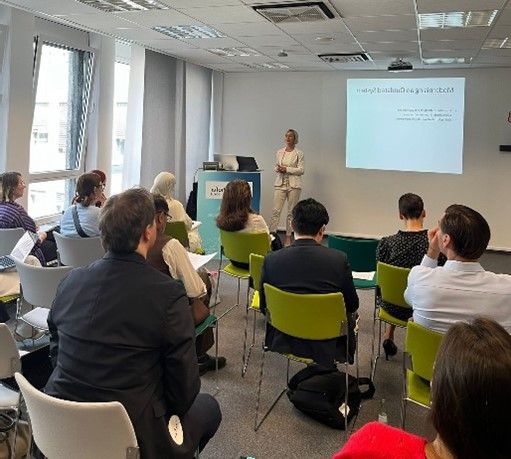
Former member of the Bundestag Nadine Schön addressed GovMesh participants on Germany’s renewed digital vision and mandate under the new Merz administration.
Germany’s story is one of those featured in the GovMesh Digest special report. Image: GovInsider
Germany's story is one of those featured in the GovMesh Digest special report. You can find the individual stories on the other participating governments at GovMesh 2.0 here.
There have been few stories in the digital government world as big as the launch of Germany’s digital ministry – a policy pledge that cut through from the “technocratic” to the public mainstream.
Historically, Germany has been an example of how a complex bureaucracy can stifle digitalisation: a heavily devolved administration meant there were 300 districts and 11,000 municipalities coordinating much of government administration; delivering critical services like e-ID often meant coordinating between thousands of authorities.
Most famously, during the Covid pandemic, there were examples of authorities using fax machines to track and trace close contacts of those who had contracted Covid-19.
Taking the bull by the proverbial horns with a new ministry was a clear statement of intent then from Chancellor Friedrich Merz in the first weeks of his administration in April this year.
In a recent interview with the BBC’s Nick Robinson, the Chancellor noted the scale of public sector change needed was front and centre: “Even people who love Germany point out there are bridges falling down because there’s no money, some people in the public sector are still using fax machines”.
A new digital body, and a threefold digital mandate
Any sense that Germany was administratively stuck in the past could easily have been dispelled by attending the Creative Bureaucracy festival in the country’s capital back in June. There, thousands of “creative bureaucrats” – including those in the country’s new ministry – gathered for a conversation about the future of the public services.
At GovMesh, co-organised by GovInsider and interweave.gov, hosted as a side event to the festival, former Member of the Bundestag, Nadine Schön, began her presentation by addressing the energy in the city: “Many people who want a modern and effective state are currently in a spirit of optimism in Germany”.
The new Ministry, she continued, is not just a correction of the old, but an adjustment to the new expectations of being a 21st-century government, a “political response to the fundamental challenges facing our administration, our infrastructure, our democratic governance and our economy”.
To subscribe to the GovInsider bulletin, click here.
The notion of a creaking state, balancing increasing expectations from citizens and ever-tightening budgets, is a familiar one. So too is the idea that tackling these challenges starts by fixing the plumbing – as Schön puts it, “combin[ing] the responsibility for digitalisation and state modernisation strategically, effectively and across ministries”.
As Germany looks to do so with the digital ministry, they have three priorities in mind: a digital economy, digital infrastructure, and building a digital and modern state.
Each has clear priorities attached – behind the vision of “the digitalisation of the economy through innovation, friendly regulatory frameworks and targeted funding” is a goal “to enable companies to be founded completely digitally and within 24 hours”.
Behind German Federal Minister for Digital Transformation and Government Modernisation, Karsten Wildberger’s assertion that “the data must flow” is targeted interventions on faster internet speeds, fibre optics, and the modernisation of mobile communications, with a first draft bill to accelerate network expansion reaching the German parliament within weeks of the new government taking charge.
And then there is the question of Digital Sovereignty, a key pillar of the digital state in Europe. As with others across the continent, this is a still-emerging concept, but among the responsibilities of the Digital Ministry is the development of an interoperable “Germany Stack”.
Could this digital ministry be different?
Germany now has a refreshed digital vision. Tick. Its digital ministry has leadership and support from the top levels of government. Tick. With the recruitment of industry veteran Wildberger to lead the Ministry, it is clearly bringing the best of private and public-sector expertise. Tick.
But the challenges of a fragmented administrative state, coordinating with local authorities, and digital immaturity in parts of the government still persist and will be difficult to solve.
A previous push to digitise almost 600 government services in 2022 was muted, with the government managing just 33.
There are two reasons why we might expect this Ministry to be different, said Schön.
The first is the centralisation of digital authority within the government. The creation of the new digital ministry practically meant the remit for digital policy and delivery moved out of the Ministry for Transport to the new Ministry.
Artificial Intelligence (AI) responsibilities were absorbed from the Ministry of Justice, and digital administration, digital society and IT procurement from the Ministry of the Interior.
In total, the new ministry has combined powers that were previously spread out across six ministries.
There is still work to do – early commentary on the new Ministry suggested data policy still has a while to go before it is fully consolidated.
But as Schön pointed out, it gives a clear path of escalation and coordination for anyone with digital issues or ambitions within government.
Second – and arguably more important – is that these new authorities will be combined with a budget for the Ministry to deliver on them. Schön informed the GovMesh participants that “previous governments also had ministers responsible for state modernisation, but they never had a budget to achieve these goals”.
The new ministry is supposed to be “not just a coordinating institution but a strong implementer”, with the power to set standards at the federal level and enforce their delivery with the support of several implementing institutions (like Germany’s Digital Service).
With so many priorities to deliver on, the key will be ensuring that the Digital Ministry maintains a clear sense of its priorities. To the immediate ambitions outlined above, Germany can add its EU responsibilities (such as a digital wallet) and thinking through cyber- and defence-sovereignty.
Add to this strategic foresight, data-driven decision making, and reform legislation - some of the ambitions that Schön talks about further down the track – and the level of change needed to make Germany a digital leader becomes clear.
As Schön said, being a 21st-century government demands it.