
GovMesh Digest: Lithuania steps out of its Baltic neighbour’s shadow
Emulating Estonia’s success in digital government, Lithuania has been fostering a collaborative and co-creation environment to rapidly digitalise its public sector.

Lithuania has embraced co-creation as a central pillar of its public sector innovation strategy. Image: Canva.
Lithuania's story is one of those featured in the GovMesh Digest special report. You can find the individual stories on the other participating governments at GovMesh 2.0 here.
Of the three Baltic states - Lithuania, Latvia, and Estonia - it is the latter that has gained considerable international recognition for digitalising 100 per cent of its government services.
What is less well known about the region is that Lithuania also has a thriving e-government ecosystem spearheaded by the country’s GovTech Lab.
Espousing more about the work being done in Lithuania in June at Berlin, Germany, Lithuania GovTech Labs’ Sector Manager, Dovilė Gaižauskienė, said the country has “embraced co-creation as a central pillar of its public sector innovation strategy”, establishing it as a national brand to foster collaboration across government, public institutions, and society.
Gaižauskienė was speaking at the GovMesh 2.0 event, organised by GovInsider and interweave.gov.
It was a closed-door roundtable discussion that convened a small group of government representatives to discuss topics around digital government.
Gaižauskienė said co-creation has been “adopted at the highest levels of government”, recognising that complex challenges require input and cooperation from diverse stakeholders.
She noted that co-creation has been central in various national initiatives, including programmes designed to attract Lithuanian talent from abroad and encourage their participation in shaping the country’s future.
The initiative extends beyond technology development to include strategic foresight and capacity building.
Testing AI tools for public sector use
Giving an example, Gaižauskienė said GovTech Lab has organised exercises that bring together public sector representatives, company leaders, and academics to envision the future of artificial intelligence (AI) in government and explore the societal impacts of emerging technologies.
Around 15 public sector institutions were invited to test AI tools and reflect on the regulatory and behavioural changes that accompany the introduction of such technologies.
The exercise brought together a diverse group of stakeholders, including public sector officials, company representatives, and academics.
All of them collaboratively envisioned various scenarios for the adoption and impact of AI in government.
Participants examined critical questions such as whether and how AI should be used in public administration, and what changes might be necessary to ensure its responsible implementation.
To subscribe to the GovInsider bulletin, click here.
The collaborative process resulted in a comprehensive report that captured the collective insights and recommendations of the participants, providing valuable guidance for policymakers and public sector leaders.
“The outcomes of the strategic foresight exercise were both practical and forward-looking,” Gaižauskienė said.
Flagship programmes
The lab’s flagship programmes, such as the Govtech Challenge Series and Govtech Sandbox, have been structured to bring together public sector institutions and innovative companies to jointly identify problems, design solutions, and develop digital prototypes.
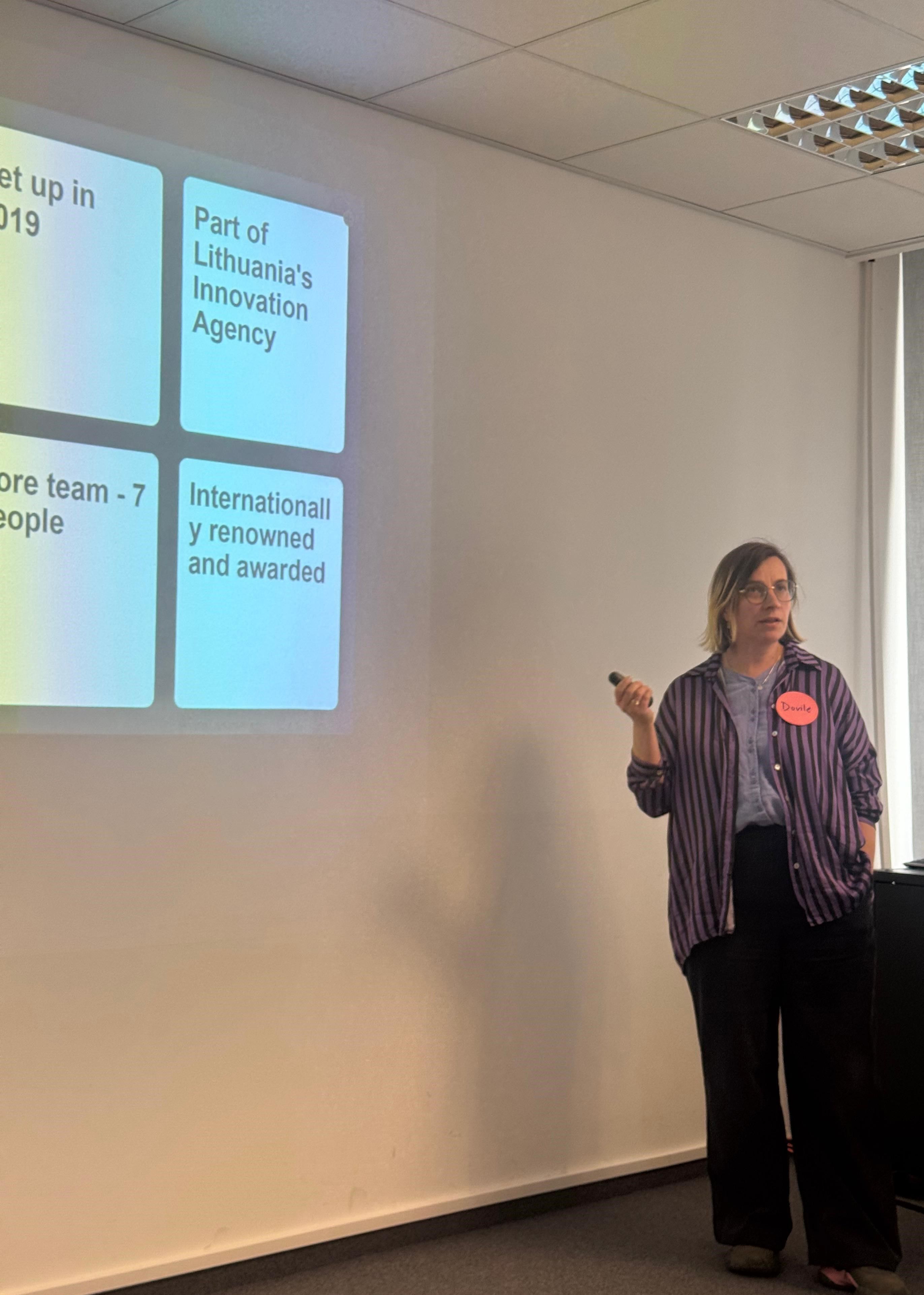
“These emphasise a shift from traditional client-supplier relationships to genuine partnerships, where government agencies and startups co-create and iterate on solutions through workshops, progress meetings, and hands-on experimentation,” Gaižauskienė said.
She added that over its seven iterations, the Govtech Challenge series has facilitated 106 challenges, engaged 74 different public sector institutions and collaborated with more than 60 innovative companies.
“Notably, 70 per cent of participating organisations have continued to develop and implement solutions beyond the initial prototyping phase, demonstrating the program’s effectiveness in fostering sustainable innovation within government,” she said.
Gaižauskienė added that the lab has also enabled the creation of personalised learning solutions for schools, now being scaled at the national level, and has piloted programmes to test AI in public sector institutions.
“These initiatives underscore the lab’s commitment to experimentation, practical impact, and the continuous evolution of public sector services,” she said.
Gaižauskienė said the “structured yet flexible environment” of sandboxing has allowed government agencies to collaborate directly with startups and technology companies, testing new ideas and prototypes in real-world scenarios.
This approach reduces the risks typically associated with large-scale implementation and empowers public sector teams to learn, iterate, and refine their solutions before broader rollout, she said.
Capacity building
Gaižauskienė noted that while the two major pillars of activity for the lab were centred on solving public sector challenges through innovation and in building a vibrant Govtech community and ecosystem, the third pillar focused on capacity building.
This was achieved through initiatives like the GovTech Innovation Academy, study visits, workshops, and tailored consultations, she said.
The objective was to equip government employees with the knowledge and tools needed to drive transformation in their organisations, she said.
Gaižauskienė added that this not only enhanced the government employees’ understanding of innovation processes and methodologies but also empowered them to become champions of change within their respective institutions.
“By investing in skills development and continuous learning, this ensures that the public sector remains agile and prepared to meet future challenges,” she said.
International collaboration was also another area of importance.
Gaižauskienė noted that the lab’s active participation in the GovTech Global Alliance “has significantly enhanced the lab’s ability to drive innovation and share best practices on an international scale”.
Being part of the alliance has opened doors for GovTech Lab to participate in cross-border initiatives, organise and attend international conferences, and support the development of Govtech teams beyond Lithuania, she said.
“These opportunities have not only raised the lab’s profile but have also accelerated the adoption of innovative solutions within the Lithuanian public sector,” Gaižauskienė said.
GovTech Lab has been able to amplify its impact, foster a culture of experimentation, and position Lithuania as a leader in the global Govtech ecosystem, she added.