
GovMesh Digest: Taiwan takes a leaf out of Estonia’s DPI playbook on safe data sharing
MODA's secure data exchange platform, T-Road, is built on the same principles used in the Baltic nation’s much-acclaimed X-Road and represents Taiwan’s move towards open data and public code for government services.

Taiwan’s secure data exchange platform, T-Road, is designed to facilitate seamless and safe data sharing. Image: Canva.
Taiwan's story is one of those featured in the GovMesh Digest special report. You can find the individual stories on the other participating governments at GovMesh 2.0 here.
The foundational aspect of digital public infrastructure (DPI) is reusable blocks that provide functionalities such as digital identity, secure payments, and trusted data sharing, based on core principles including openness, interoperability, data protection, and user choice.
Unlike proprietary efforts to digitalise public sector services, the open-source nature of DPI allowed the reuse of components as well as their adaptation by other countries looking to develop similar infrastructure.
A great example of this was Taiwan’s secure data exchange platform, T-Road, which was inspired by Estonia’s pioneering data exchange programme X-Road.
During a presentation at the GovMesh 2.0 event, co-organised by GovInsider and interweave.gov, in Berlin earlier this year, Taiwan’s Ministry of Digital Affairs’ (MODA) Systems Planning Manager, Rosalind Liu, highlighted how T-Road was designed to facilitate seamless and safe data sharing.
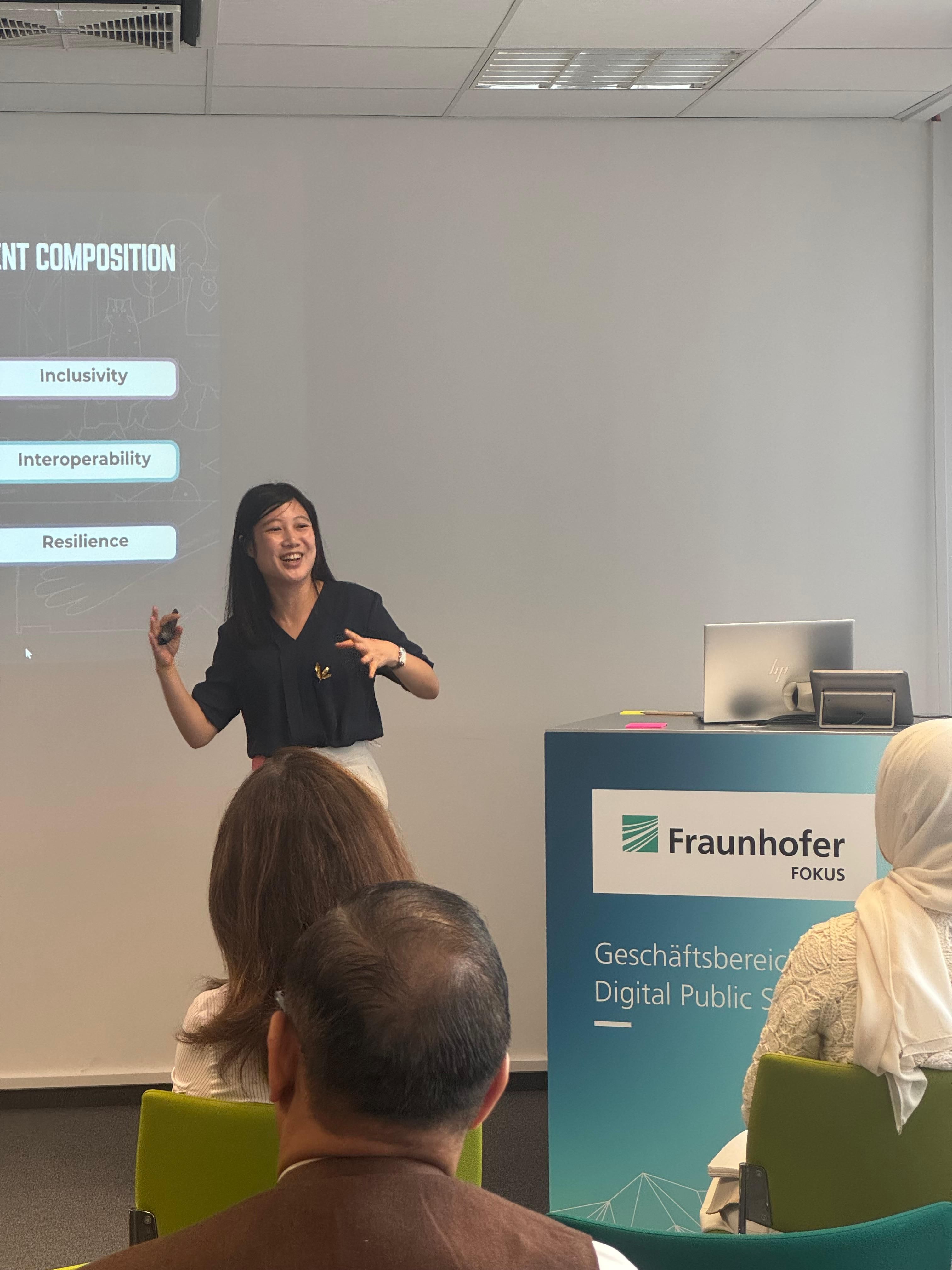
T-Road enabled government agencies to exchange information efficiently while maintaining high standards of security and privacy.
Liu added that while the platform’s focus remained on inter-agency collaboration within the government, a few major financial institutions had also onboarded the platform. There were plans to bring more private sector entities on board over time, she noted.
“By implementing T-Road, Taiwan aims to modernise its digital infrastructure, ensuring that essential services and administrative processes are both resilient and responsive to the needs of a digital society,” Liu said.
Like Estonia’s X-Road, T-road uses a secure digital identity framework that allowed citizens to authenticate themselves and access a wide range of government and private sector services online,
Taiwan’s version has similar features.
Liu noted that T-Road had a robust security and privacy framework, alongside strong authentication and encryption mechanisms, to ensure that only authorised entities could access specific data and to protect sensitive information.
Fostering culture of public sector innovation
Discussing Taiwan’s approach to DPI, Liu emphasised the strong focus on connectivity and inclusivity, ensuring that all citizens can easily access digital public services.
The Draft Act on Promoting the Development of Data Innovation and Utilisation represented a significant step forward in modernising the country’s digital government and fostering a culture of innovation within the public sector, she said.
The government had recognised the challenges that public servants faced when navigating the grey areas of data sharing and digital transformation.
“The act has been designed to provide clear legal frameworks and protections.
“By doing so, it empowered government employees to pursue innovative solutions without fear of penalty, thereby accelerating the adoption of new technologies and practices across government agencies,” Liu said.
Open data and public code
In addition to promoting data exchange, the draft act encouraged the use and development of open government data and public code.
By making doing so, software and algorithms that were transparent and open for public review, the government hoped to foster innovation and build trust with citizens.
Liu noted that while this approach was intended to foster trust, enable innovation, and allow citizens and experts to scrutinise and improve government digital services, it has faced several challenges.
To subscribe to the GovInsider bulletin, click here.
“It remains a controversial topic within the country, particularly among vendors and stakeholders who are uncertain about the implications of opening up government code,” Liu said.
To address these concerns, the government took a gradual approach, starting with pilot projects launched through sandboxes and civic technology experiments in collaboration with local governments and citizens.
The goal was to demonstrate the benefits of public code while ensuring that proper standards and protections were in place, Liu said.
Digital Identity Wallet
Building on the foundation laid by T-Road, the government has developed the Taiwan Digital Identity Wallet, which was a decentralised, blockchain-based solution that aimed to empower citizens to control their own data and selectively share information with both public and private entities. It is expected to be launched in December this year.
Liu said the digital identity wallet had an intuitive app interface that allowed users to choose what information they wished to share for different transactions, whether interacting with government agencies or private sector organisations.
“This selective sharing not only protects sensitive data but also fosters greater trust in digital services, as users retain full control over their digital footprint,” she added.
Liu said hackathons played a pivotal role in Taiwan’s digital government strategy.
The annual Presidential Hackathon brought together public servants and citizens to collaboratively address societal challenges using open government data, she added.
Each year, the event focused on a different government ministry or domain, such as transportation or archaeology, thus encouraging innovation and continuous improvement in public services.
This initiative not only fostered creative problem-solving but also strengthened the partnership between government and the public, driving forward the open data movement and digital transformation in Taiwan, Liu said.
Building resilience
Liu noted that in an increasingly digitalised world, resilience of critical information infrastructure (CII) is of paramount importance to ensure the continuity of government services and societal functions.
She observed that infrastructure such as internet connectivity and electricity form the backbone of digital government, enabling everything from public service delivery to emergency response.
At the same time, these systems were vulnerable to a range of threats, including cyberattacks, natural disasters, and even “deliberate physical disruptions like the severing of undersea cables”.
To safeguard against such risks, it was essential to design infrastructure that could withstand attacks and maintain connectivity, ensuring that essential services remain available even in the face of adversity, she said.
Liu added that Taiwan’s approach was to build redundancy and resilience into the national infrastructure.
“By preparing for scenarios where primary connections might be compromised, such as through alternative routing, backup power supplies, and robust cybersecurity measures, governments can minimise downtime and maintain public trust,” she said.