
GovMesh Digest: UAE’s innovation culture moves from global to local, and then back again
Abeer Tahlak and Noora Almahri from UAE’s Mohammed Bin Rashid Centre talk about the country’s decade-long journey to build a government that says, “It’s possible”.
-1754464232155.jpg)
South Korea’s story is one of those featured in the GovMesh Digest special report. Image: GovInsider
UAE's story is one of those featured in the GovMesh Digest special report. You can find the individual stories on the other participating governments at GovMesh 2.0 here.
“Innovation is not a kind of side initiative”, said Abeer Tahlak from the United Arab Emirates’ (UAE) Mohammed Bin Rashid Centre for Government Innovation.
She added that the “national identity and leadership [of UAE] took it super seriously”.
At GovMesh 2.0, Tahlak and her colleague, Noora Almahri, talked about how the Middle Eastern nation has transformed itself into a powerhouse of innovation.
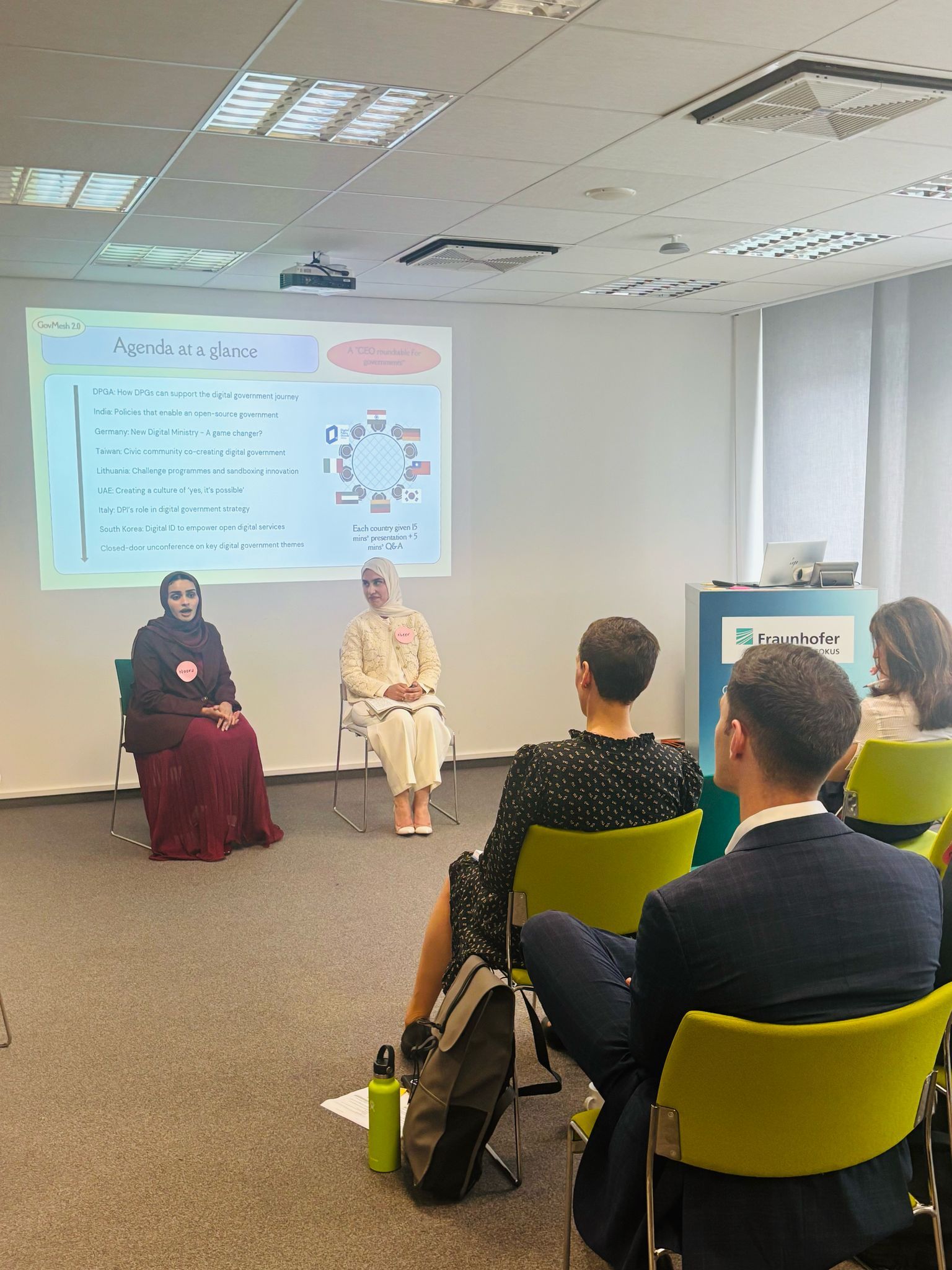
GovMesh, co-organised by GovInsider and interweave.gov, was a closed-door roundtable discussion that convened a small group of governments to discuss selected topics around digital government.
The first verison of the event, GovMesh 1.0 happened in Singapore in March this year and the GovMesh 2.0 took place in Berlin, Germany, in early June.
Speaking to participants from across Europe and Asia, with countries as geographically distant as Taiwan and Italy, and as different in size as Lithuania and India, both Tahlak and Almahri noted that despite the difference in size and distance, all the countries “share the same reality” and “go through the same challenges” as teams trying to reimagine how bureaucracy functions.
Chief among these challenges was a government that said “that’s not possible”, one that is stuck in its ways and that blocks innovation from a policy or delivery perspective.
Tahlak and Almahri’s team at the Mohammed Bin Rashid Centre for Innovation were principal among those responsible for fostering this innovation culture in the UAE.
Their team is 10 years old, and Tahlak describes their work over the last decade as “dismantling all those not possible, impossible assumptions” – ranging from placing Chief Innovation Officers in every federal entity to supporting departments to spend one per cent of the UAE’s national budget on fostering innovation.
Creating an innovation-first culture
For more than a year now, the UAE has been operating a Zero Bureaucracy programme – an ambitious effort to eliminate all unnecessary government process as part of an attempt to imagine the UAE government as a “sandbox for the future”.
It has been an initiative taken seriously by the top levels of government – after its first year, both the highest and lowest performing entities were publicly named.
Both Tahlak and Alhmahri, noted that this was a part of a broader culture shift.
The UAE created a Ministry of Possibilities in 2019 to address systematic challenges in government through design thinking and experimentation. The Centre itself has a dedicated team to scout and detect early-stage innovations elsewhere in the world.
“Our role is to counter those that say, ‘It’s impossible’ and say not only is it possible, but it has been done before”, Tahlak said.
This is not always easy. Tahlak and Alhmahri talked about the dangers of “novelty fatigue” – where constant new launches, new ideas, and big announcements sap energy within a civil service.
Commenting on the UAE’s public announcements around which agencies were the best innovators, there was also a risk of unhealthy competition between government bodies, they said.
“When you’re in competition you want to win, you want to pitch the next big thing, you want to show impact”.
To mitigate these risks, they said it is important to recognise the many component parts of an innovation culture: a mindset shift, changes in structures, and strong innovation talent in government.
“It took us 10 years to have this conversation in a mature way, and to know how to speak to each other about innovation”.
From global to local, and local to global
The Mohammed Bin Rashid Centre’s team has been looking to scale this innovation culture.
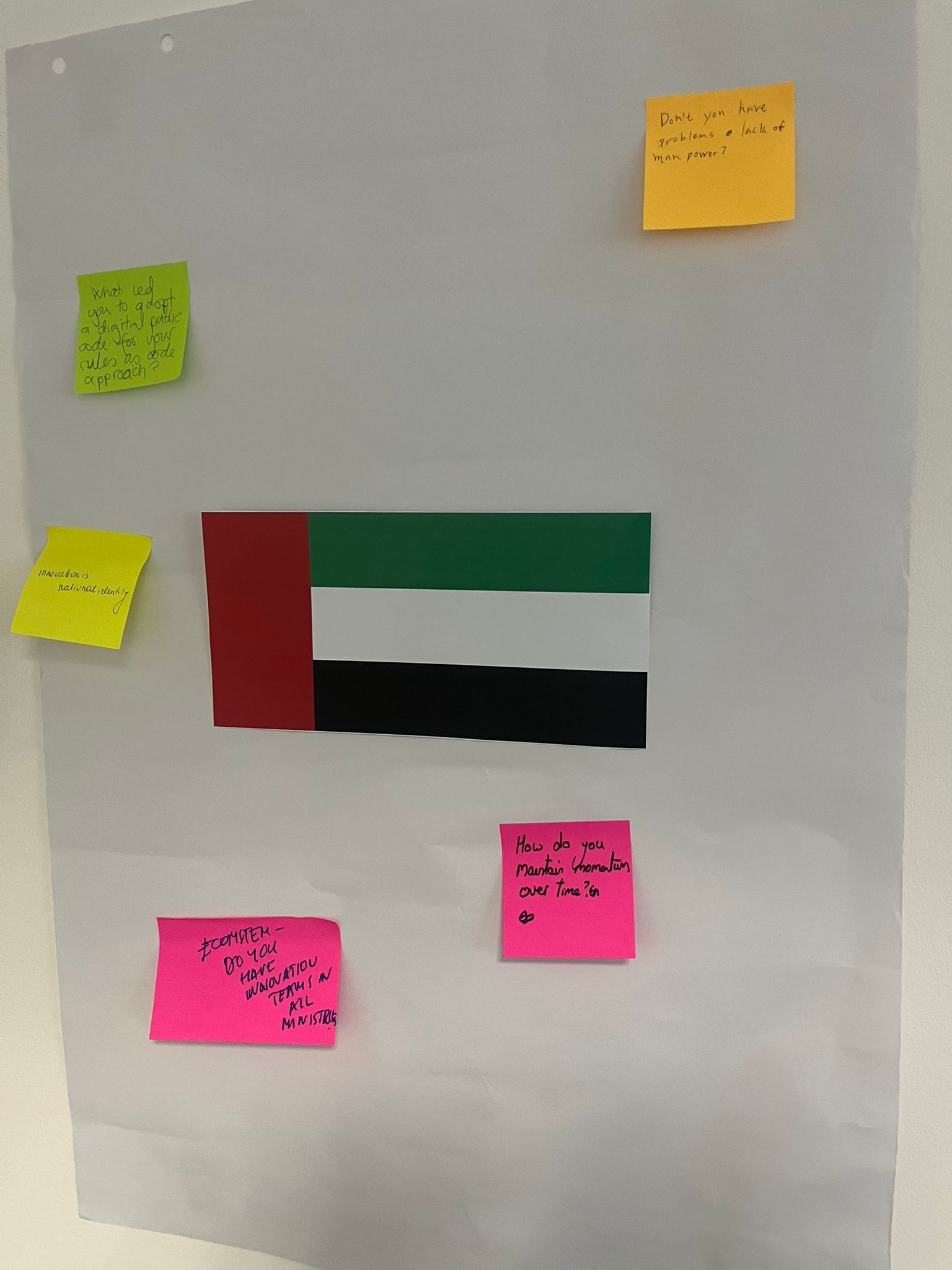
This will be partly achieved by working with local and international partners to answer bold questions.
As an example, Tahlak cited a collaboration with a Spanish design studio to answer the question: “Can people with Alzheimer’s and Dementia help to write the history of the UAE”.
The Spanish startup developed a methodology called “synthetic memories”, which uses Generative AI (GenAI) to help people visually reconstruct their personal memories.
The Centre homed in on this example at the World Government Summit, giving people in the Emirati government an opportunity to engage with the people behind the case study.
Beyond surfacing these examples, there was work to be done in adapting many of these solutions to a UAE context.
“One of the challenges we face”, said Tahlak, “was that off-the-shelf commercial large language models (LLMs) struggled with the UAE context, because they are trained on language and images from the Global North”.
This was a familiar challenge for governments and private users of AI around the world.
“They struggle to understand our landscape, our clothes, our cultural references” she added.
In the context of synthetic memories, the Centre has had “to reach out to archives and independent photographers, engaging with them and creating partnerships for them to donate their images to this project”, Tahlak noted.
Just as a shiny frontend of a product may hide a complex backend, so too does the final use case of synthetic memories require a huge amount of work to set it up for success.
In reaching out to these archivists, the team discovered “an even deeper challenge, how scarce archival footage is in our region”.
In the end, to recreate the “synethetic memories” project in the UAE, “we also had to redesign clinical and interview protocols with our team at the hospital to fit our health authorities, rules and procedures”, as well as accounting for ethical and cultural sensitivities.
Scaling any innovative project then, and by extension a culture of innovation, is really “an intensive back and forth conversation”.
It is clear that the Centre’s team has learnt how to localise innovation – through process changes, mindset shifts, and adapting products – through a decade of iteration.
They are now ready to share this roadmap with the world.
“Imagine a government that works with the agility of a startup, the foresight of think tanks, and has the inclusiveness of a community-driven initiative”, Tahlak said. That’s the vision of the UAE.
Just as the countries in the room at GovMesh were facing common challenges, the UAE’s hope is that together they can find common solutions too.