
How Malaysia’s R&D centre (MIMOS) supports the government to land its AI ambitions
By Valeryn Liaw
Malaysia's national Applied Research and Development Centre (MIMOS)’ approach is to translate R&D into practical solutions that can serve government, industry and the public for today’s needs and those expected in the years ahead, shares its group CTO Dr Zulaikha Kadim.
-1789091131617.jpg)
Malaysia's national Applied Research and Development Centre (MIMOS)' group CTO Dr Zulaikha Kadim. Image: MIMOS
A successful proof of concept (POC) doesn’t necessarily translate into a practical solution addressing people’s needs.
Between the first prototype and its actual application sits research and development (R&D), procurement, institutional workflows and talent capability, where Malaysia’s national Applied Research and Development Centre (MIMOS) sees its supporting role.
As Malaysia advances its National Artificial Intelligence (AI) Action Plan 2026-2030, MIMOS supports the Ministry of Science, Technology and Innovation (MOSTI) by convening the government, private sector and universities to move emerging research towards adoption.
“Public institutions are becoming more aware of what technology can actually do for their operational needs, rather than viewing technology adoption simply as an infrastructure exercise,” MIMOS Group Chief Technology Officer (CTO), Dr Zulaikha Kadim, shares with GovInsider.
“MIMOS’ approach is to translate R&D into technologies that can serve government, industry and the public, both for today’s needs and those expected in the years ahead,” she adds.
That is reflected in the technologies MIMOS has developed, including AI for deepfake detection, blockchain, and quantum innovation.
One example is Mi-MUALLIM, developed with the Ministry of Home Affairs (KDN) to support Quranic content verification.
Rather than replacing scholars and operators altogether, the AI provides initial suggestions before human experts conduct the final verification.
“This is intended to reduce time-consuming manual processes, with a target of cutting verification time by 60 to 70 per cent while improving accuracy,” Dr Zulaikha shares.
MIMOS is also developing an AI-powered deepfake detection engine for news and media factchecking, particularly as generative AI makes the manipulation and creation of digital content increasingly difficult to distinguish.
But getting technology to work is only the first step. The challenge lies in connecting research to the people and institutions using it.
Moving beyond R&D and prototypes
“Malaysia needs to strengthen the integration between fundamental research, applied research and industry deployment,” Dr Zulaikha emphasises.
“Universities and government research institutes may conduct fundamental research, while MIMOS works on applied research and technology development. Industry, meanwhile, understands the operational problems and requirements of the market.”
A promising use case can look very different in actual deployment.
A working AI system is only one checkpoint. “The biggest challenge in scaling AI in the public sector is defining the actual use case and problem that needs to be solved,” Dr Zulaikha shares.
“Moving from a POC into actual deployment remains difficult. This includes navigating the procurement process and ensuring that the solution can operate within the institution,” she adds.
As such, MIMOS sees both talent and technology readiness as critical.
Building talent and technology for institutional readiness
“Malaysia also cannot fully depend on foreign technologies, so developing technologies around the needs of Malaysian public institutions and testing them in real environments becomes part of building that readiness,” Dr Zulaikha says.
With that, MIMOS Academy has been working with agencies and ministries to provide upskilling in areas including AI, semiconductors and quantum, where the content is tailored to the day-to-day work of civil servants.
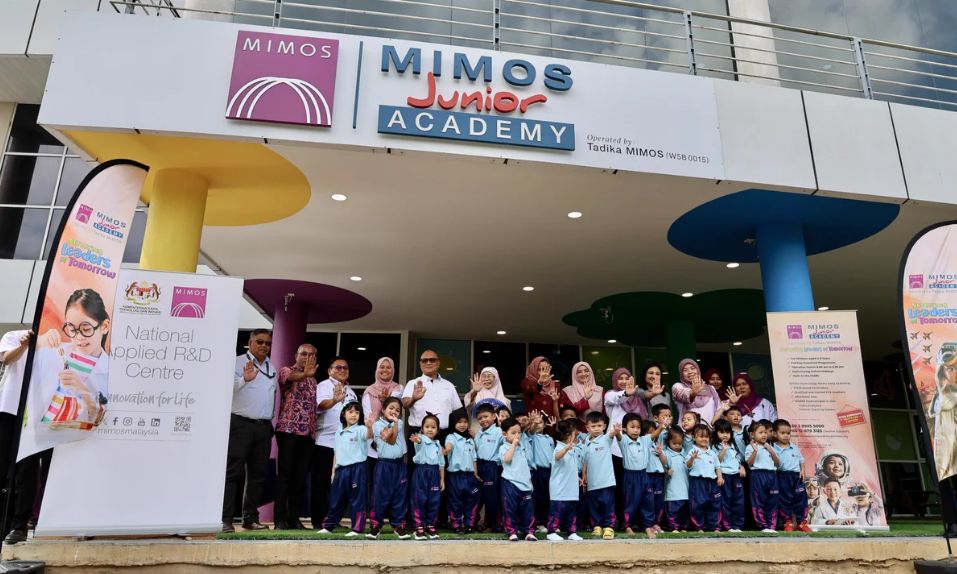
Beyond working professionals, MIMOS extends the initiatives to children through MIMOS Junior Academy, educating them about Science, Technology, Engineering, and Mathematics (STEM) through practical applications like video analytics.
The junior academy’s environment is also incorporated with the digital technologies developed by MIMOS, including AI-enabled attendance using facial and vehicle-plate recognition, as well as indoor positioning and tracking.
Wider deployment to other schools and kindergartens is planned, she says.
But technology adoption alone does not create readiness. Institutions also need the right skills, processes, and systems to integrate and use it effectively.
That is why MIMOS develops and tests solutions around specific operational needs.
“By understanding what the public sector and industries need, we are crafting the solutions based on that so that they can see how the technology is working in the actual environment before they are ready to use it in wide deployment.”