
How to land and scale a pilot in a Singapore public hospital
At the Healthcare InnoMatch 2026 event, healthcare leaders from NHG Health, SingHealth and NUHS share lessons to move siloed pilots within one unit of the hospital to a healthcare system-wide plan.
-1791192726837.jpg)
On October 2, the Centre for Health Innovation (CHI) announced six start-ups that will share up to S$3 million to pilot AI and workforce solutions with Singapore's three public healthcare clusters. Image: CHI
By now, we can say there is no lack of promising technologies and pilots in healthcare.
But public hospitals are still short of time and capacity to test the pilots, fit them into busy wards, and integrate them with existing systems.
This is the gap that this year's Healthcare InnoMatch 2026 startups is looking to close.
On October 2, the Centre for Health Innovation (CHI) announced six start-ups that will share up to S$3 million to pilot artificial intelligence (AI) and workforce solutions with Singapore's three public healthcare clusters.
The startups were selected from 220 applications across 38 countries, and judged by a panel comprising senior leaders and domain experts from the three clusters, Temasek Foundation, Ministry of Health (MOH) and national healthtech agency, Synapxe.
Beyond piloting in the hospital, the harder test is ensuring that healthcare workers use it and that the pilot can sustain and be integrated into operations.
As CHI Evaluation Office's Deputy Director, Elizabeth Martin, said in a presentation about how CHI evaluates innovations, "it's not just whether it works, but does it provide value and how it works."
The same day also saw healthcare leaders from the three clusters sharing what they have learned about scaling pilots.
Bring a real problem and an owner
Before a tech reaches the ward, "you must have a solution, you must have a problem, you must have an internal champion, and chemistry between the champion and the vendor," said Dr Ling Zheng Jye, Chief Medical Informatics Officer, National University Health System (NUHS).
The pilots are then rigorously filtered, as his team recognised that every pilot draws on the

healthcare worker's time that would otherwise go to patients.
He estimated the cost of the time loss to be almost S$100,000.
The remaining pilots go through the "greenhouse phase," as he called it, where NUHS commits to a six-month pilot with outcomes agreed by the vendor and problem owner.
The outcomes are measured and go into a report card that determines whether the pilot should be continued.
As the team is backing up as Singapore’s public healthcare system, he wants to be as transparent as possible with the vendor, he said.
“[The vendors] can do what they want with the report card. We are happy to stand by whatever we issue in that report card to them,” he explained.
Another lesson Dr Ling has picked up over the two decades of NUHS’ innovation work is that solutions cannot be inserted wholesale into the process, without first understanding the process.
He illustrated these lessons through the implementation of an AI-powered pharmacy counselling service.
It started with the team asking a question: “Why are we sending the highly trained person to explain what’s Panadol?”
Routine counselling for simple over-the-counter drugs takes around three to 20 minutes, he said, adding that the pharmacists, who were the problem owners, were receptive to adopting the solution.
The pilot started small, initially starting with 10 drugs.
The kiosk is equipped with a standard barcode scanner and a computer. Once patients scan their prescription, the AI-powered counselling commences.
After meeting safety milestones, NUHS expanded to 66 drugs across three pharmacies.
Moving forward, the team plans to expand coverage across NUHS' hospitals, expand coverage upstream before the medical consult, or avail it on the Health Hub app.
Bring back the joy and purpose in healthcare work
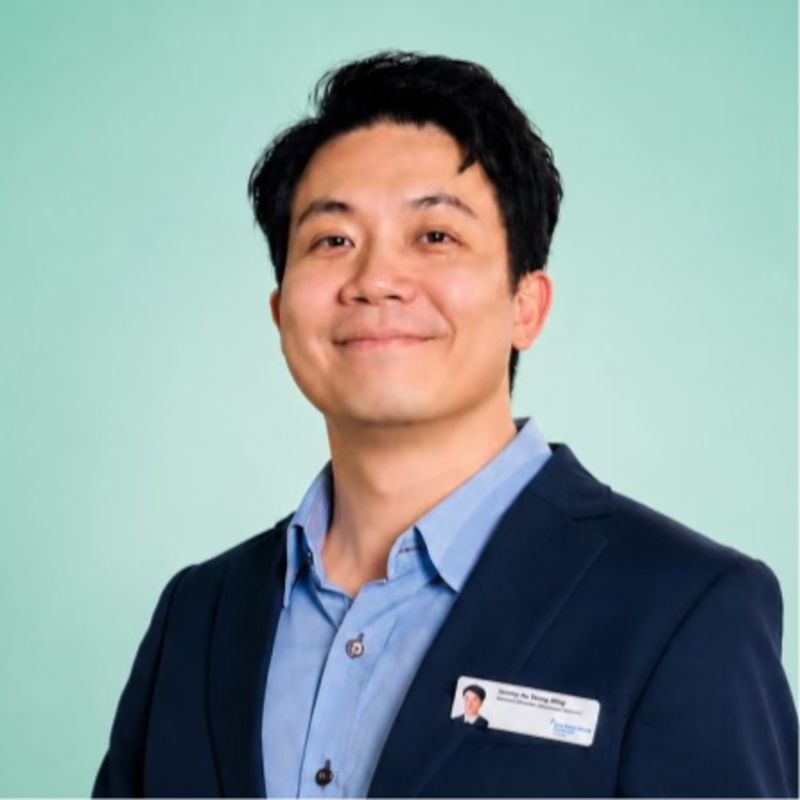
"A lot of time when we talk about smart ward, the first thing that comes to our head is technology," said James Ang, Assistant Director of Nursing, Tan Tock Seng Hospital (TTSH).
"We want to shift the question a little bit differently by asking: what should nurses be spending the time on?"
Having surveyed nurses across the NHG Health cluster, his team found that nurses spent about three hours a day on non-clinical work, which could be better used for patient-fronting care.
A bulk of this non-clinical work included bringing patients to scans and procedures, followed by administration, inventory, housekeeping, meals and IT equipment.
Over time, nurses became the "absorber" of every gap in the system.
"We are being known as how much we can absorb rather than what we can bring to the table," he said.
With this renewed framing of what innovation can bring to the table for healthcare workers, Ang said that instead of jumping straight into solutioning with tech, the first thing he did was to consult with both nurses on the ground and senior leaders on what they want out of the future healthcare system.
He highlighted three shifts: people first, technology second; empowering caregivers and patients to actively participate and manage their care; moving from reactive to anticipatory, more integrated and shared healthcare model.
The team aimed to achieve what Ang called a "strategic dualism" of both transformation and productivity.
On one hand, improving direct patient care and operational efficiency. On the other, returning time back to nurses to tend to their patients and reinvest the rest in the profession through new competencies.
NHG Health has also moved from siloed pilots within nursing to a healthcare system-wide plan.
Through its digital hospital steering community, the team identified four priority areas, namely wearable monitoring, smart portering, end-to-end mail process, and carer on board.
Each area is led by a chief nurse and a chief operating officer from a NHG Health hospital, "so that we make sure that whatever we design, we design with scale in mind."
The cluster has also reached out to Singhealth to understand their automation practices as they plan for campus transportation.
Plan for integration from day one
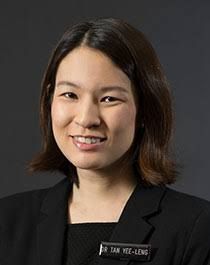
Dr Tan Yee Leng, a Senior Consultant in Neurology and Head of Ambulatory Services at the National Neuroscience Institute (NNI), reflected on what it takes to move an innovation from an idea to something scalable and sustainable that is adopted in routine care of her patients.
NeuroBrowser, an AI tool that reads electroencephalogram (EEG) recordings to flag seizures, has been through multiple layers of support since Dr Tan started working on it.
First came research funding and a startup partner, which was a spin-off from the Nanyang Technological University (NTU)'s neuroengineering lab.
Then came a test-bedding grant from the National Health Innovation Centre Singapore (NHIC), and the solution was piloted in TTSH and Singapore General Hospital (SGH) which showed good
results for clinical validation.
Finally came integration.
Getting the tool to fit the clinical workflows took SingHealth's OpsTech team, the CIO office, Synapxe's Innovation Capabilities Enablement (ICE) team, and Amazon Web Services (AWS), to clear IT security and cloud infrastructure constraints on what appeared to be a simple problem.
What lies ahead is additional licensing approvals from the Health Sciences Authority (HSA), as well as impact analysis of adoption thus far.
She gave two pieces of advice for innovation teams.
First, to think about how integration will happen at the beginning and involve the important stakeholders as early as possible; second, to not be afraid to pivot and keep smaller projects ongoing so something else moves when one project is killed.