
India’s Andhra Pradesh state uses data exchange to build a proactive government
The Indian state is connecting datasets across departments and layering AI onto its digital workflows as it seeks to anticipate problems, says its Secretary of Information Technology, Electronics & Communications (ITE&C), Bhaskar Katamneni.
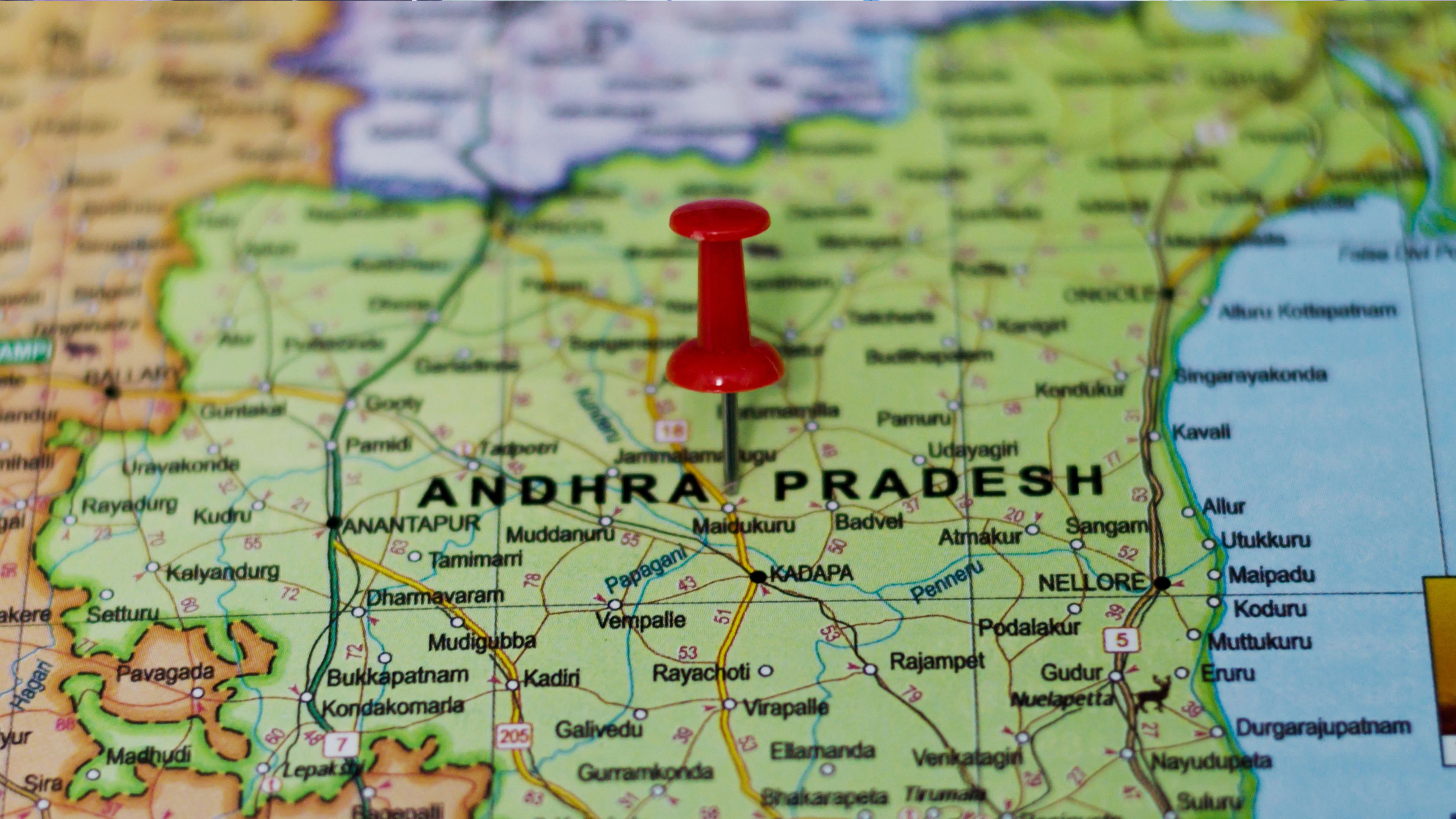
The state is using data on areas such as agriculture, education, health, demographics, social conditions and skills to build what Katamneni describes as "a 360-degree picture of citizens, families and communities." Image: Canva
Governments have spent years putting services online.
But Indian state Andhra Pradesh is taking digital government a step further: using data from across departments to anticipate problems and intervene before they become crises.
For the state government’s Secretary of Information Technology, Electronics & Communications (ITE&C), Bhaskar Katamneni, this is the essence of what the state calls real-time, proactive governance.
The approach involves connecting datasets across departments so officials can make decisions based on what is happening on the ground rather than relying solely on individual judgement.
“The decision should be based on what the reality in the world is,” Katamneni tells GovInsider.
The state is using data on areas such as agriculture, education, health, demographics, social conditions and skills to build what Katamneni describes as "a 360-degree picture of citizens, families and communities.”
The aim is not simply to collect more data, but to make different datasets “speak to each other” and turn them into actionable intelligence.
Using data to decide where public infrastructure is needed
The state's approach is being applied to physical infrastructure.
Katamneni describes a system in which different datasets can help determine where a new school should be located.
Population and demographic information can indicate where children are concentrated, while other

data can reveal whether an existing school is accessible to them.
A school may appear close by on a map, but a railway line or other physical barrier could make it difficult for children to reach.
The same principle can be applied to roads and bridges. Katamneni gave the example of goods travelling significantly farther than necessary to reach a market.
Data on traffic and the movement of goods can reveal that a village is sending its produce an additional 40 kilometres because a small stream prevents direct access to a nearby market.
That information can then become a decision point for departments responsible for roads and rural infrastructure.
With a limited budget, the government could use the data to identify where a bridge would have the greatest impact.
“If tomorrow I have 100 rupees available there, I should be effectively using that money to build a bridge there rather than wasting that money, putting up some other structure at some place where there are already two bridges available.”
This is where the value of data-driven governance lies: better allocation of public resources, rather than simply more digital services, he says.
From rainfall forecasts to protecting farm incomes
Agriculture provides another example of how this approach is being used.
According to Katamneni, government departments can identify at a micro level where rainfall deficits are expected, which crops and areas are likely to be affected and the anticipated extent of the deficit.
That information allows departments to prepare in advance rather than wait for the consequences of drought.
Ahead of the current season, he says, some areas have adopted natural farming practices and used pelletised seeds and drought-resistant crop varieties that can grow with limited rainfall.
The objective is not necessarily to maximise agricultural output under difficult conditions, but to protect livelihoods.
Even when crops cannot produce a full harvest, the approach can ensure sufficient green fodder for livestock, helping protect farmers' income during periods of low rainfall.
For Katamneni, this is the difference between responding to a problem and anticipating it.
“That is what we call real-time governance or proactive governance.”
The approach extends beyond agriculture. In education, for instance, officials can potentially identify students at risk of dropping out by combining information such as attendance, family’s financial circumstances, and illnesses within the household.
The objective is to enable more personalised intervention before a student leaves school.
70 per cent of services now delivered digitally
Andhra Pradesh is measuring its digital transformation through citizen access to services.
Katamneni says around 70 per cent of government services in the state are currently delivered digitally, without requiring a physical interface.
The state's target is to reach 90 per cent.
The remaining 30 per cent includes services accessed through citizen-service kiosks and village and ward secretariats.
Smartphone access remains one barrier. Katamneni estimates that around 80 per cent of the remaining cases involved people who do not have access to a smartphone.
But the state is also trying to address the digital divide through its Gram/Ward Sachivalayam network, which are decentralised, local government facilities with staff to help citizens access the administration’s services.
The service itself remains digital, while the physical interface simply helps people who may not have the technology or confidence to navigate it themselves.
The state also uses WhatsApp and departmental applications to deliver services.
The ambition, Katamneni says, is for citizens to receive government services on their phones with the same ease with which they order goods online.
Data sharing remains a work in progress
Building such an integrated system, however, has not been straightforward.
One challenge is institutional ownership of data. “Everybody feels that they are the custodians of the data. They will not share with others.”
Andhra Pradesh has established a framework and is creating a data lake through which datasets from different departments can flow.
But Katamneni acknowledges that getting departments to share data seamlessly remains a work in progress.
The challenge, he says, is less about departments themselves and more about individual attitudes towards technology and change.
This is particularly relevant as governments increasingly attempt to integrate artificial intelligence (AI) into public administration.
AI is becoming the next layer
The Andhra Pradesh state is working to apply AI to the datasets it has already accumulated, with the aim of identifying relationships and patterns that may not be obvious through conventional analysis.
Katamneni sees AI’s usage potential to identify less obvious factors contributing to health and education outcomes.
Currently, AI is incorporated into the government's electronic workflow system, he says.
An AI assistant is being layered onto this system to analyse incoming requests, examine legal precedents and budgets, suggest possible courses of action and generate draft orders.
Public officials retain the ultimate decision-making authority, says Katamneni.
From government data to new products
Katamneni also sees value in making appropriately governed datasets available beyond government.
His argument is that public data could become an input for businesses and startups to develop new products and services, provided that privacy, security, and other safeguards are maintained.
Road accident data, for example, could potentially help an insurance company develop new products based on driving risk.
Similarly, information about healthy lifestyles could potentially contribute to new insurance models.
The broader principle is that data can create economic value beyond its original administrative purpose.
“Data is today’s wealth,” he points out, highlighting the potential value of a dataset to not be limited to how it’s used internally, but how it can support innovation and create new services.
Breaking down digital silos
For other governments looking to learn from Andhra Pradesh's experience, Katamneni has a straightforward recommendation: don't build more silos.
“Create an architecture in which you're not creating silos, but all the data sets speak to each other, particularly in the age of AI.”
Interoperability, he argues, becomes even more important as governments adopt AI because the quality and usefulness of AI analysis depend heavily on the data available to it.
His vision extends beyond government departments.
With safety protocols, data should also be accessible to startups, companies, and other innovators so that they can build products and services on top of the infrastructure.
The next phase: from digitisation to intelligence
Andhra Pradesh's digital government journey is moving beyond simply putting services online.
The state is re-engineering business processes, reducing unnecessary data inputs, digitising workflows and connecting datasets before applying AI to them.
For citizens, the impact is intended to be visible in simpler services.
Katamneni points to examples such as examination results and marksheets being delivered directly to students' phones through WhatsApp and mobile services, eliminating the need to visit schools or government offices.
The larger ambition is to make government interaction increasingly invisible: citizens should not need to understand which department, database or technology sits behind a service.
The next phase, however, will depend on whether the state can successfully connect its datasets, overcome institutional barriers to data sharing and ensure that AI enhances rather than replaces accountable human decision-making.
For Katamneni, digital government should not merely digitise existing processes. It should use data to make better decisions and anticipate citizens' needs.
Andhra Pradesh's experiment suggests that the next frontier of digital public infrastructure (DPI) may therefore be less about how many services a government puts online—and more about how intelligently the government can use the information it already has.
You can read our other India's digital goverment stories here in our Global Digital Government Directory.