
Indonesia and Saudi Arabia advance Hajj services through cross-border interoperability
Cross-border data interoperability between Indonesia and Saudi Arabia aims to ensure data validity and improve the governance of Hajj administration.
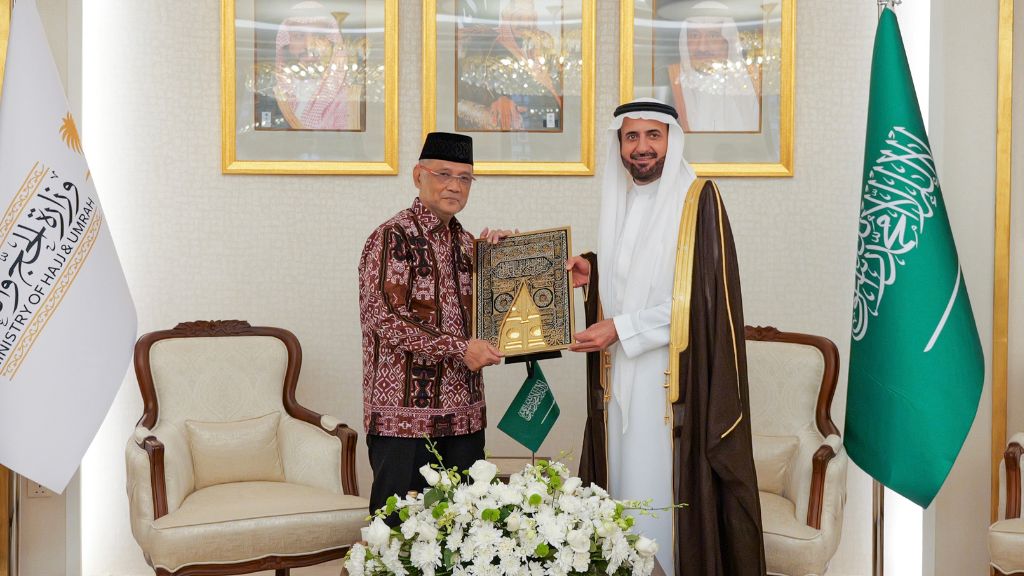
The Ministry of Hajj and Umrah of Indonesia is advancing data interoperability with the Kingdom of Saudi Arabia to streamline validation processes and improve services for Hajj pilgrims. Image: Ministry of Hajj and Umrah of the Republic of Indonesia.
Indonesian and Saudi authorities are linking their digital platforms to streamline and improve services for Indonesian pilgrims who go on Hajj pilgrimage.
At the Saudi Arabia-Indonesia Umrah Co-Exchange forum in Mecca, Saudi Arabia, on February 16, Indonesia’s Minister of Hajj and Umrah, Mochamad Irfan, announced the integration of both Indonesia’s official Hajj management system, SISKOHAT, and Saudi Arabia’s Nusuk.
The integration enables pilgrim data from SISKOHAT to connect in real-time with the Saudi system. This will make it easier and quicker for Indonesians to get their visas, validate their identities, and apply for Hajj permits, while minimising data duplication.
According to an official release, Irfan noted the integration goes beyond technological modernisation, to ensure the Indonesian traveller’s safety and comfort during pilgrimmage.
"Every process, from visas and accommodation to healthcare services and return travel, can now be comprehensively monitored and protected,” he explained.
He described integration as a major step towards a more efficient, integrated, and data-driven Hajj service ecosystem.
This would reduce the administrative errors, improve departure management, and ensure accurate tracking of pilgrims upon arrival in Saudi Arabia, he added.
Addressing longstanding challenges
As the country with the largest Hajj quota in the world (more than 200,000 pilgrims departing each year), Indonesia needed to develop systems that were reliable, efficient, and compliant with the strict verification standards set by the Saudi authorities.

Indonesia’s Ministry of Hajj and Umrah’s Head of the Centre for Data and Information Technology, Farosa, said that real-time validation with Saudi systems would address longstanding issues such as visa delays and data discrepancies, as well as support smoother service delivery.
Since October 2025, technical teams have conducted staged integration checks, including cyber security reviews, system mapping, and secure certificate exchanges.
By January this year, SISKOHAT and Nusuk were declared securely connected and operational.
Farosa emphasised that the system development adhered to national data protection and cyber security principles.
“Data can only be accessed by authorised parties, and was protected during transmission, and recorded accountably within the system,” he said.
Currently, the integration supports visa processing for Hajj pilgrims. Data was transferred automatically from SISKOHAT to Nusuk without manual intervention, accelerating services, and improving data consistency.
In future phases, integration will expand to support pilgrim grouping and packaging, arrival and departure processes, service contract management, and Umrah services.
“This integration lays the foundation for future digital Hajj services, ensuring all service stages are connected within a reliable and sustainable data ecosystem,” Farosa added.
Strengthening transparency and risk management
At the bilateral forum, Minister Irfan highlighted the integration as a gateway to greater transparency in Hajj management between the two countries.
“This concerns transparency in the quotas granted by Saudi Arabia to each country, including the management of hotel contracts and pilgrim services,” he said.
During the Hajj season last year, thousands of Indonesian pilgrims were unable to depart due to visas not being issued by the Saudi government, resulting in financial losses related to hotel contracts and airline seats.
Indonesia has proposed greater flexibility in visa replacement mechanisms for pilgrims who cancel their departure to prevent quotas from being forfeited.
“Every quota represents the rights of the faithful. We hope there can be a flexible mechanism up to the eve of departure so that slots are not wasted,” Irfan said, adding that Indonesia remained committed to supporting Saudi Arabia’s Hajj modernisation efforts under the Saudi Vision 2030 programme.
Health data interoperability
Beyond pilgrim administration, Indonesia and Saudi Arabia already have data interoperability in healthcare services for Hajj pilgrims.
Since 2024, Indonesian Ministry of Health has implemented the Hajj Pilgrim Health Card (KKJH), containing digital medical records based on the World Health Organisation (WHO)’s International Patient Summary (IPS) standard.
The data could be accessed directly by medical personnel in Saudi Arabia via QR code, without requiring a specific application.
The embedded data includes demographic details, vaccination status, medical history, medications, and allergies.
When scanned by healthcare workers in Saudi’s medical facilities, the information enables faster and more accurate treatment decisions, eliminating the need to start examinations from scratch.
To date, Indonesia and Malaysia have pioneered in large-scale, cross-border health data interoperability.
Their systems support local health authorities in monitoring pilgrims’ fitness before departure. If a pilgrim is deemed medically unfit to travel, the departure can be postponed or transferred to another family member.