
Indonesia creates public service innovation from citizens’ voices
Through the Public Service Innovation Booster, the Indonesian government is promoting a new approach to ensure that innovation is truly grounded in the needs and lived experiences of citizens.
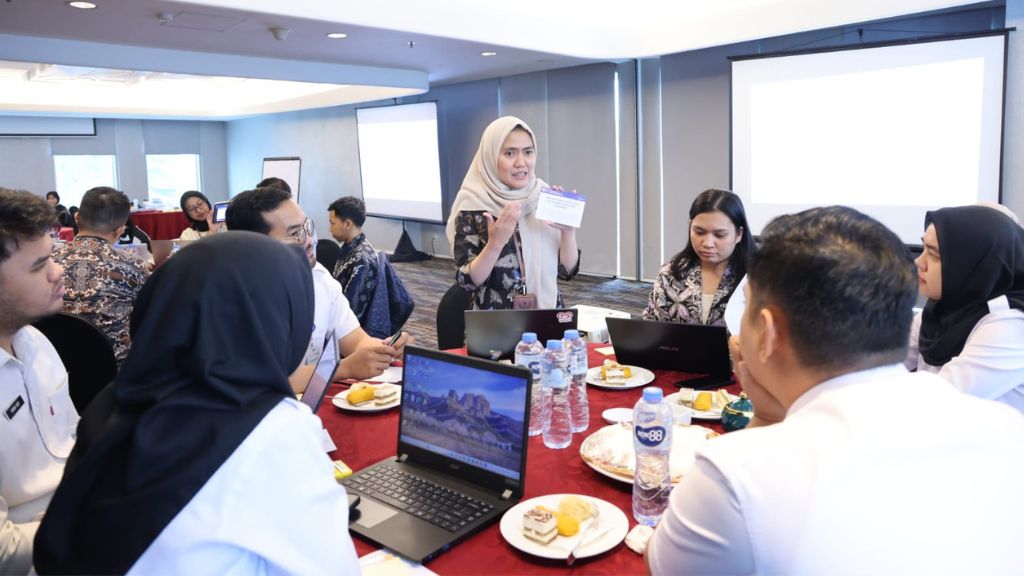
Kementerian PANRB piloted the Public Service Innovation Booster to drive simpler, more inclusive, and citizen-centred public service innovation. Image: Ministry of PANRB
Over the past few decades, innovation has become an integral part of the public sector.
Its impact extends beyond individuals or communities, driving systemic transformation in how governments operate and deliver services.
As such, building a culture of innovation in the public sector is no longer optional, but essential to delivering higher-quality services.
In Indonesia, efforts to promote public sector innovation began in 2013 through the One Agency One Innovation (OAOI) movement, introduced by former Vice Minister for Administrative and Bureaucratic Reform (PANRB) from 2011 to 2014, Eko Prasojo.
Inspired by the One Village One Product (OVOP) movement in Oita Prefecture, Japan – popularised in the 1970s, each government agency was encouraged to produce at least one innovation annually.
To institutionalise the culture in Indonesia, the government launched the Public Service Innovation Competition (Kompetisi Inovasi Pelayanan Publik/KIPP) in 2014.
Since its inception, KIPP has attracted more than 29,000 innovations, with 1,338 recognised as Top Public Service Innovations, and nearly 300 replicated across government institutions.
These achievements reflected Indonesia’s commitment not only to generate new innovations, but also to building an ecosystem for scaling and adoption across the public sector.
As the paradigm of human-centred public services continues to evolve, expectations around the quality of innovation have also risen.
Innovations emerging from bureaucracy are increasingly expected to be rooted in the real needs and lived experiences of citizens.
These innovations are no longer judged solely by numbers or awards, but whether they make a tangible difference in people’s daily lives.
Implementing the Public Service Innovation Booster
The Indonesian government took a strategic step by joining an international collaboration facilitated by the OECD, alongside nine other countries including Brazil, Australia, and Japan.
The initiative aims to develop a practical tool to help civil servants design innovations that are grounded in citizens’ real needs, later rebranded as the Public Service Innovation Booster.
The Booster is designed as a practical guide that can be readily used by government agencies.
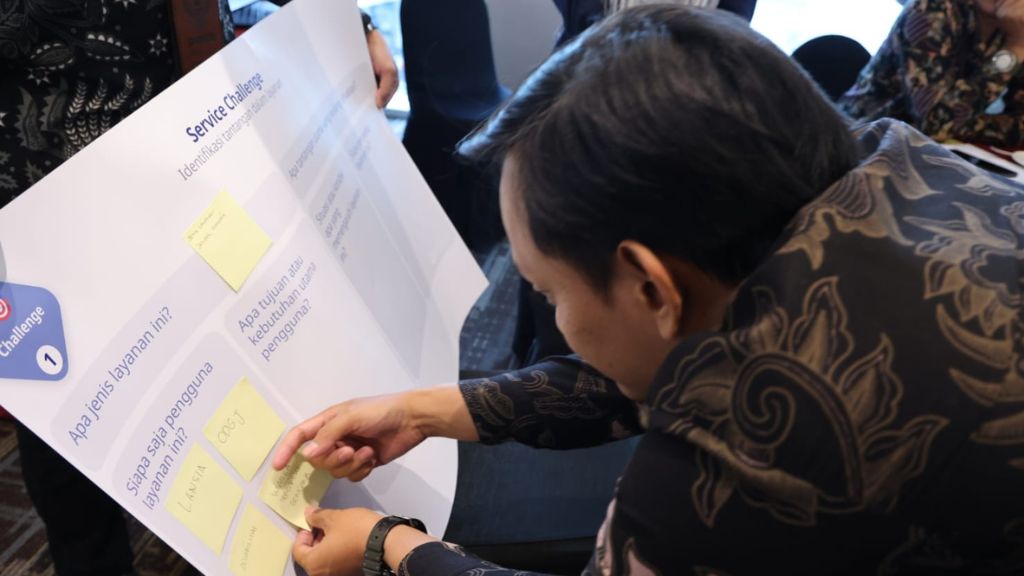
It consists of seven structured yet flexible steps, beginning with defining challenges and directly engaging service users, followed by understanding user experiences, reframing problems, developing ideas, testing solutions, and communicating outcomes.
Each stage is supported by practical tools and ready-to-use templates, making it accessible without requiring specialised expertise.
Before its official rollout, the Booster was piloted across participating countries to ensure its applicability and relevance.
In Indonesia, the Ministry of PANRB not only translated the tool linguistically but also adapted it contextually.
The steps were reframed into guiding questions to encourage reflection, ensuring participants were not merely following a process, but actively thinking through each stage.
The pilot involved participants from across different levels of government – from local districts and provinces to national ministries and agencies – and demonstrated a notable shift in approach.
Lessons from the pilot
The pilot sessions generated several important insights.
1. Adopting a problem first approach
Initially, many participants tended to jump straight to solutions.
However, through the Booster’s facilitation, they were guided back to fundamental questions: who are the users, what do they need, and what challenges truly need to be addressed?
Participants noted that the Booster helped them reframe from service challenges from the perspective of citizens.
Post-pilot surveys also showed strong positive feedback, with participants rating the Booster 4.5 out of 5 for improving understanding of service challenges and users, and 10 out of 10 for their interest in progressing to the next stages.

2. Taking on a citizen-centred perspective
These findings suggest that the Booster functions not only as a tool, but also as an approach that can shift mindsets within the public sector towards more citizen-centred innovation.
This aligns with the view of PANRB’s Assistant Deputy for Public Participation Empowerment, Insan Fahmi, who believes the Booster is effective in opening new perspectives on public services.
According to him, even small shifts in mindset can lead to deeper engagement and sharper insights into citizens’ real needs.
3. Starting small and scaling
Going forward, the Indonesian government plans to integrate the Booster into the broader ecosystem of public service innovation development at the national level.
With a decade-long foundation of innovation culture already in place, the Booster represents the next layer in this journey – ensuring that innovation within the bureaucracy is not only abundant, but also truly meaningful for the citizens it serves.
-----------------------------------------------------
Teguh Budi Santoso and Fika Zaviera Remalia are both Policy Analysts at the Ministry of Administrative and Bureaucratic Reform (PANRB). Their work focuses on advancing human-centered public services, strengthening public service innovation, citizen engagement, accessibility and inclusion, as well as data-driven evaluation across national and subnational governments.