
Indonesia launches ‘elderly schools’ to keep older adults healthy and happy
The government has proactively introduced sekolah lansia (elderly schools) to address the country's demographic shift towards an ageing population, focusing on keeping older adults healthy, active, and empowered with dignity in their later years.
-1765204241807.jpg)
The Elderly School Programme designed to maintain the physical, mental, and social wellbeing of older adults, ensuring they continue to find purpose and meaning in society. Image: Ministry of Population and Family Development/BKKBN
As the country undergoes demographic change, the perception of older people is evolving. The long-standing stigma of the elderly as unproductive and dependent is fading, replaced by a view that they are capable and valuable contributors.
“The government no longer sees them as a vulnerable group, but as an important asset that can strengthen family and community resilience,” said Ministry of Population and Family Development (Kemendukbangga)/the National Population and Family Planning Agency’s (BKKBN) Director of Family Resilience for the Elderly and Vulnerable Groups, Puji Prihatiningsih, to GovInsider.
“Ageing is part of the life cycle. Family development cannot stop at toddlers or adolescents, but also how we empower older adults so they can live happily and with dignity,” she adds.
To support this vision, Kemendukbangga/BKKBN established the “elderly schools” programme, a non-formal education initiative designed to maintain the physical, mental, and social wellbeing of older adults, ensuring they continue to find purpose and meaning in society.
Launched in 2021, the programme has reached 23,217 participants as of November 2025, nearing the national target of 24,000 participants by the end of this year.
The ministry, supported by Indonesian local governments, has also developed 2,122 elderly school facilities across all provinces in Indonesia.
To make the elders stay healthy and happy
According to Puji, the elderly school programme was created to respond to two main challenges.
First is the growing need for active engagement. Due to increased life expectancy, the number of independent older adults who remain physically and socially active is rising.
Indonesia now has the largest elderly demographic in Southeast Asia, with 30 million older persons, which is about 12 per cent of the total population, as reported by Indonesia Statistics Bureau (BPS) in 2024.
Second is the impact of loneliness on wellbeing.
A 2024 policy brief by Ministry-UNFPA Indonesia highlighted that loneliness significantly affects mental health, with 64.3 per cent of older adults reportedly experiencing depression.
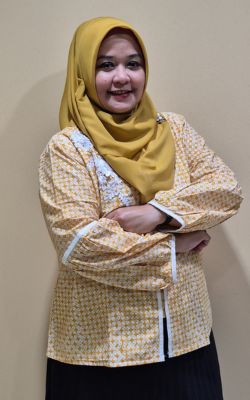
“Loneliness is real and it has major health consequences. Our goal is simple: helping the elderly stay healthy and happy,” Puji explains.
The programme is built on the concept of lifelong learning. Despite the term “school”, the approach does not mirror formal education systems. Instead, it operates on a community-based model.
The curriculum is based on the Seven Dimensions of a Resilient Elderly, developed in collaboration with academics and gerontology organisations. These dimensions cover spiritual, physical, intellectual, sociocultural, vocational, emotional, and environmental wellbeing.
Learning is introduced gradually, starting with self-acceptance in ageing and strengthening family roles, and progressing to enabling active participation in community activities.
The programme is divided into three levels: Standard 1, Standard 2, and Standard 3, consisting of 12 sessions spread over six or twelve months.
“All sessions are designed to be light and enjoyable because we want them to go home feeling healthier and more appreciated,” she adds.
Upon completion, participants attend a ceremony similar to formal education.
“These graduation moments are often emotional, especially for older adults who only completed primary school and never had the chance to pursue higher education.
“The presence of their families, children, and grandchildren makes it even more meaningful,” she says.
Enrollment is not automatic. Prospective participants must undergo an Activities of Daily Living (ADL) assessment to determine their level of independence.
Those found to have moderate, severe, or total dependency are directed to Long-Term Care (PJP) support, ensuring comprehensive care beyond just social or learning activities.
To subscribe to the GovInsider bulletin, click here.
Economic and social empowerment through collaboration
Puji emphasises that the elderly schools focus not only on knowledge enhancement or social activities, but also on economic empowerment.
“To achieve these goals, collaboration is essential.”
Kemendukbangga/BKKBN works with the Ministry of Manpower to provide vocational and productivity training, as well as entrepreneurship development, to elderly school participants.
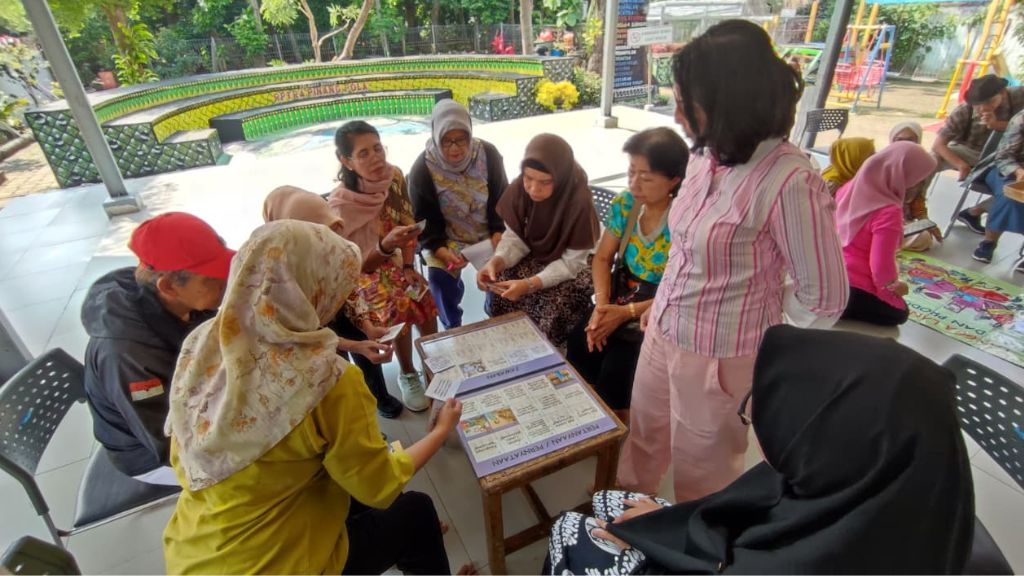
As of November 2025, 619 elderly students have participated in formal training under the Ministry of Manpower.
“With longer life expectancy, older adults should be part of the demographic dividend. Not merely as objects, but as subjects of development,” Puji says.
Kemendukbangga/BKKBN has also partnered with the Ministry of Communication and Digital to improve digital literacy among older adults, especially those selling through digital platforms, to help them avoid online scams.
Collaboration with local and regional governments has also significantly supported programme growth. East Java Province, for instance, now has 472 Elderly Schools and is one of the fastest-expanding provinces.
In West Java Province, the Melati Elderly School in Cilengkrang Subdistrict, Bandung, has become a centre for producing recycled plastic craft products sold nationwide.
She adds that working with universities also contributes to strengthening policy design and curriculum development.
The programme further opens space for collaboration with local communities, including elderly groups, to ensure implementation remains adaptive to local needs.
“The curriculum is centrally designed, but learning methods can be adapted according to the needs of each elderly school,” she notes.
Implementation challenges
Despite its rapid progress, Puji acknowledges that several challenges must be addressed to ensure long-term effectiveness.
First, the limited number of field officers, who must divide their time across multiple target groups, from toddlers to the elderly.
The ideal ratio of one officer for every two villages has yet to be met.
Second, budgetary support remains uneven. As a community-based programme, the long-term sustainability of elderly schools relies heavily on the varied commitment and priorities of local governments.
Third, many areas still lack elderly-friendly learning facilities.
Fourth, broader cross-ministerial support is required to ensure elderly issues are integrated into national development agendas.
Looking ahead, Kemendukbangga/BKKBN is preparing several strategies to strengthen the elderly policy ecosystem in collaboration with ministries, agencies, and partners.
One of these includes issuing a national elderly ID to facilitate access to public services such as healthcare, social protection, and financial support.
The ministry has also proposed utilising the state’s fund transfers budget to support capital provision and entrepreneurship programmes for elderly business owners at the village level.
Partnerships with non-governmental organisations will also be expanded to ensure greater inclusion.
Puji also hopes that more elderly ambassadors will be recruited from programme alumni to mobilise local communities and make the programme sustainable at the grassroots level.