
Indonesia rolls out CONNECTIDN to provide single sign-on for civil servants
CONNECTIDN has been developed by the country’s cybersecurity agency (BSSN) to simplify access to government systems by its employees while reducing security risks, says the Digital ID Gateway Service Centre (BLPID)’s head Imam Muhtahar.
Connect IDN, developed by Indonesia’s National Cyber Agency (BSSN) through the Digital ID Gateway Service Centre (BLPID), aims to simplify access to government-specific services for public sector employees. Image: Canva
The lack of a unified digital identity remains a major challenge for Indonesia’s public services.
With the country’s government digital systems expanding without integration, civil servants are now burdened with multiple credentials that are required to access various platforms.
To address this, the Digital ID Gateway Service Centre (BLPID) under Indonesia’s National Cyber and Crypto Agency (BSSN) has introduced CONNECTIDN, which serves as a gateway to streamline the national IDs while strengthening security.
Since its launch in October 2025, CONNECTIDN has been rolled out for public sector employees.
“Like a Google Account, with a single set of credentials [username and password], CONNECTIDN allows users to access multiple services easily,” says BLPID’s Head, Imam Muhtahar, to GovInsider.
CONNECTIDN acts as an identity broker and a mediator that connects digital service providers with identity providers.
This approach enables more integrated data exchange, enabling better security and efficiency, he adds.
Simplifying government service access
The complexity of accessing digital services has been a daily challenge for many civil servants.
Within a single organisation, an employee can have at least six different accounts for accessing core services. The complexity increases when factoring in cross-ministerial systems and interactions between central and local governments.
This complexity impacts efficiency and increases security risks. The more accounts users have, the more passwords they must manage, which raises the likelihood of vulnerabilities.
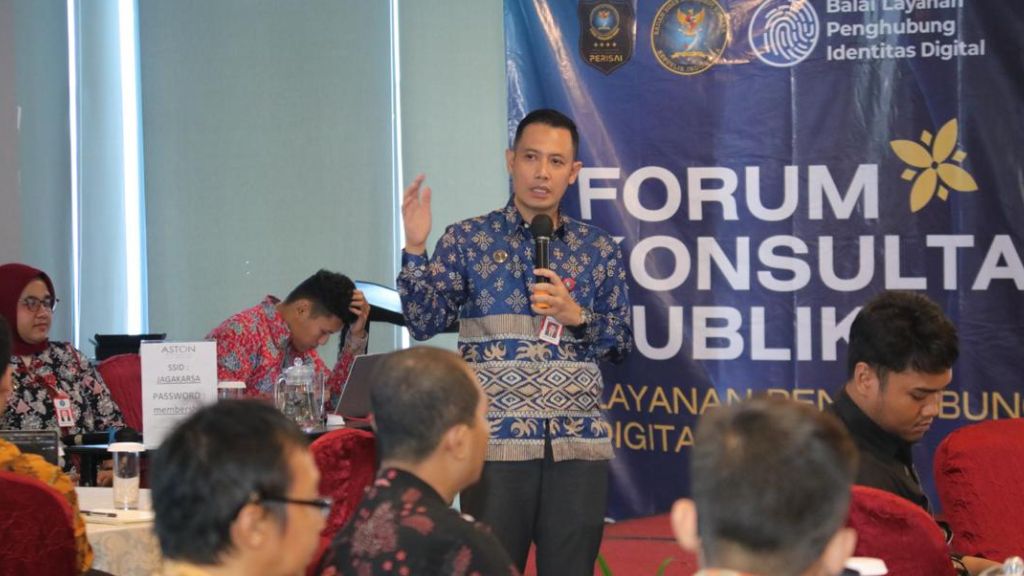
“CONNECTIDN will address this password fatigue – the burden of remembering multiple passwords – which often leads to weak or reused credentials,” says Muhtahar.
Several services have already been integrated, such as the HR systems for civil servants.
For example, the systems managed by the National Civil Service Agency (BKN), including the State Civil Apparatus Information System (SIASN) and mobile app for civil servants to manage HR matters (MyASN), are now integrated the National Institute of Public Administration (LAN)’s ASN Competency Development System (Sibangkom).
SIASN and MyASN are portals for managing employee profiles, performance monitoring, and other HR-related services, while Sibangkom provides access to digital training and learning programmes.
“Within just a few months, the impact has been clear. Helpdesk complaints have significantly decreased, and cases of forgotten passwords have been reduced,” he claims.
Building the foundation for digital trust
CONNECTIDN forms part of the broader efforts by BSSN to build a trusted digital ecosystem in Indonesia.
According to Muhtahar, every interaction in the digital space requires a reliable identity system, whether in government services, e-commerce, or private sector platforms.
All of these depend on the assurance that users are verifiable and legitimate.
“BSSN is working to foster a digital trust ecosystem so that people can have confidence that digital interactions and transactions are secure and accountable.”
To achieve this, CONNECTIDN adopts global approaches.
From a framework perspective, it draws on the European Union (EU)’s digital identity standard, eIDAS, while its system design is inspired by implementations in countries such as France, Italy, and Norway.
From a security standpoint, the system applies a Zero Trust Architecture approach, enabling early anomaly detection and faster, more coordinated responses to threats.
In addition, CONNECTIDN is aligned with Indonesia’s Personal Data Protection Law (PDP Law), which grants individuals greater control over their data, including the rights to access, correct, and withdraw consent.
Embracing the principle of minimum disclosure
Looking ahead, he emphasises that Connect IDN will adopt the key principle of minimum disclosure, sharing only the data strictly necessary for a given service, such as a user’s name or year of birth.
“Services do not need to know all user data, but only the relevant attributes,” he explains.
This approach aligns with the concept of zero-knowledge proof, which is increasingly being adopted globally.
The principle will be further strengthened through upcoming features such as ConnectWallet, which will allow users to manage their digital credentials independently, and ConnectSign to integrate digital signature services.
“Users will be able to see where their account is used, when, and for what purpose,” he adds.
From a technical perspective, CONNECTIDN uses a federated identity management approach, enabling a single identity to be used across multiple services while maintaining safeguards against misuse.
To enhance security, the system will incorporate multi-factor authentication (MFA), with plans to introduce passwordless passkey authentication in the future.
Despite positive results within government, BSSN is taking a cautious approach to expanding the service to the public because the agency wants to ensure the system is fully ready.
For now, BSSN is focused on expanding adoption across central and local government institutions, while building cross-sector partnerships with various identity providers.