
Indonesia to tap on ‘wellbeing economy’ to advance women's role in the digital economy
Policymakers and financial industry leaders highlighted a shift in how financial inclusion of women was being measured, from number of people connected to how financial inclusion helped them improve their wellbeing.
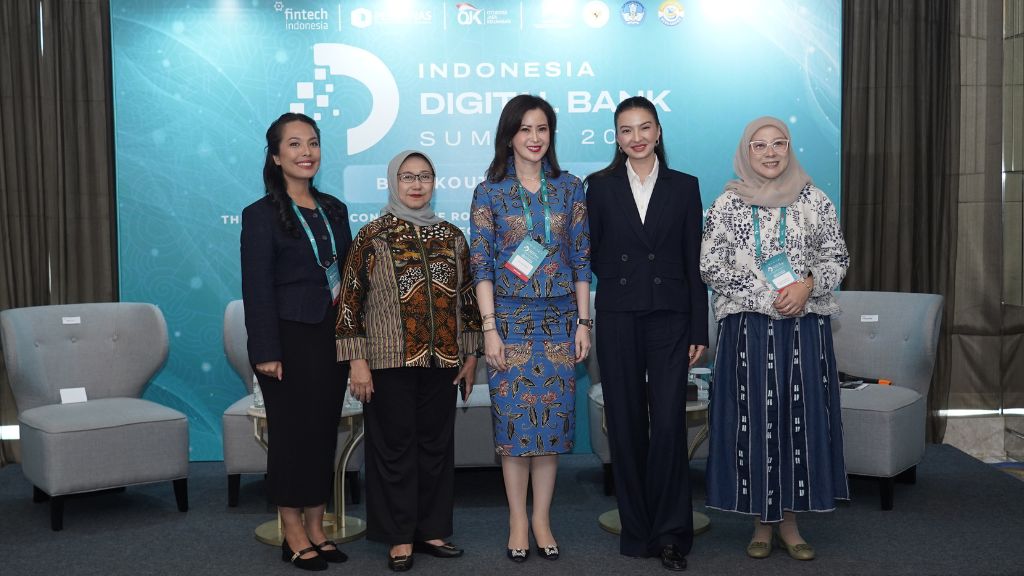
Women leaders emphasised the importance of advancing women's role in the digital economy through the wellbeing economy approach. Image: Indonesian Fintech Association (AFTECH)
Women account for around 64 per cent of Indonesia's micro, small and medium-sized enterprises (MSMEs).
Despite this impressive number, owning a bank account or digital wallet was no longer enough to conclude that financial inclusion of women has been a success.
The more important question was whether this access genuinely helped women make better economic decisions.
This was the focus of a panel titled The Wellbeing Economy: The Role of Women in Fintech for Economic Growth at the Indonesia Digital Bank Summit (IDBS) 2026 in Jakarta, on July 7.
The panel featured Ministry of National Development Planning (Bappenas)' Deputy for Economic Affairs and Digital Transformation Vivi Yulaswati; State Bank of Indonesia (BNI)'s Vice President Director Alexandra Askandar; Minister of Communication and Digital's Special Staff for Global Partnerships and Digital Education Raline Shah; and Indonesia’s investment and trading app Pluang’s Senior Manager Public Policy and Business Development Dessy Bonita.
The all-women panel was moderated by People Bank of Indonesia (BRI)'s Sharia Supervisory Board member, Elsa Febiola Aryanti.
Putting people at the centre of development
According to Bappenas' Yulaswati, the concept of a wellbeing economy offers a different perspective from conventional development approaches that focus solely on economic growth.
"We are not only pursuing economic growth but also ensuring that people have the capacity to take advantage of the opportunities available to improve their wellbeing," she said.
Placing people at the centre of development, the approach questions whether economic growth is genuinely delivering better lives, more equal opportunities, and more widely shared prosperity.
Within this framework, technology matters not because it connects people to services, but because it creates equal opportunities for everyone to thrive.
She added that when women have both access to and the ability to use financial services productively, the impact is felt not only by households but also across the national economy.
"Women's empowerment is not merely an equality agenda, but part of a strategy for more inclusive economic development," said Yulaswati.
She stressed that digital transformation does not automatically remove the structural barriers women continue to face, ranging from income inequality and disproportionate domestic responsibilities to low representation in leadership positions.
"Technology is only a tool. Its impact depends on how we build an inclusive ecosystem and provide equal opportunities for women," she said, adding that the government's strategy must move beyond infrastructure development and connectivity alone.
Earlier, GovInsider reported the importance of women entrepreneurs building strong networks, alongside access to technology and finance.
Banking as a growth partner
BNI's Askandar emphasised the financial sector's efforts to transform itself from a service provider into a long-term growth partner for customers.
According to her, women play a strategic role in Indonesia's economic growth, both as household financial managers and as business owners.
As such, digital financial services need to be designed to support women at every stage of their financial journey, from saving and accessing financing to expanding into new markets.
"Banks cannot stop at simply providing financing. We must be able to support businesses so they can grow sustainably," she said.
Askandar added that the future of the financial industry will not be defined solely by transactions, but also by strong financial ecosystems and customer trust.
To support that commitment, BNI has launched BNI Xpora, a programme that connects MSMEs with financing, business mentoring, international market access, and export opportunities.
BNI is also strengthening its digital transformation efforts through the Wondr by BNI application to deliver a simpler, more accessible, and integrated customer experience.
Digital literacy as the new infrastructure
Ministry of Communication and Digital's Shah highlighted the growth in digital access alongside emerging challenges such as fraud, data misuse, and the rise of illegal lending platforms.
As a result, she argued that digital literacy has become just as important as digital access itself.
"Digital literacy is not only about the ability to use technology, but also about understanding risks, protecting data security, and making informed decisions in the digital space," she said.
Through the ministry's National Digital Literacy Movement, which focuses on four pillars – digital skills, digital ethics, digital safety, and digital culture – the government aims to expand women's participation not only as technology users, but also as innovators, startup founders, and leaders in the digital sector.
"The more women are involved in digital innovation, the greater the impact on inclusive economic growth," she said, adding that the government continues to reach underserved groups, including women in remote areas and homemakers.
Pluang's Bonita added that fintech platforms also have an important role to play as education partners.
"Helping people understand investment risks and build healthy financial habits has become just as important as providing financial products," she said.