
Indonesia urges local governments to use tech to improve fiscal efficiency
In order to do more with less, Indonesia’s Home Affairs Minister Tito Karnavian underscored the importance of digitalisation by local administrations to foster efficiency and transparency.
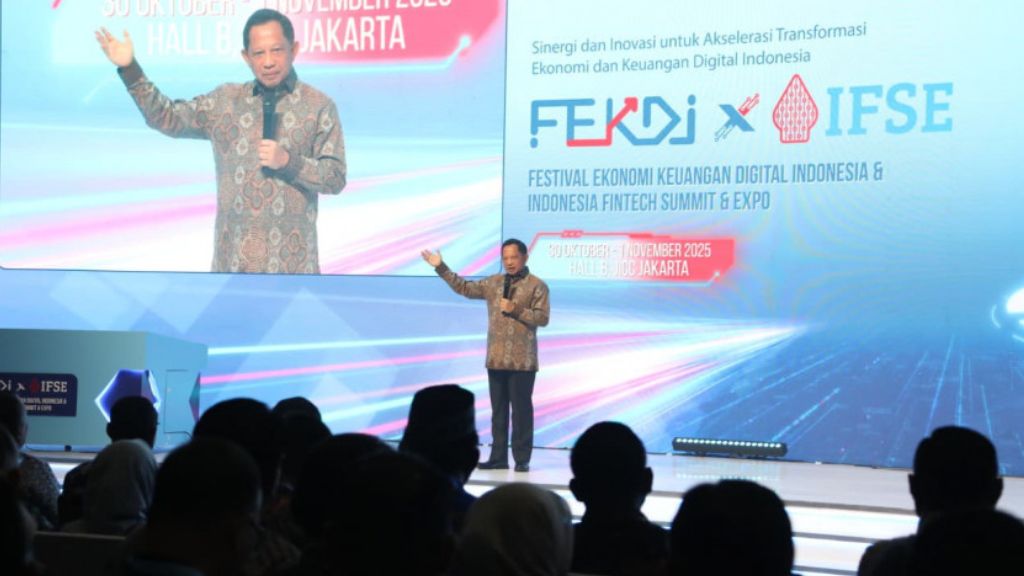
Indonesia’s Minister of Home Affairs, Tito Karnavian, said that digitalisation can make local government financial management more efficient and transparent. Image: Ministry of Home Affairs of Indonesia.
According to Indonesia’s Minister of Home Affairs, Tito Karnavian, local governments must adopt digitalisation to survive and grow due to the recent national policies aimed at fiscal tightening, referring to reduced central government fund transfers to local governments.
“Digitalisation will make local administration systems more transparent, including taxes, levies, and other public services, which will ultimately enhance revenue (PAD),” said Karnavian.
He made the remarks during his keynote address at the Indonesia Digital Economy and Finance Festival (FEKDI) and the Indonesia Fintech Summit and Expo (IFSE) 2025 held together at Jakarta on October 31.
The event was organised by the Coordinating Ministry for Economic Affairs, Central Bank of Indonesia (BI), and the Indonesia’s Financial Services Authority (OJK).
Addressing thousands of participants representing central and local governments, Karnavian pointed out that many local administrations were still operating with outdated mindsets when it came to managing public finances.
According to Karnavian, the reduction in central government transfers was often seen as a “budget cut,” when in fact they should be seen as an opportunity to improve spending efficiency.
In Indonesia, the local government budgets are jointly funded by both central and local governments, with varying proportions depending on the capacity and potential of each region.
“Don’t use old benchmarks for new circumstances. If you used to receive 100 and now it’s 60, don’t immediately say it’s lacking. When I examined regional accounts, I found spending on official travel, meetings, and maintenance to be excessive,” he shared with the audience.
Karnavian cited the experience of public servants during the Covid-19 pandemic who managed to keep operations running despite severe budget cuts.
“At that time, 75 per cent of civil servants worked from home, and office operations continued through digital platforms. What does that tell us? It could mean that our staffing expenses have indeed been too high,” he remarked.
Promoting regional financial transparency
Karnavian highlighted digitalisation as a powerful tool to optimise government revenue while enhancing transparency.
He pointed out potential leakages in tax and levy collection, such as restaurant, hotel, parking, and service charges, that are paid by the public but do not fully reach local government coffers.
“Take restaurant bills for example. There’s already a 10 per cent tax. That means the public has paid. The problem is, does that money reach the local treasury? I’m sure not all of it does,” he said.
To prevent such leakages, Karnavian urged local governments to adopt digital payment systems.
He cited Banyuwangi Regency as an example, where hotel and restaurant payment systems are directly connected to the local treasury through digital platforms, enabling real-time transactions without human intermediaries – a practice he said should be replicated elsewhere.
To subscribe to the GovInsider bulletin, click here.
Karnavian further suggested that the central government, particularly the central bank, could support this effort by developing a national standard system similar to QRIS (Quick Response Code Indonesian Standard), but tailored for local tax transactions.
“Imagine if regional tax collection worked like QRIS. With a single connected national system, we could monitor transactions in real time and ensure that tax money paid by the public truly goes into local treasuries,” he said.
He added that such a system would benefit everyone: local governments would gain more predictable and transparent revenues, citizens would not face new taxes, and central bank would strengthen the digital payment ecosystem at the local level.
Dukcapil services as the digital foundation
Karnavian explained that the foundation for government digitalisation already exists through the Population and Civil Registration (Dukcapil) system under the Ministry of Home Affairs.
The Dukcapil database now covers nearly 99 per cent of Indonesia’s population and has been utilised by both public institutions and private-sector entities.
“The Dukcapil database contains unique biometric identifiers, including fingerprint scans, iris recognition, and facial recognition. This data now forms the backbone of various verification systems for both public and commercial services,” he said.
More than a thousand digital entities and financial institutions, including FinTechs, e-commerce platforms, and banks, are now integrated with the Dukcapil verification system.
According to him, this proved that digitalisation was no longer a concept for the future but a reality that must be expanded to the local level.
Overcoming challenges through collaboration
Karnavian, however, acknowledged that accelerating local digitalisation still faced significant challenges.
The top challenge was interoperability, as many regional digital systems currently operate in silos without integration, creating inefficiencies rather than improving them.
Another challenge lays in digital literacy among local officials, ranging from application governance and technical skills to data security.
Karnavian added that these challenges could be overcome if the central government continuously supported local governments in implementing digital governance systems tailored to their local contexts.
He concluded his address on an optimistic note, stressing that regional digitalisation is not merely a technological issue but a matter of collective spirit.
“Collaboration between central and local governments is a win-win solution: stronger regions, prosperous citizens, and a more resilient nation in the digital era.”