
Indonesian government’s new smart city playbook to put citizens over tech
By Yuniar A.
Indonesia's local government leaders said digital transformation should integrate services, data and communities to solve local problems and deliver more tangible benefits to citizens.
In building smart cities, local government leaders are placing greater emphasis on the impact on communities rather than on technology. Image: Jakarta Smart City
Indonesia’s local government officials are redefining the impact of a smart city, shifting the measure of success from the number of applications deployed to tangible improvements in public service delivery at the local village level.
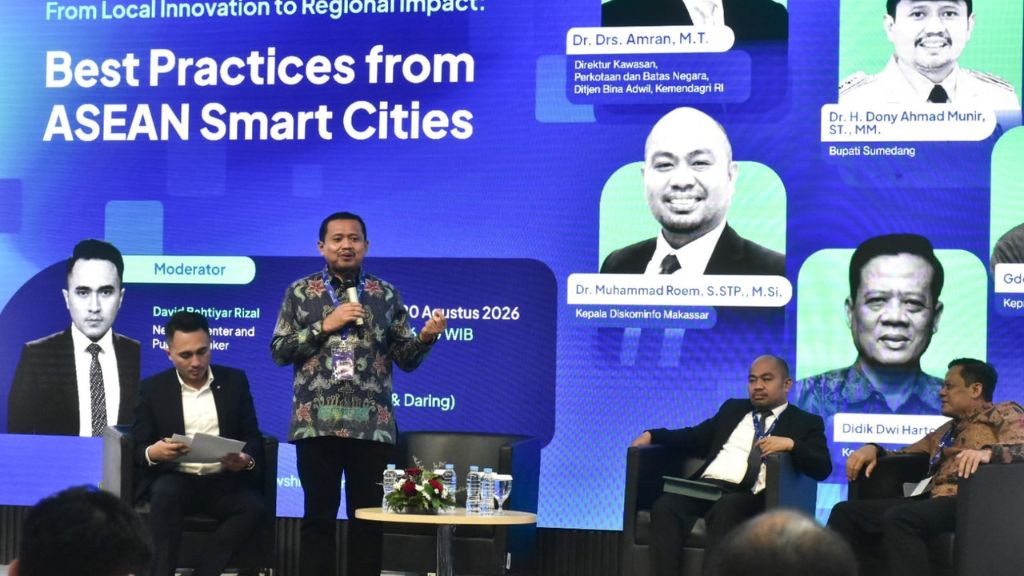
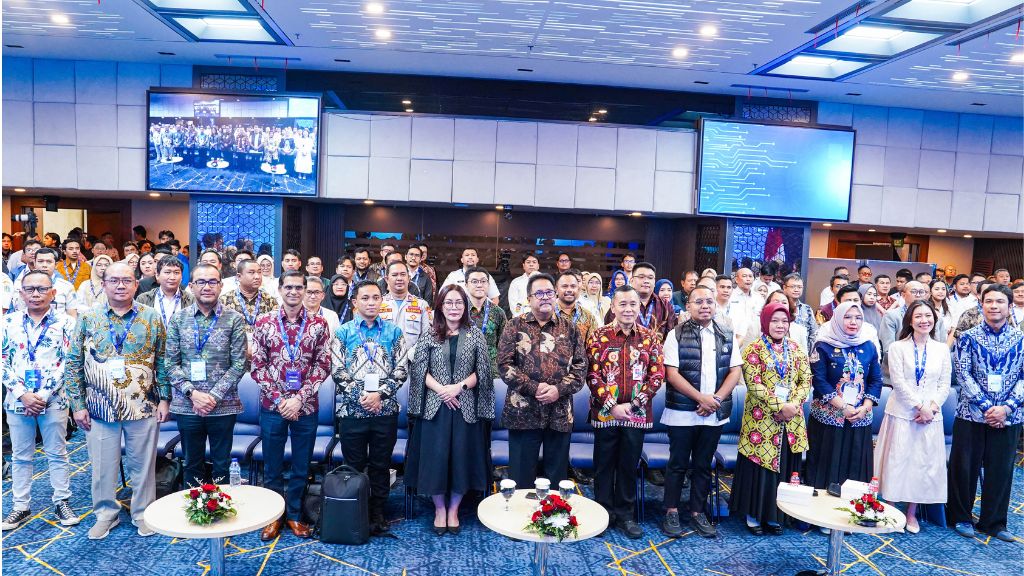
This was the main takeaway of the "From Local Innovation to Regional Impact” panel at the Jakarta Smart City's JAKI & Fellowship Cities Forum (JFCF) 2026 event in Jakarta on August 20.
Dony Ahmad Munir, Head of Sumedang Regent, West Java, said his district’s digital transformation was focused not simply on building apps, but on making public services easier, faster and more tangible for villagers.
“Digital technology is an instrument. Our ultimate goal remains the welfare of the people,” he said.
When Munir first took office as regent, he gathered civil servants and instilled the principle that the bureaucracy should make citizens’ lives easier. The approach was then translated into bureaucratic reform and the use of technology.
One example is population administration services, where Sumedang reduced processes that previously took up to six months to a maximum of three days.
The local government has also the “Jampe Harupat” service to connect health facilities with population administration. Now, the birth of a baby automatically triggers the issuance of four population documents.
Documents such as birth certificates, family cards, and Child Identity Cards (KIA) could now sent as PDFs via WhatsApp, while electronic identity cards are delivered through post.
“This service is intended to ensure that the state is present to welcome its new citizens,” Munir added.
Harnessing data for policy intervention
Besides improving public services, the government also uses technology and data to determine policy priorities.
When data showed high prevalence of hypertension in Sumedang, for example, the government could direct programmes towards preventive and promotive measures.
“Good data will drive good decisions. Good decisions will drive good interventions and lead to good outcomes,” he said.
The approach was also being used to address issues such as stunting.
Through the e-Simpati system, the government can view recipient data by name and address, while identifying the causes of problems in each village, ranging from sanitation, healthcare, health insurance, to other issues.
“Perhaps a truly smart city is not the most sophisticated one, but the one whose impact is felt most strongly at village level,” he added.
Makassar pushes for an integrated digital ecosystem
Muhammad Roem, Head of the Communication, Information and Statistics Office in Makassar, South Sulawesi province, shared a similar experience.
Makassar faced a common challenge among local governments developing smart cities: too many applications operating in silos.
“Now local leaders understand that what we are actually pursuing is not a smart city, but an impact through digital transformation,” Roem said.
By developing Lontara Plus as a superapp to integrate citizens’ digital services, residents now can access a wide range of services, from tax payments and population administration to services that encourage citizens to help maintain public facilities.
The concept was not only about moving services onto an application. The government wanted to use data and citizen complaints as a basis for decision-making, he added.
In his slides, Roem showed how the volume of public complaints can provide insights into urban problems. In Makassar, complaints are used to identify issues such as street lighting and the need to repair public facilities.
Technology is therefore positioned as a tool to shorten the distance between government and citizens, rather than as an end.
Semarang and two innovations for concrete problems
Didik Dwi Hartono, Head of the Communication, Informatics, Statistics and Encryption Office in Semarang City, took a similar approach.
Semarang has developed AISA, an artificial intelligence (AI)-based solution to help the government manage waste, as well as Semarang dalam Genggaman, a digital service designed to make it easier for residents to access a range of government services.
Hartono stressed on the principle behind the two programmes: “For us, digitalisation is meaningful when the government can provide services that are easy, fast, responsive and sustainable,” he said.
According to him, digitalisation must connect four elements: integrated public services, data-driven governance, digital government operations, and citizen participation.
Through Semarang dalam Genggaman, residents can access a range of city information and services through a single platform, including education, healthcare, investment and public complaint channels.
The approach shows that the real challenge of a smart city is how technology can help simplify the relationship between government and citizens, Hartono added.
Smart cities to support tourism
Denpasar city has chosen to develop its smart city around the city’s economic and social characteristics.
Gede Wirakusuma Wahyudi, Head of the Communication, Informatics and Statistics Office, Denpasar City, Bali, said the city has developed the Denpasar Parama Sewaka application to
support its smart tourism and creative hub concepts.
The approach is closely linked to Denpasar’s character as a city driven by tourism and the creative economy. The city has 35 traditional villages and 360 traditional community units, which form an important part of its cultural and tourism ecosystem.
The government sees local communities, MSMEs, hotels, restaurants, arts, culture, culinary businesses and various festivals as parts of an ecosystem that needs to be integrated into smart city development.