
Indonesia's DPI-driven safety net reform puts citizens in the data
Indonesia's efforts to reform its social protection system involve introducing a new digital portal that ensures its social and population data is accurate, high-quality and continuously updated.

The Indonesian government is reforming the social assistance distribution system by using technology to ensure aid reaches those who need it most. Image: Canva
A single wrong entry in a national database can mean a family goes hungry, or a subsidy goes to someone who no longer needs it.
This is the problem Indonesia’s Ministry of Social Affairs is trying to solve as it overhauls Perlinsos, the country’s social protection programme, in an attempt to process its assistance programmes more quickly and accurately.
This reform is part of the government's efforts to build digital public infrastructure (DPI) connecting digital identity with data exchange within public service portals.
However sophisticated the platform might be the success of this transformation depends on the quality of the data.
"Data quality is of absolute urgency and is a key pillar in fulfilling citizens' constitutional rights," says Agus Zainal Arifin, Director General of Social Protection and Security, Ministry of Social Affairs, to GovInsider.
In the context of social protection, data quality determines the accuracy of state intervention, says Arifin.
Inaccurate data can directly result in fiscal budgets being misallocated, while irrelevant data can cause poor communities to lose access to basic guarantees they are entitled to.
For this reason, the Ministry of Social Affairs regards data not merely as an administrative instrument, but as the foundation for building a more transparent, accountable, and equitable social protection system.
Tackling a classic problem with a new approach
According to Arifin, the greatest challenge lies in ensuring that the data a country has on its citizens continues to keep pace with their lives on-the-ground.
For example, a person's socio-economic status could change in an instant.
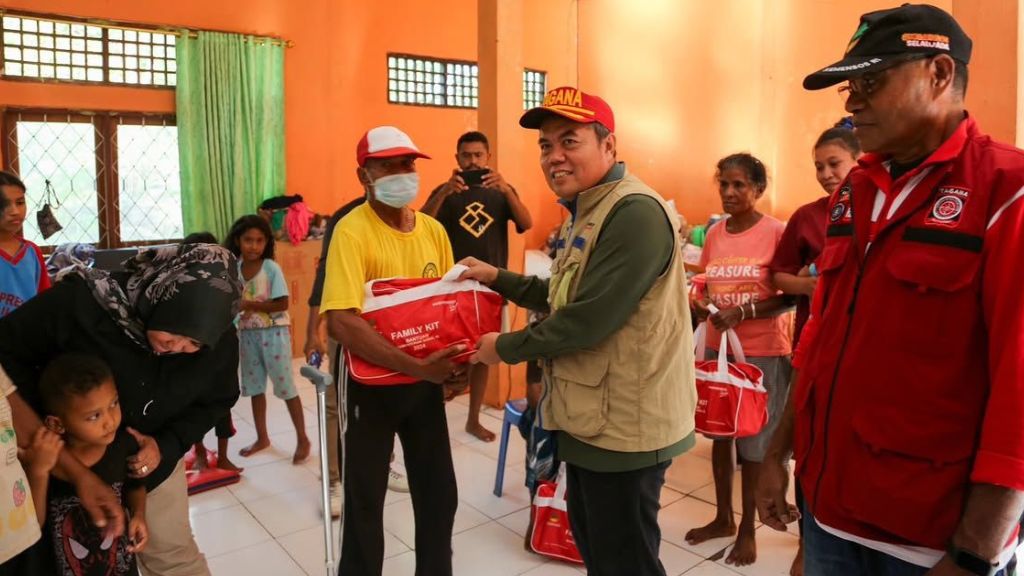
An unexpected job loss, relocation, or change in income and family circumstances can mean someone suddenly needs social assistance.
Conversely, someone who previously needed assistance may gradually become self-sufficient and no longer meet the criteria, he adds.
The Ministry of Social Affairs has begun shifting its data collection approach away from a static list of recipients towards a continuously updated system, by "updating the Single Socio-Economic Data (DTSEN) as a national database through the Next Generation Social Welfare Information System (SIKS-NG)."
Local governments are involved in the verification and validation process, so that changes in people's circumstances can be quickly reflected in the national database.
The Ministry also periodically carries out data residue clean-ups to reduce the risk of both exclusion and inclusion errors, so that assistance continues to be given to those who genuinely meet the criteria, he adds.
Building a more responsive and integrated social protection system
Arifin highlights that improving data quality also opens opportunities to redesign how citizens access government services.
Rather than having to deal with various programmes separately, the government wants to build a single-entry point for all social protection services.
Such a citizen-centric approach has been realised through the Perlinsos Portal, which was jointly developed by some ministries and agencies under the coordination of the Committee for Accelerating Government Digital Transformation (KPTDP).
The new system also opens the door for public participation in policy, allowing citizens to register themselves and flag incorrect information.
"The public is not merely the object of data collection but is also part of the process of maintaining data quality," he says.
The Perlinsos portal is also designed not only to distribute social assistance, but also to serve as a gateway to a range of other government services, from economic empowerment programmes to access to capital.
To address gaps in access to digital services, the ministry is working with local governments through field facilitators who help the citizens access these various services.
Arifin adds that as more data is being exchanged, personal data protection is also becoming a key concern.
"The digitalisation of social assistance must go hand in hand with the application of information security principles so that the identities of beneficiaries remain protected."
One identity, one single source of truth
Social protection reform relies not just on socio-economic data, but on accurate population identity data too.
The Population Identification Number (NIK) is now the single source of truth underpinning every public service in Indonesia, according to Hani Rustam, Secretary of the Directorate General of Population and Civil Registration (Dukcapil), at the Ministry of Home Affairs.
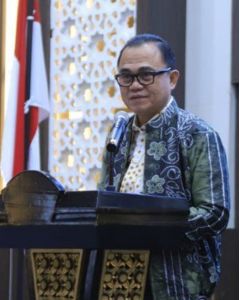
Through the Population Administration Information System (SIAK), population data is updated in real-time.
"User agencies can also provide feedback if they identify any anomalies, allowing verification to take place promptly," says Rustam.
Even so, keeping population data up to date remains a challenge, particularly in disadvantaged, frontier, and outermost (3T) regions that do not yet have full access to public services.
To reach these communities, the Directorate General of Dukcapil, together with local governments, runs outreach services through the Indonesia Population Administration Awareness Movement (GISA).
GISA is a national movement that enables Dukcapil to mobilise local apparatus down to the community level, reaching those who remain unregistered and unserved.
These communities can update or correct their data through village or sub-district and district offices, Public Service Malls or by calling a hotline.
Citizens can also do so through Dukcapil’s online chatbot service or visiting one of their offices physically.
For Rustam, digital transformation must continue to prioritise inclusivity.
"We uphold the principle of inclusive fairness. Technology is a tool for expanding access, not a new wall that restricts people's rights," he concludes.