
Indonesia’s national planning ministry on effective social protection
Ministry of National Development Planning (Bappenas)’ Director for Poverty Alleviation and Social Welfare Tirta Sutedjo explains why digitalising social protection programmes is essential to making poverty reduction policies more targeted and responsive.
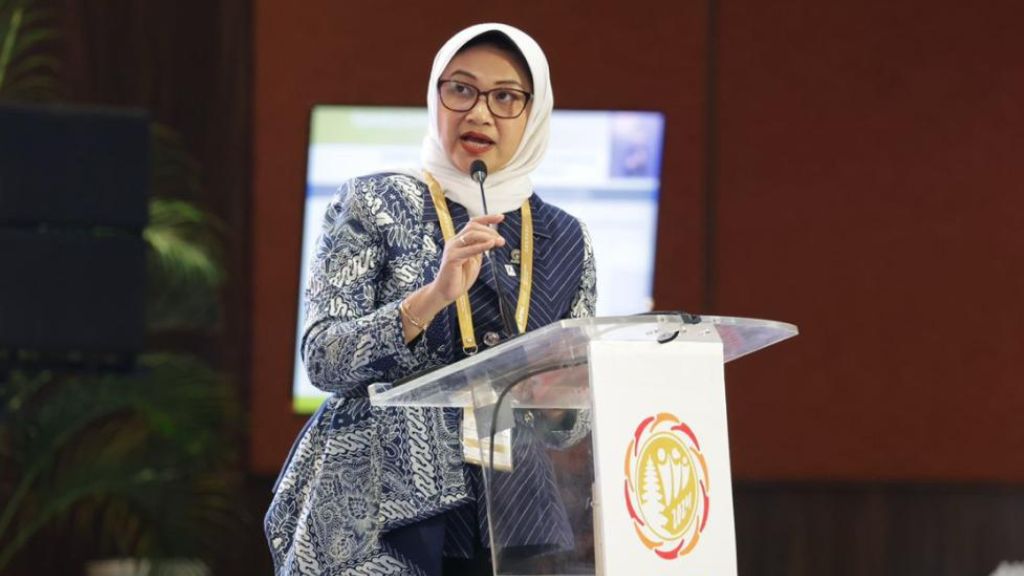
Bappenas' Director of Poverty Alleviation and Social Welfare, Tirta Sutedjo, highlights the importance of effective, targeted social protection programmes to break the cycle of poverty. Image: Bappenas
Social assistance helps a family stay afloat when its income falls. But in a country with a high level of inequality such as Indonesia, assistance alone isn’t always enough to lift families out of poverty.
Tirta Sutedjo, Director for Poverty Alleviation and Social Welfare at the Ministry of National Development Planning (Bappenas), says that social protection is only one part of a broader set of structural interventions aimed at improving people’s welfare.
“Social protection is not enough if it only answers the question of who receives assistance.
"The government also needs to understand what support is needed for a family to become more independent and empowered,” she tells GovInsider.
Sutedjo highlights three policy pillars that need to work together: reducing household expenditure, increasing incomes, and ensuring access to essential services and infrastructure.
The first pillar focuses on protecting households when they face economic pressures.
Social assistance, social security, and subsidies all fall under this pillar, with the aim of helping people meet their basic needs while reducing the burden of household expenditure.
The second pillar seeks to strengthen families’ ability to earn higher incomes. Training, access to financing or credit, market access and employment opportunities can help families increase their income and reduce their dependence on assistance.
The third pillar focuses on the environment in which people live. Access to education, healthcare, transport, connectivity, and basic infrastructure can determine whether a family has the opportunity to improve their economy.
According to Sutedjo, the three pillars complement one another.
Social assistance provides short-term relief; empowerment supports people in the medium term, while services and infrastructure provide the foundations for long-term wellbeing.
From identifying beneficiaries to understanding their needs
Social protection programmes that make use of data and technology are increasingly important in helping the government target its interventions more effectively, says Sutedjo.
“The challenge is to build a system that can understand people’s circumstances more dynamically through continuously updated socio-economic data, rather than simply maintaining a list of beneficiaries that is updated periodically.”
To support this process, the government is beginning to connect information from different sources.
She cites data from state electricity company (Perusahaan Listrik Negara/PLN) and vehicle ownership data as examples of information that can help the government understand consumption patterns and people’s circumstances.
This effort is taking place alongside the establishment of the National Single Socio-Economic Data (DTSEN), which brings together several existing databases, including the Socio-Economic Registration (Regsosek) and the Integrated Social Welfare Data (DTKS).
The data continues to be updated through ground checks, information provided by citizens, and mechanisms involving local governments.
The system has been piloted in Banyuwangi Regency since September 2025 and expanded to 43 regencies and cities in February 2026.
The government aims to roll it out nationwide by the end of 2026.
Opening the door to those who have been left out
One important change introduced by the new programme is the use of an on-demand mechanism.
“Through the digitalisation of social protection, people who feel they need assistance can register independently through the social protection application,” Sutedjo says.
They can also use a grievance mechanism to correct information or challenge their eligibility status.
This approach can help reduce exclusion errors, and makes the system more responsive to changes in people’s socio-economic circumstances.
However, making a system more digitally accessible does not automatically make it inclusive.
Not everyone has the same access to devices, internet connectivity, or digital skills. If access to social protection becomes too dependent on digitalisation, the most vulnerable groups could be left behind.
The government is therefore also preparing alternative access mechanisms through agents appointed by local governments.
These agents can include facilitators from the Family Hope Programme (PKH), members of the Family Welfare Movement (PKK), and community health post (posyandu) cadres. They can assist people who have difficulty accessing digital services.
“These agents work in the regions and understand the circumstances of the people in their areas,” she says, adding that the government needs to ensure people have the most realistic way of accessing these services.
Vulnerability is also not always visible in income levels alone.
People with disabilities, for example, may face additional living costs or barriers to employment. Older people living alone may have different needs from other households with the same level of income.
“The system also needs to capture who is vulnerable and why they are vulnerable, rather than simply identifying who is below the poverty line,” she adds.
AI for more adaptive social protection
Bringing together different sources of data also creates opportunities to use artificial intelligence (AI) in social protection.
“AI has the potential to help the government recognise patterns of vulnerability, identify households at risk of experiencing a decline in wellbeing, and help direct interventions before their circumstances worsen,” she says.
However, the use of AI also has limitations, particularly when the underlying data is of poor quality.
“If the data is wrong or inaccurate, AI will also read it incorrectly,” she notes.
For this reason, she sees stronger data governance as one of the keys to accelerating poverty reduction and improving the targeting of social protection programmes.