Indonesia’s new one-stop platform strengthens MSMEs’ integration in the national supply chain
The SAPA UMKM platform goes beyond mapping the country’s micro, small, and medium-sized enterprises (MSMEs) by assessing their readiness and matching them with industry demand.
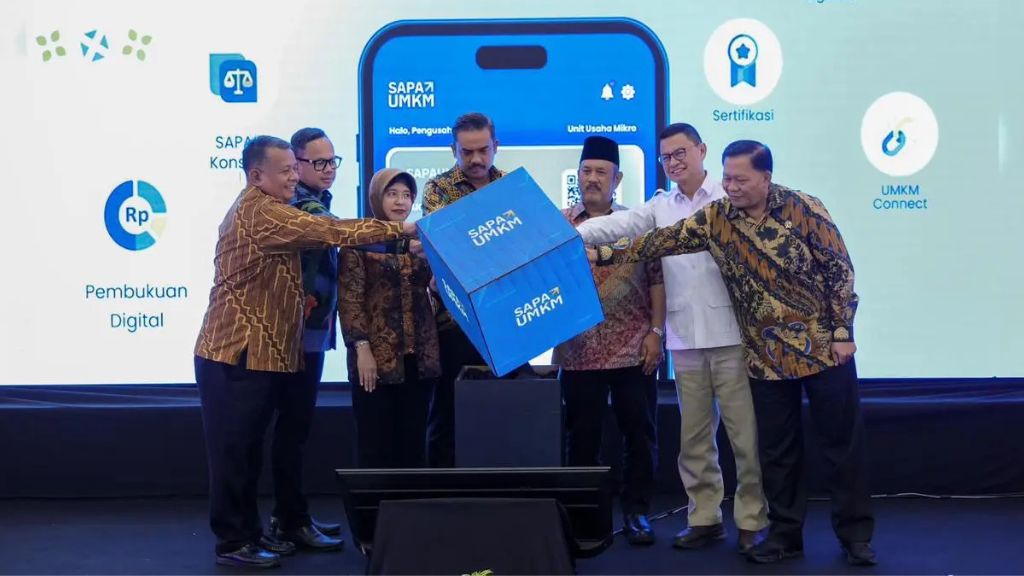
SAPA UMKM is designed as a one-stop integrated platform for MSMEs to access financing, markets and capacity-building programmes. Image: Ministry of MSMEs
Despite being a key pillar of the domestic economy, Indonesia’s micro, small, and medium-sized (MSMEs/UMKM) often struggle to sustain their business due to the lack of strong links with major suppliers and other industry partners they can source from or buy what they produce.
Designed to close this gap, SAPA UMKM is an integrated service platform for MSMEs launched by the Ministry of MSMEs (Kementerian Usaha Mikro, Kecil dan Menengah/UMKM) and the Ministry of National Development Planning (Bappenas).
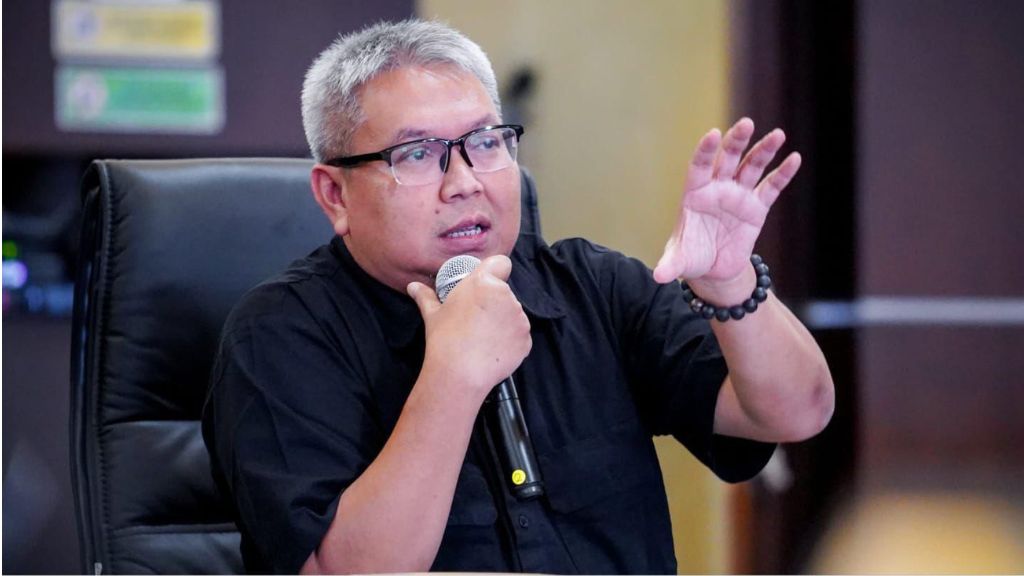
Ministry of MSME's Deputy for Small Businesses, Temmy Satya Permana, says the platform will connect MSMEs with industry partners, including state-owned enterprises (BUMN), to strengthen the integration of their products into national supply chains.
“SAPA UMKM is not a standalone service. We want to connect information about MSMEs with the national industrial ecosystem,” Permana tells GovInsider.
Launched in May 2026, the platform serves as a one-stop shop for MSMEs, by integrating business needs ranging from licensing, certification and access to finance, on one platform.
This reduces the need for small business owners to switch between different applications and information sites separately.
From database to business connections
The next phase of the platform is to connect MSMEs with buyers and larger companies, Permana says.
With around 60 million MSMEs in Indonesia, the government cannot realistically map, assist and connect millions of businesses with potential buyers one-by-one, he notes.
Additionally, he highlights that it’s no longer enough for the platform to simply collect MSME data and display it on a national dashboard.
The platform must be able to turn that data into business connections that can generate real market uptake, he adds.
At the launch of SAPA UMKM in May 2026, Minister of MSMEs, Maman Abdurrahman, said dynamic data would be an important element of the platform.
“Through SAPA UMKM, we want to turn the static data that has been collected so far into dynamic data that is continuously updated,” said Abdurrahman according to a press statement.
Regularly updated data can allow the government to tailor interventions to the actual needs of businesses, rather than applying the same approach to every MSME, he added.
For Permana, the value of data lies in its ability to generate transactions and partnerships.
Rather than simply displaying an MSME database, the platform aims to provide a more detailed directory of businesses’ capabilities, differentiation, location, and scale to help identify supply and demand.
“SAPA UMKM will provide information on how ready a business is to become a supplier and what needs that business can fulfil,” he says.
An industrial buyer, for example, needs more information about a MSME beyond a particular particular food product or component the MSME produces.
The buyer may also want to know the MSME’s production capacity, minimum order quantity, quality standards, and ability to fulfil orders within a specific period.
As large buyers typically need more than one supplier, the platform could help them build supplier ecosystems capable of meeting their requirements collectively.
“Meanwhile for the government, the platform can serve as a layer that helps identify MSMEs that match industry requirements, while also showing what interventions are needed to make those businesses ready to supply,” he adds.
Building MSME capacity before matching
Permana acknowledges that alongside the suppler chain integration, MSMEs also need to strengthen their capabilities.
This is why SAPA UMKM also provides services aimed at improving the business capacity of MSMEs.
The UMKM Connect feature, for example, provides a space for business owners to network, share experiences and collaborate with other MSMEs across Indonesia.
The platform also provides access to financing and capital support for MSMEs that meet the relevant criteria.
Training and mentoring are also available, including digital literacy programmes.
The same approach applies to certification. Ministry of MSME runs facilitation programmes covering various standards and certifications, including ISO, SNI (Indonesia National Standards), halal certification and BPOM MD (Indonesian Food and Drugs Authority) permits.
“MSMEs that do not yet have certification can be directed to the appropriate facilitation programme, while businesses that already meet the required standards but lack production capacity can receive different forms of assistance,” he notes.
Beyond just a status recorded in a database, the certification also helps determine what an MSME needs to do before it is ready to enter a particular market or supply chain.
Measuring uptake and economic impact
According to Permana, the success of SAPA UMKM is measured by how many connections lead to market uptake and partnerships.
“What matters is how this system can generate real economic impact for MSMEs,” he says.
For this reason, UMKM is not rushing to roll out its business-matching model across all sectors.
The pilot will consider several factors, including the clarity of supply chain requirements, data readiness and quality, MSME potential, industry demand, partners’ readiness to integrate with the platform, and opportunities for partnerships and market uptake.
The process will involve mapping and preparing data, validating MSME readiness, integrating with partners, running pilots, evaluating the results, and then scaling up.
He points to PaDi UMKM, a MSME e-catalogue for SOEs, as an example of how digital platforms can generate transactions worth trillions of rupiah.
The platform recorded IDR7.2 trillion (S$525.2 million) in transactions in 2025.
“The lesson from this success is that transactions happen when the ecosystem, data and buyers are connected on a shared platform,” he concludes.