
Innovation is about improving lives, not trends or technology
Delivering the keynote address at GovInsider’s Festival of Innovation, Senior Minister of State at the Prime Minister’s Office, Desmond Tan, noted that innovation never follows a linear path and that people innovate, not systems or policies.
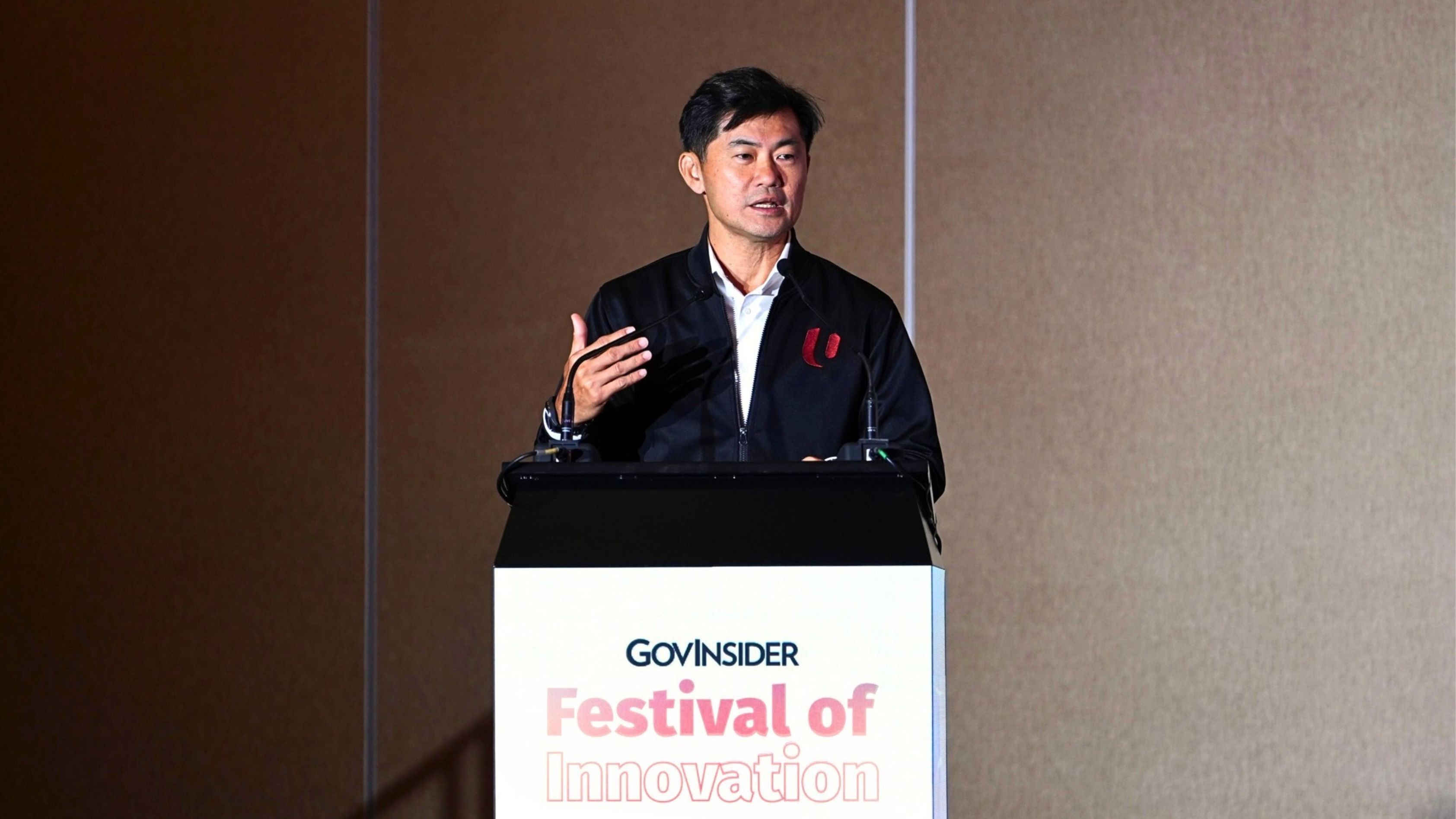
Senior Minister of State at the Prime Minister’s Office and National Trades Union Congress (NTUC)’s Deputy Secretary-General, Desmond Tan, delivering the keynote address at the start of GovInsider’s Festival of Innovation 2026 event. Image: GovInsider.
Why does the public sector innovate?
It does so to improve lives, strengthen trust, and deliver outcomes that truly matter to citizens and workers.
Sharing this at the opening keynote at GovInsider’s Festival of Innovation (FOI) event on March 3, Senior Minister of State at the Prime Minister’s Office and National Trades Union Congress (NTUC)’s Deputy Secretary-General, Desmond Tan, added that government innovation has never been about novelty for its own sake and progress has never followed a linear path, coming with its own ups and downs.
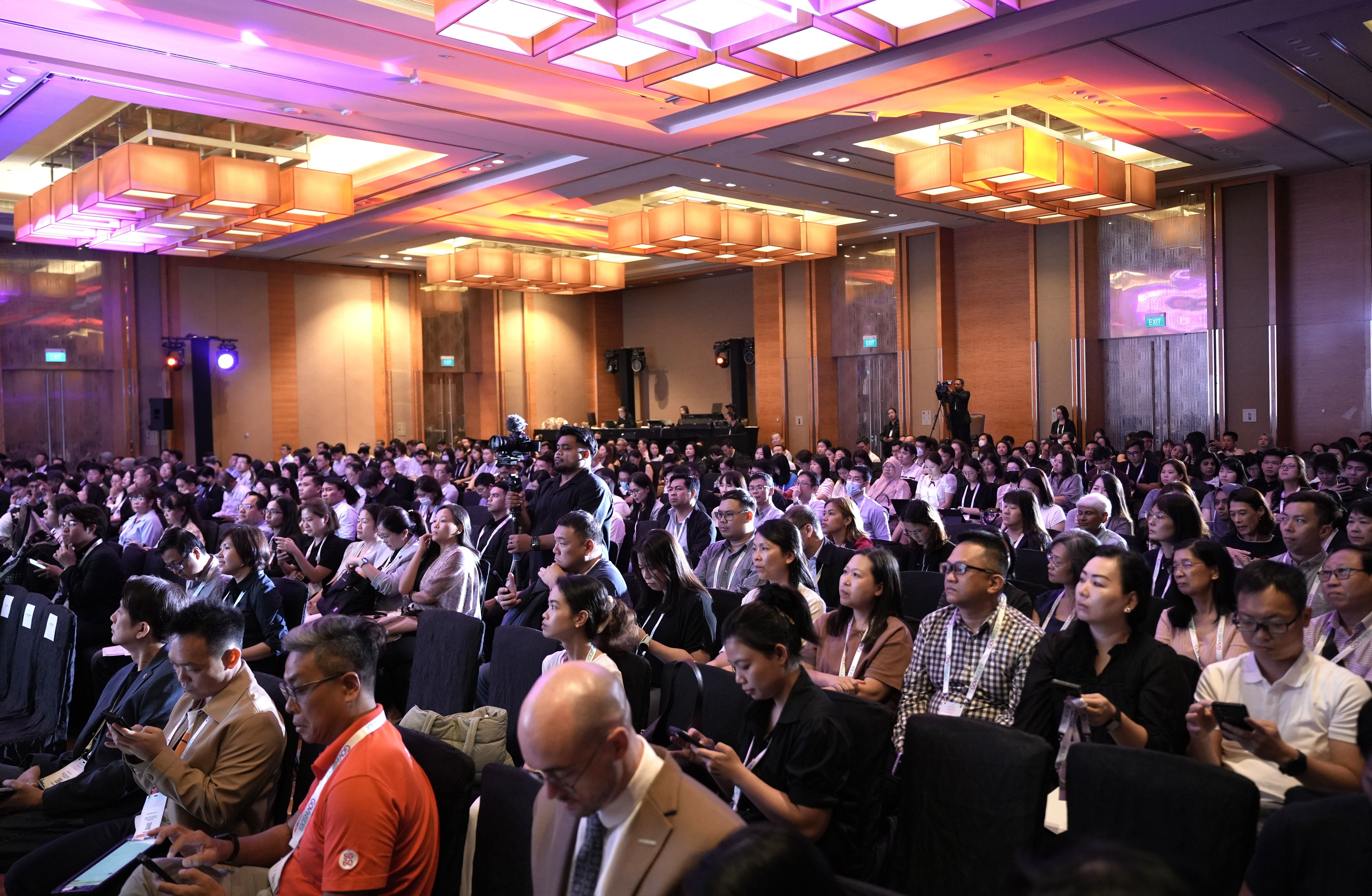
The two-day FOI2026 event brought together public sector practitioners from around the world for deliberations and provided countless networking opportunities.
Over 2,200 attendees signed up for the festival, including 322 international visitors from 28 countries.
The attendees represented 421 government agencies, ranging from healthcare, education, defence, science, technology, and the digital economy.
Innovation a continuous process
In his speech, the Minister noted that innovation was a continuous process.
He noted that more than a decade ago, Singapore experimented with on-demand public transport through Beeline.
“While it generated enormous interest and expectations at the start, the initiative eventually ended.
“But innovation did not stop; instead, we learnt and adapted, and today we continue to explore new transport models, including autonomous vehicles”, he said.
The important lesson was that not every innovation will succeed.
“But if we stop trying, or if we fear failure more than we value learning, public impact will stall,” Tan said.
AI a strategic priority
The minister added that this balance between ambition and purpose was reflected in how Singapore approached artificial intelligence (AI).
At the national level, Singapore is taking decisive steps to shape how AI is adopted and governed.
Noting that AI was now a strategic priority for Singapore, the Minister said that the National AI Strategy 2.0 set out a clear vision to harness AI for the public good in Singapore and the world.
“Moving from aspiration to execution, the newly announced National AI Council, chaired by Prime Minister Lawrence Wong, will provide clear leadership and coordination across research, regulation and investment promotion,” Tan said.
Systems do not innovate, people do
While technology reshapes how governments operate, the most important driver of transformation is people, the Minister highlighted.
“Systems do not innovate. Policies do not innovate. People do.”
Noting that leadership today was about bringing people along, Tan said that at NTUC, this belief “guides our efforts to support workers, including public officers, to stay relevant in an AI-driven world”.
He noted that when workers were supported and were clear on intent, leadership emerged at every level.
He cited the example of Sutarsan Jaganathan, a Principal Trainer at the Immigration and Checkpoints Authority (ICA), who took the initiative to reinvent how officers learn, using adaptive learning and microlearning, tapping into technologies such as Augmented Reality (AR) and Virtual Reality (VR).
Noting that Jaganathan’s example showed that the most powerful tool in any transformation was not technology but the mindset, grounded in curiosity, empathy and adaptability, the Minister said this was what FOI represented.
“This year, FOI received 270 award submissions, a significant 60 per cent increase from last year, with almost half coming from overseas. Spanning across 13 categories, these entries reflect real-world solutions, not theoretical ideas,” he said.
The winners of the awards will be announced on the second day of FOI on March 4.
Governing through uncertainty
The opening panel for this year’s FOI, Governing Through Uncertainty: Innovation, Inclusion and Leadership for the Next Era, discussed many of the broad issues raised by the Minister.
The panel, moderated by Home Team Science & Technology Agency (HTX) Deputy Director xDigital, Matthew Chua, comprised Malaysia’s International Trade and Industry (MITI) former Deputy Minister and Taylor University Adjunct Professor, Ong Kian Ming, Tony Blair Institute of Global Change (TBI) Singapore’s Senior Policy Advisor, PeiChin Tay, the Maldives’ Former Minister of State for Environment, Climate Change and Technology, Mohamed Shareef and ASEAN Economic Community’s Deputy Secretary-General, Satvinder Singh.
The speakers broadly agreed that governing through uncertainty required empathy, citizen-centred leadership, combined with collaboration, to manage the economic and technological changes.
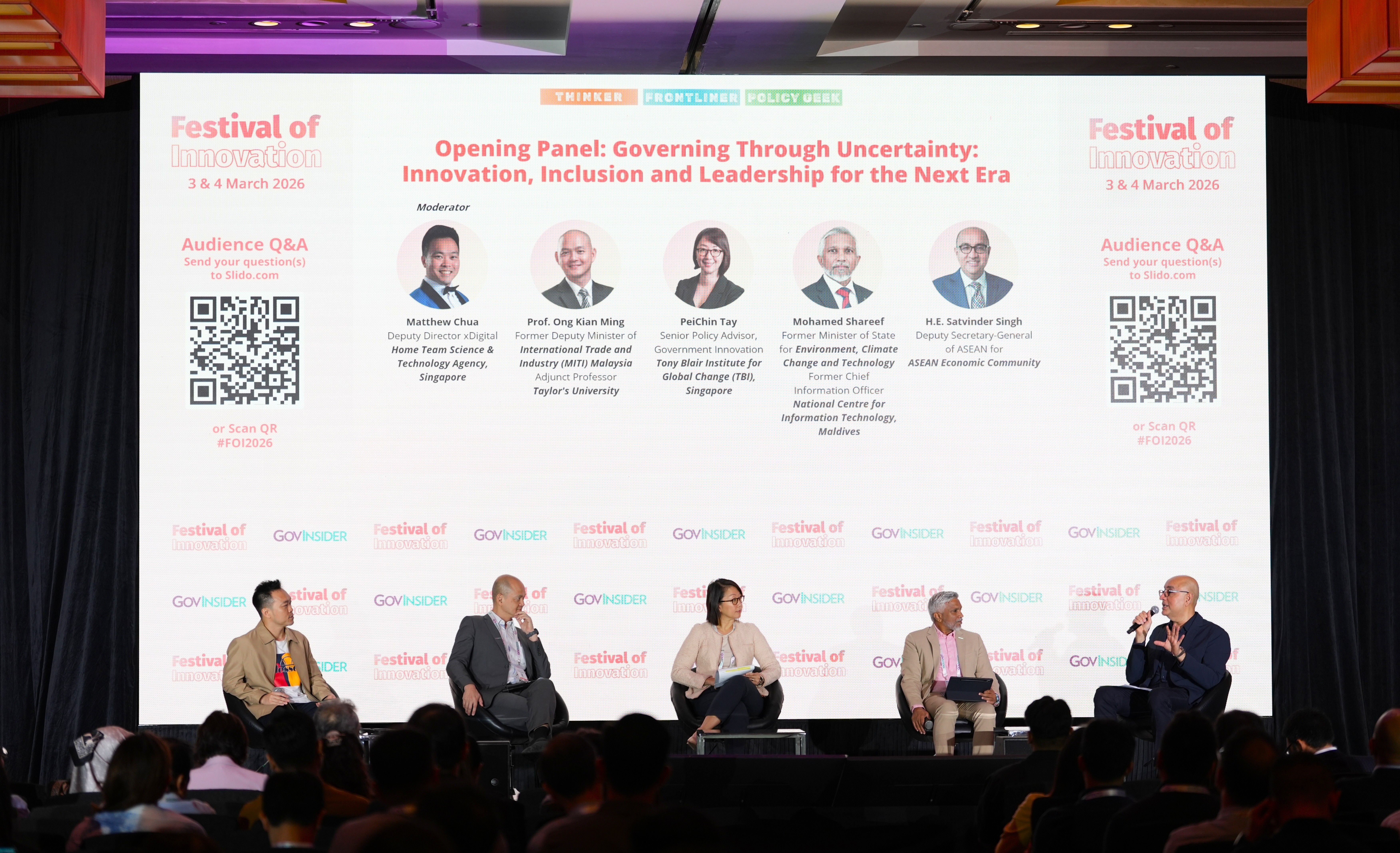
When all public servants were guided by the value of making an impact, progress happened organically, and institutions became more willing to change, the panellists noted.
They stressed that across ASEAN and beyond, governments needed to be flexible and adaptable.
Government leaders had to understand stakeholder needs, demonstrate clear public value, and communicate authentically and clearly, especially with younger generations.
They also highlighted that innovation in government should be institutionalised through strong political mandate, cross-government coordination, and both “hard” and “soft” infrastructure, including trust.
For small and resource-constrained states, like the Maldives, the panellists emphasised the need for partnerships, leapfrogging technology cycles, and “cognitive sovereignty” so that they could keep control of their own strategic choices.
Cognitive sovereignty is the capacity to think independently, question assumptions, and hold contradictory ideas in tension to create meaning from chaos.
The panellists converged on the idea that empowered, values-driven public servants, backed by regional cooperation, are essential to building resilient institutions for an unpredictable future.
You can access AI-driven insights of all FOI2026 sessions, including this panel, here.