
Iqbal Firdaus, Senior Manager, Operations, Population Health, NHG Health, Singapore
Meet the young public sector officials in the inaugural Young & Official Report 2026.
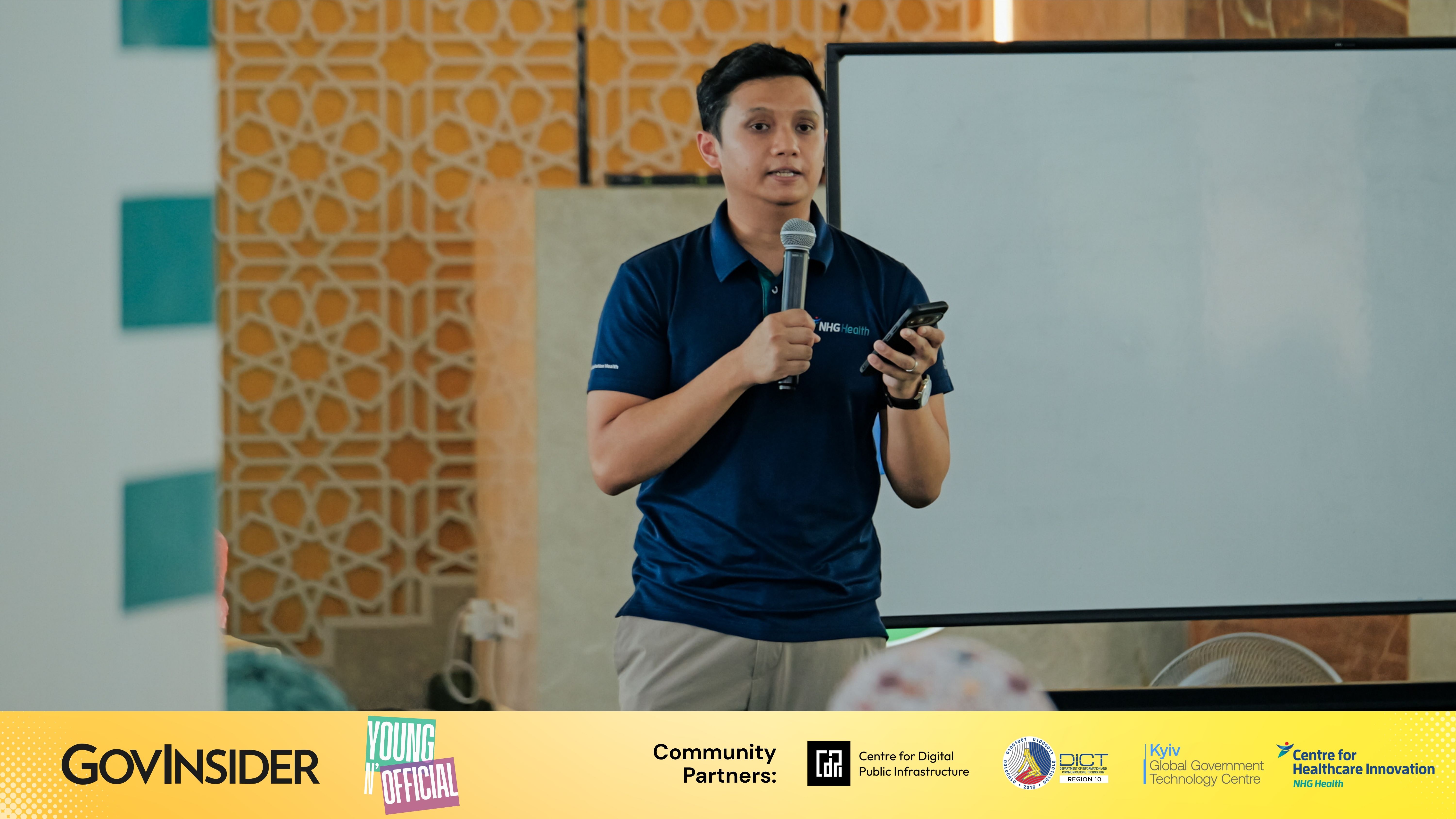
Iqbal Firdaus, Senior Manager, Operations, Population Health, NHG Health, Singapore. Image: Iqbal Firdaus
1) What does public service mean to you? Can you share more about your role in the public sector?
To me, public service is about building systems that support residents to live well.
I have been with NHG Health for about nine years, with experience spanning population health, community care, healthcare financing, and digital transformation.
Much of my current work supports NHG Health efforts to shift healthcare upstream – from treating illness to building healthier communities before people become patients.
I have also been involved in connecting emerging leaders across health and social care through Centre for Healthcare Innovation (CHI) Future Leaders and Young INnovators Guild (FLYING).
Most recently, I was part of the organising committee for the inaugural CHI FLYING Summit last year, which brought together young professionals to exchange ideas on the future of care.
Over time, I’ve become convinced that the real test of institutions is not just whether they are efficient, but whether people still feel seen and connected within them.
That belief continues to shape how I approach my work.
2) Tell us about a project you championed. What impact did it have on the community?
One project I am particularly proud of was leading community health initiatives under NHG Health’s Population Health to bring preventive care closer to where people already live, gather, and trust.
A key part of this work involved setting up community health posts in mosques and partnering with community care organisations and relevant agencies to improve access to health screening and health education.
The intent was simple but important: if preventive health is to work, the system cannot always expect residents to come to us. In many cases, care has to move towards the community instead.
Working closely with community partners, including mosque leaders and volunteers, helped us design outreach that felt familiar and welcoming rather than clinical or intimidating.
One senior resident jokingly told me, “I came for tea and somehow ended up checking my blood pressure.”
In many ways, that line captures what we were trying to achieve – making health engagement feel natural, not burdensome.
3) As a young professional, how has your unique background or perspective allowed you to identify a solution that others in your organisation might have overlooked?
Being relatively early in my career has sometimes helped me ask “naive” questions that uncover assumptions hidden within systems.
I have always been interested in both policy and design. Not just whether something works operationally, but whether it feels intuitive and meaningful to the people experiencing it.
That perspective became especially useful during digital transformation projects, where we realised that dashboards and data tools only succeed if frontline teams actually find them useful.
During one of my earlier postings at NHG Health’s Tan Tock Seng Hospital, I developed a digital visitor dashboard for the Emergency Diagnostic & Therapeutic Centre to improve operational visibility and decision-making.
Beyond the technical build, a key insight was that users did not need more information but needed clarity and trust in the system itself.
Sometimes we confuse digitisation with transformation, when they are not the same thing.
4) What is your personal strategy for maintaining your creative energy when faced with bureaucracy?
I try to remember that bureaucracy is not inherently bad.
Most processes exist because someone, somewhere, once made a mistake significant enough to create a policy about it. That mindset helps me approach systems with curiosity rather than cynicism.
At the same time, I try not to let systems harden me emotionally. Healthcare administration can sometimes reward detachment because detachment feels efficient.
But I think the work becomes dangerous when we stop feeling affected by the people we serve. And occasionally, humour helps.
If you cannot laugh during a three-hour meeting about workflow redesign, public service becomes unnecessarily difficult.
For me, creativity comes from staying connected to people outside my immediate domain. I draw inspiration from community partners, clinicians, designers, residents, and innovators across industries.
Organising the inaugural CHI FLYING Summit was especially energising because it reminded me how powerful honest interdisciplinary conversations can be.
5) If you had just one area to invest in to accelerate transformation in the public sector (regulation, technology, talent, etc.), which one would you choose and why?
I would invest in talent, specifically interdisciplinary and emotionally intelligent leadership.
Most public challenges today do not fit neatly into organisational charts.
Through my experiences in NHG Health, CHI FLYING, and NHG Health’s Management Development Programmes, I have seen how healthcare increasingly overlaps with factors such as the built environment, literacy, and social mobility.
Technology alone cannot solve these issues if people are unable to collaborate meaningfully across domains.
What struck me during my leadership development experiences was that transformation rarely fails because of a lack of ideas. More often, it fails because systems struggle to align people, incentives, and trust.
We need officers who are analytically rigorous, operationally grounded, digitally fluent, and deeply empathetic. In many ways, the future public officers may look less like a traditional specialist and more like a bridge-builder.
6) What is your greatest ambition as you grow in your public service career?
My ambition is not simply to build more efficient systems, but to help build institutions that people can trust, participate in, and feel cared for by.
In the near term, I hope to continue growing as a healthcare leader - strengthening preventive health ecosystems and advancing population health strategies.
Over time, I hope to contribute more directly at the policy level, particularly in areas related to healthcare accessibility and social equity.
I am especially interested in how public institutions can remain both high-performing and deeply human. Efficiency matters, but so does dignity. That is the kind of public sector leadership I aspire towards.
7) What is a “universal value” that connects everyone in your department – from interns to directors – and how do you use that to drive collaboration?
I think the universal value is purpose. Healthcare is one of the few sectors where almost everyone, regardless of rank or function, can clearly see the human impact of their work.
Whether you are managing operations, analysing data, or shaping policy, there is usually a resident or patient at the end of the chain.
I try to use that shared purpose as a “common language” during collaboration.
When discussions become difficult, returning to the question “What outcome are we trying to create for residents?” often recentres the conversation productively.
Titles matter less when people feel collectively responsible for something meaningful.
8) What is the best piece of advice you’ve got for the next generation of public servants?
Do not confuse visibility with impact. Some of the most meaningful work in public service is slow, collaborative, and largely invisible.
You may spend months aligning stakeholders or quietly fixing structural problems before anyone notices the outcome.
I would also encourage young public servants to protect their sense of idealism. The world will give you many reasons to become cynical or emotionally detached. Resist that instinct.
Some of the most meaningful public service work requires emotional courage, not just technical competence.
9) What is a myth you wish to debunk about young public servants?
That young officers are impatient or unrealistic. From my experience, many younger officers are deeply aware of operational constraints and institutional realities.
We understand that systems are complex and that change takes time.
But we also believe institutions can evolve without losing their humanity. Most young officers are not trying to “break” the system.
We are trying to help it become more responsive, compassionate, and future-ready while remaining effective.
10) Write a letter to your future self in 2035. Please keep it within 200 words.
Dear Iqbal,
If you are reading this in 2035, I hope you have learned to live a little lighter and appreciate the small, ordinary joys around you.
I hope you have become more comfortable with not always being “on” or progressing in visible ways. That rest is not a pause in life but part of it. That well-being is not something you schedule after everything else but the baseline that makes everything else possible.
I hope you have kept your curiosity but also learned to let some moments stay unanalysed, unrecorded, and still meaningful.
I hope you have taken better care of your body and mind. That you have found comfortable rhythms of living.
Lastly, I hope you have kept your humour intact. Not the polite kind of laughter, but the kind that comes when life is a bit absurd and you are no longer trying to control every outcome.
If I could leave you with one instruction, it would be this: do not let ambition harden into posture. Keep it soft enough to still be useful. You do not need to have “arrived” by 2035. But it would be good if you are still becoming.
Cheers,
Iqbal from 2026
The story was made possible due a partnership with the CHI FLYING (Future Leaders and Young INnovators Guild) Network, hosted by NHG Health's Centre for Healthcare Innovation, with over 300 members connecting young health and social care leaders across Singapore and beyond.