
Jakarta Smart City's GovTechAthon drives digital solutions to local challenges
Civil servants from local governments develop digital solutions to tackle public service challenges, with the agency honing the winning ideas into scalable smart city products.
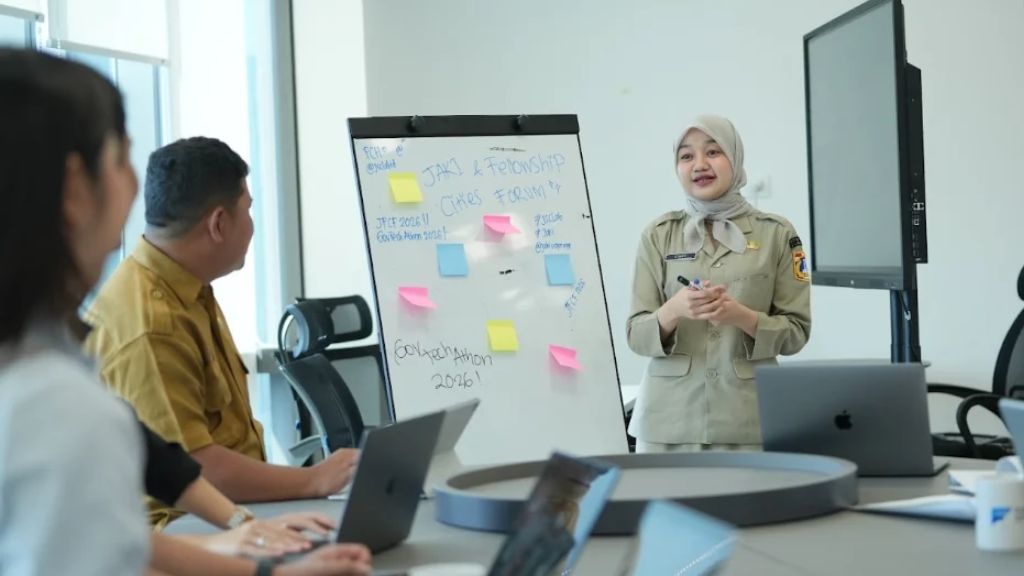
The inaugural GovTechAthon Jakarta Smart City (JSC) event will bring together civil servants, JSC mentors and technology partners to design solutions to regional problems. Image: Jakarta Smart City
Civil servants from local governments are often best placed to understand the challenges faced by their communities.
But turning this understanding into solutions requires technical expertise, resources, and adequate support.
Through GovTechAthon 2026, Jakarta Smart City (JSC) aims to bridge this gap by providing a space for experimentation, mentoring and digital product development based on real-world local challenges.
The programme first invites civil servants to identify public service problems and design relevant digital solutions.
“GovTechAthon is not simply a competition to find the best ideas. It is designed as a space for experimentation, learning and collaboration,” says JSC's Head Ponirin Ariadi Limbong, to GovInsider.
JSC will then work with the winning teams and its partners to develop the selected ideas into digital products that can be handed over to the winning local governments.
Registration for GovTechAthon opened in August and closes on October 28.
The programme continues until February 2027, covering participant selection, mentoring, final presentations, and the development and handover of digital products.
Starting with problems, not technology
Unlike conventional hackathons, GovTechAthon does not require participants to have the technical skills to build applications or prototypes themselves.
Instead, they focus on identifying problems and designing practical solutions.

“Civil servants in local governments also act as problem owners because they are on the front lines of public service delivery and are best placed to understand the challenges faced by their communities,” says Limbong.
Each team must identify a real-world problem that aligns with local development priorities and is supported by data.
Proposals must also explain the root causes of the problem, the existing measures taken to address it, and the gaps that remain unresolved.
Participants then prepare a concept note outlining the local challenge, their proposed digital solution and its intended users.
Following administrative screening and assessment, shortlisted teams proceed to attend workshops, receive mentoring, followed by final presentations and pitching, before the winners are announced.
At the end of the programme, the resulting digital products will be handed over to the winning local governments.
Turning ideas into ready-to-use products
Limbong adds that the programme is committed to taking the winning ideas beyond competition and through product development.
“We do not want the process to end at the awards ceremony. The winners’ ideas will be developed into ready-to-use digital products in collaboration with JSC’s development team,” he highlights.
Before the final presentations, finalists will receive intensive mentoring from JSC professionals, technology partners and subject-matter experts to refine their solutions and prepare their pitches.
JSC and its partners will also visit the finalists’ home regions to verify the problems identified in their proposals.
These visits will provide opportunities to engage with local government agencies and community members who could potentially use the solutions.
According to Limbong, artificial intelligence (AI) and data analytics could be included in the solutions developed by participants, reflecting this year’s focus on adaptive, data-driven public services.
However, he stresses that technology is not the end goal of innovation.
What matters is whether a solution addresses local challenges effectively, delivers measurable impact and can be sustained over time.
Technically sophisticated solutions may not deliver benefits if they fail to address clearly defined public service challenges, he says.
Fostering collaboration across local governments
Beyond developing digital products, GovTechAthon aims to strengthen collaboration between local governments, technology partners and public sector innovators.
“What we hope to see is that these solutions are genuinely adopted and used sustainably. At the same time, they should serve as the starting point for an ongoing network of collaboration between local governments, enabling them to share good practices and replicate innovations,” says Limbong.
He emphasises that the digital solutions developed should also be designed to connect and exchange data with other systems, in line with the interoperability principles of Indonesia’s national Electronic-Based Government System (SPBE).
Without adequate coordination and common standards, independently developed digital services across local governments risk creating fragmented systems that cannot communicate with one another.
“As a fellow for local governments, JSC promotes collaboration that prioritises interoperability to prevent the creation of siloed systems, while ensuring that every solution is driven by the real needs of the community,” he says.