
Keep your system, but make it talk to others
With the world more fragmented and prices rising, APEC officials say the answer is not one system for everyone, but for governments to work together across trade systems, AI and crisis cooperation.

The Asia-Pacific Economic Cooperation (APEC) organised a media roundtable on November 3, ahead of the APEC leaders' meeting in Shenzhen. Image: APEC
Next week, Southeast Asian and other Asia-Pacific states will meet back-to-back - first in Manila then in Shenzhen - to discuss about digital trade among other issues.
The final text of the ASEAN Digital Economy Framework Agreement (DEFA) will be released at the ASEAN Summit, while Asia-Pacific Economic Cooperation (APEC) members meet afterwards.
Artificial intelligence (AI) and supply chain resilience expected to dominate the agenda at the APEC leaders’ meeting in Shenzhen on November 19.
At a media roundtable organised by APEC on November 3, its Secretariat highlighted the urgency of getting some consensus on digital trade with these new developments.
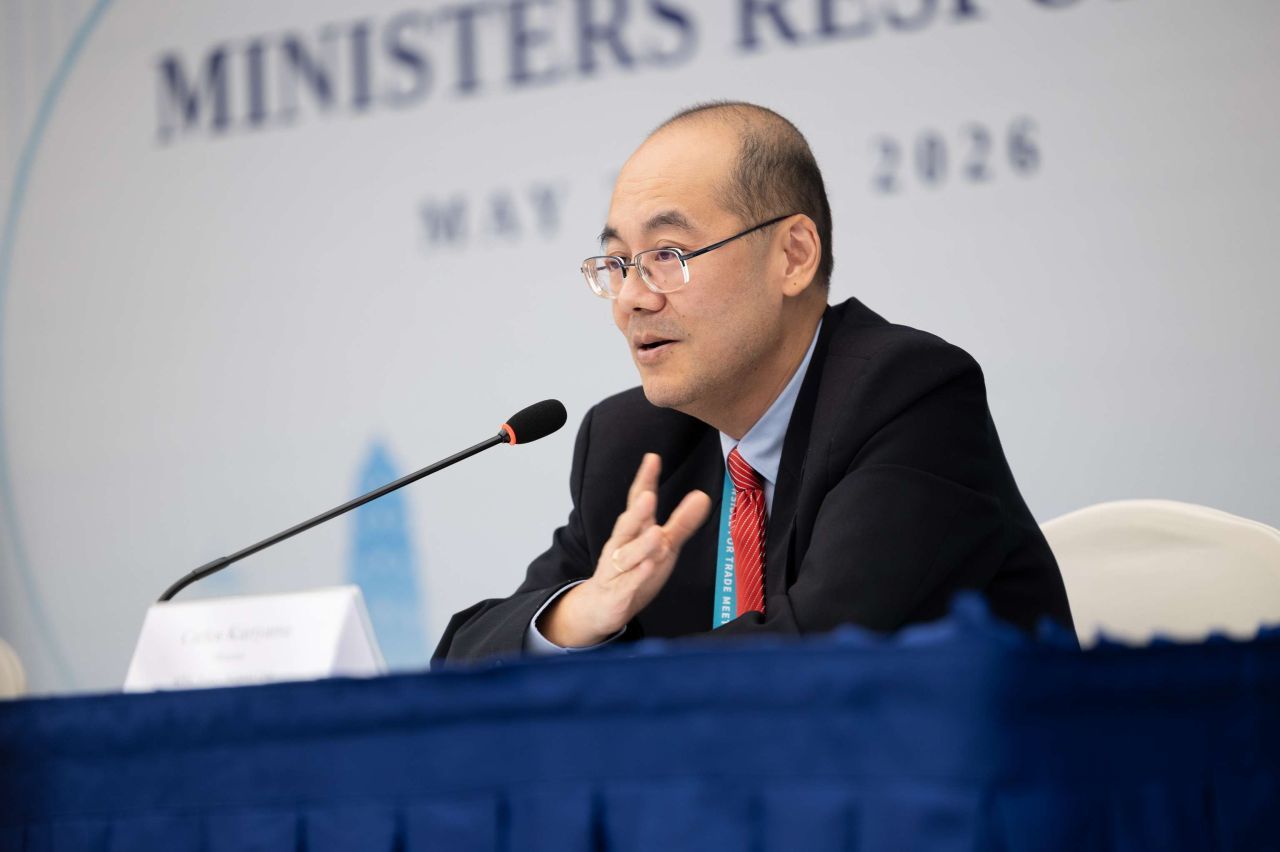
“We are no longer talking about harmonising systems, but acknowledging there are different systems and we can [still] work together with the different systems,” shares APEC Policy Support Unit Director, Carlos Kuriyama.
The region's approach to fixing this has therefore changed.
The aim is no longer to get all 21 economies onto the same system. Instead, APEC wants their different systems to work with each other, so that documents can seamlessly cross borders.
Systems that talk
Currently, trade still mostly runs on paper, with only one per cent of global trade documents being digital – out of four billion paper documents exchanged every year.
This matters as it's a costly affair, with APEC's studies showing that around five to eight per cent of transaction costs could be cut from digitalisation alone.
A key part of APEC's plan is legal, by making sure that electronic documents have the same legal value as paper documents.
One of the several outcomes it has delivered this year is the APEC Centre of Excellence for Paperless Trade (ACCEPT).
Instead of simply only turning paper into electronic documents, the centre is scoping its work to make sure that both paper and electronic documents can be recognised, exchanged and used across borders.
ACCEPT is working with businesses and governments on pilots to test solutions in legal recognition and common standards to interoperability.
The Singapore Business Federation (SBF) has been supporting ACCEPT's work in this regard, focusing on four common trade documents including electronic bills of lading, certificates of origin, invoices and customs bonds.
Kuriyama also highlighted that economies need a supportive policy environment for electronic authentication, e-signatures, e-invoicing and digital payments.
They also need trusted ways to move data across borders. GovInsider recently interviewed Denise Wong, Commissioner, Personal Data Protection Commission (PDPC) on how Singapore creates a secure and open environment for cross-border data flows.
Interoperability applies to AI as well
The upcoming APEC meeting would also focus on uncovering the different approaches to regulating AI.
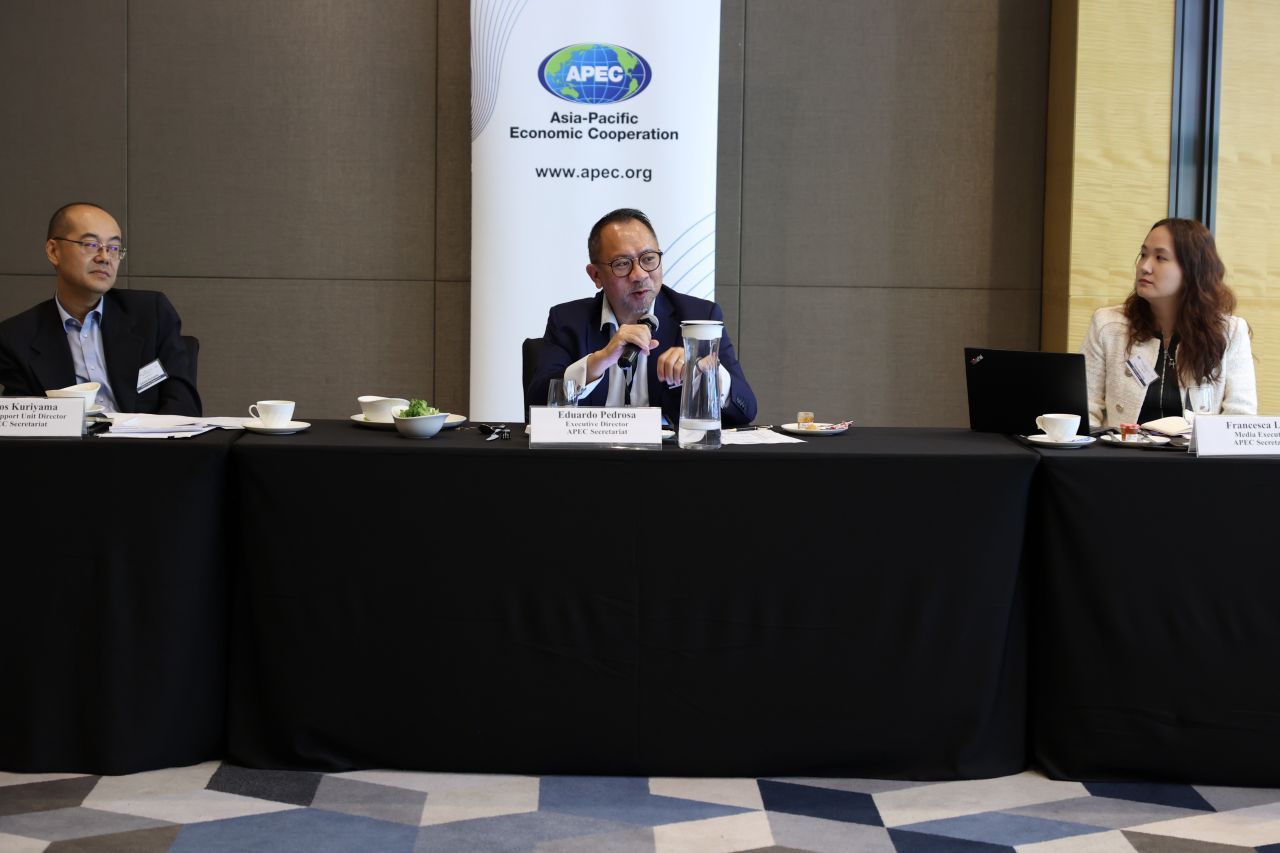
According to APEC Secretariat Executive Director, Eduardo Pedrosa, the aim for AI is the same as in trade documents: "What we’re looking is on a deeper level on the interoperability of those systems."
That includes trust, data privacy and the “black box” problem of AI systems.
Responding to GovInsider on how far digital sovereignty is discussed at the APEC level, Pedrosa said the first step is simply agreeing what the term means.
“We’re not all on the same page on what that actually means,” he said, referring to different terms used like "digital sovereignty", "data sovereignty" and "data privacy."
As a consensus-based organisation, APEC has been organising workshops and dialogues for different economies to set out their own understanding.
While the top-level talks like this focus on principles, the standards are at the working level, which is at focus of the upcoming meetings.
What consensus-building has achieved so far
Asked how APEC’s founding aim of economic openness squares with some of its largest members prioritising national security and adopting protectionist policies, “I’m not going to pretend there is no fragmentation,” said Pedrosa.
But in that gap, he noted that the members that find common ground are pressing ahead in smaller groups, such as through the Comprehensive and Progressive Agreement for Trans-Pacific Partnership (CPTPP), Future of Investment and Trade (FIT) Partnership, and even more specific agreements to help one another in a crisis.
He cited an arrangement between Singapore and New Zealand to assist one another in essential supplies during crisis as an example.
"Those economies are still moving quite quickly, and they're getting critical mass," he said.
As a "concrete deliverable" from these meetings, said Pedrosa, APEC wants to focus on food systems, by setting out the principles of working together in a framework.
"Trying to figure that out and what we need to do in response is a major deliverable," he added.
Beyond talking about diversifying supply chains, APEC’s discussions with its members since 2020 have been centred around moving supply chains from "just in time" to "just in case."
The latter model focuses on maintaining large inventories to meet unexpected demands.
Recognising the limits of reaching agreement across 21 APEC economies, Kuriyama highlighted where consensus-building at APEC was delivering.
There have been 13 ministerial meetings this year, with consensus outcomes in around nine of them, and about 16 ministerial-level deliverables, he said.
He pointed to a policy statement from APEC finance ministers on financing digital infrastructure, with governments sharing risk, multilateral development banks helping with project preparation and co-financing, as well as the private sector bringing new financial instruments.
Other policy areas discussed on ministerial level included a joint statement on harnessing AI for employment – focusing on lifelong reskilling and upskilling – as well as a task force to mutually enhance AI and energy.
These discussions happened amid what Kuriyama called "two offsetting shocks": With AI boosting productivity, alongside increasing food and fuel prices from geopolitical tensions.
"What can APEC do about this? It's that interoperability story. When we get together, try to ensure that the policies we take do promote things like supply chain resilience," Pedrosa noted.