
Kenneth T. Asuncion, Provincial Officer (Misamis Occidental), Region 10, Department of Information and Communications Technology (DICT) of the Philippines
By Sol Gonzalez
Meet the young public sector officials in the inaugural Young & Official Report 2026.
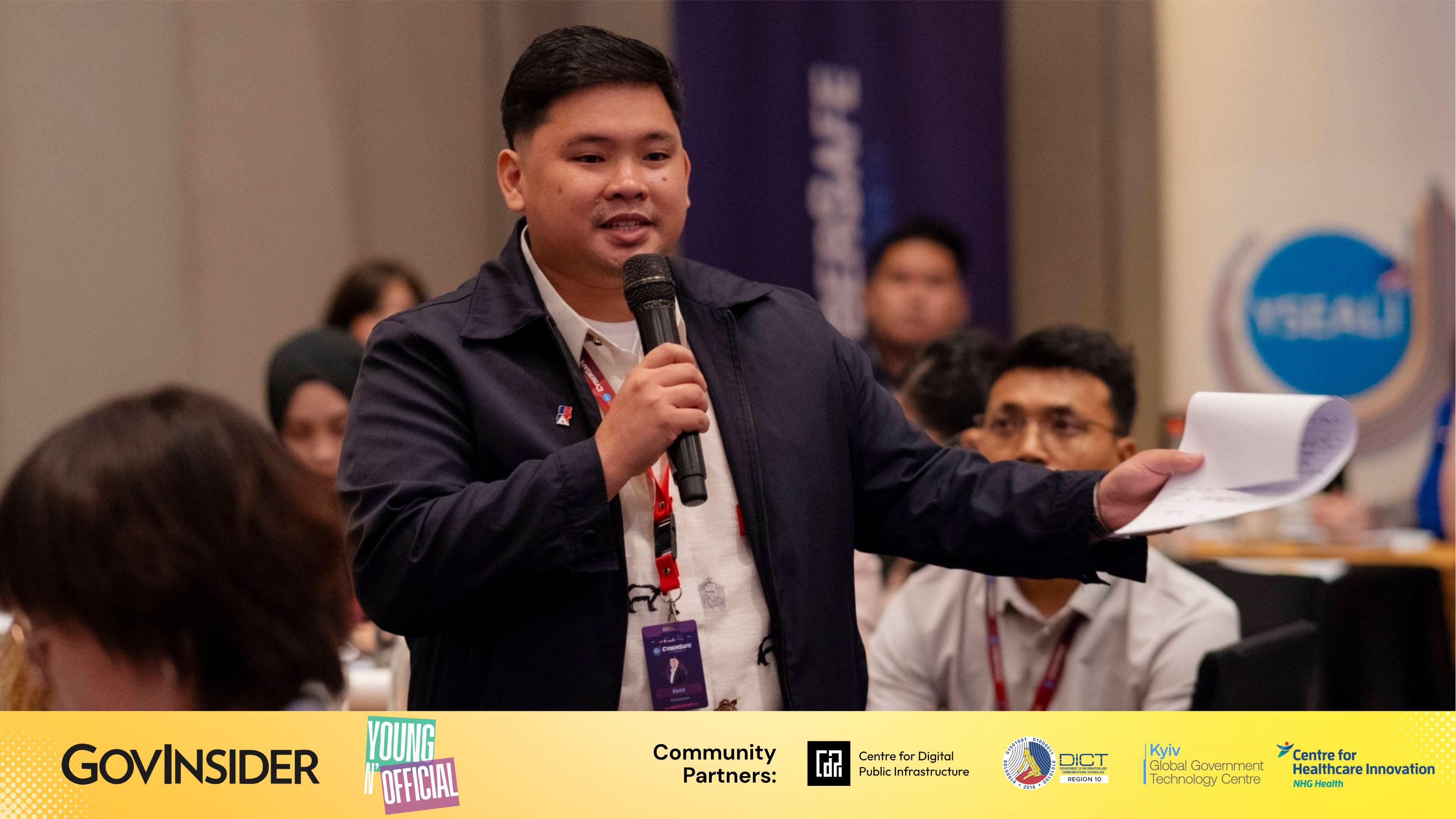
Kenneth T. Asuncion, Provincial Officer (Misamis Occidental), Region 10, Department of Information and Communications Technology (DICT) of the Philippines.
1) What does public service mean to you? Can you share more about your role in the public sector?
Public service, to me, means ensuring that no one is left behind in the digital revolution. In a rapidly evolving world shaped by technology, I believe that every community — regardless of geography or social condition — deserves access to connectivity, digital opportunities, and government services. It is about creating bridges that allow people to participate meaningfully in society and benefit from digital transformation.
In my role in the public sector, I lead and support initiatives focused on digital inclusion, community empowerment, and strategic partnerships. One of the key programs I help champion is the Smart Village initiative, which aims to transform isolated and conflict-affected communities into digitally empowered and connected communities.
Through this initiative, communities gain access to free connectivity, digital literacy programs, eGovernment services, educational platforms, and opportunities that help them become more resilient and participative members of society. The goal is not only to provide technology, but to create environments where communities can thrive in the digital age.
I also lead initiatives such as LAKIP, which promotes upskilling and digital capacity-building opportunities using local dialects. I strongly believe that people who continuously develop their skills are better equipped to adapt and prosper. By equipping individuals — especially the youth and underserved sectors — with digital competencies and emerging skills, we help prepare communities for opportunities in the digital economy.
Another important aspect of my work is expanding connectivity as a catalyst for growth and development. Reliable internet access accelerates education, governance, communication, entrepreneurship, and access to critical services.
At the same time, meaningful impact cannot be achieved by one institution alone. Public service also means building strong partnerships with local government units, national agencies, private sector partners, academic institutions, and non-government organizations that share the same vision of inclusive and sustainable development.
For me, public service is ultimately about empowering people, creating opportunities, and ensuring that technology becomes a tool for inclusion rather than division.
2) Tell us about a project you championed. What impact did it have on the community?
One of the projects I am most proud to have championed is the Smart Village initiative in Barangay Dalingap, Misamis Occidental — a geographically isolated and conflict-affected community that previously had very limited access to digital services and opportunities. The initiative was designed to demonstrate how technology and collaboration can transform underserved communities into digitally empowered and connected societies.
Through the project, we established free public internet connectivity powered by satellite technology, a Digital Transformation Center equipped with computers, digital literacy and skills training programs, access to eGovernment platforms, and technology-enabled community services.
More importantly, the initiative focused on empowering residents — especially students, youth, and families — to actively participate in education, communication, online services, and livelihood opportunities.
The impact on the community has been significant. Students who previously struggled with connectivity were able to access online learning resources and educational platforms. Residents gained easier access to government services and digital information, while the youth became more engaged in digital literacy and emerging opportunities in freelancing and the digital economy.
The project also helped change perceptions within the community by showing that even isolated areas can become active participants in the digital future when given the right support and opportunities.
The initiative eventually became part of the Smart Villages and Smart Islands movement and now serves as a model for inclusive digital transformation in underserved communities.
Another initiative I actively champion is Child Safe Thursdays, a community-driven advocacy focused on child online protection and cybersecurity awareness. As internet access expands, we recognized the growing risks of online exploitation, cyber threats, and unsafe digital practices affecting children and vulnerable sectors. Through awareness campaigns, school and community engagements, and partnerships with stakeholders, the initiative educates parents, students, teachers, and communities on responsible digital citizenship and online safety. In 2025 alone, the initiative reached more than 5,000 students.
Beyond awareness, Child Safe Thursdays helped strengthen community conversations around online safety and reinforced the importance of ensuring that digital transformation is paired with responsibility, protection, and inclusion.
Both initiatives reflect my belief that public service is not only about deploying technology, but about ensuring that technology creates meaningful, safe, and inclusive opportunities for communities.
3) As a young professional, how has your unique background or perspective allowed you to identify a solution that others in your organisations might have overlooked?
As a young professional in the public sector, I believe my advantage comes from being highly immersed both in community realities and in the rapidly evolving digital landscape. While many programs traditionally focus on infrastructure targets and deployment metrics, my experience on the ground taught me that digital transformation only becomes meaningful when communities are empowered to actually use and benefit from the technology provided.
This perspective shaped how I helped champion initiatives such as the Smart Village project in Barangay Dalingap. While the initial goal was to provide internet connectivity, direct engagement with residents, students, and local stakeholders made me realize that connectivity alone would not solve deeper issues of digital exclusion. Communities also needed practical ways to use technology to improve their daily lives and livelihoods.
Because of this, we expanded the initiative beyond infrastructure by conducting digital literacy and upskilling programs tailored to community needs. One example was working with women’s groups and teaching them how to use social media marketplaces and digital platforms to better market and sell their local products. Through online selling and digital promotion, technology became not just a communication tool, but a means of economic empowerment and community growth.
Similarly, through Child Safe Thursdays, I recognized another gap often overlooked during digital expansion efforts — online safety and child protection. As internet access became more accessible, many communities were still unprepared for the risks associated with cyberspace, particularly online exploitation and cyber threats affecting children and vulnerable users. Through awareness campaigns and stakeholder engagements focused on cybersecurity and child online protection, we were able to integrate digital responsibility into community digitalization efforts.
I believe my perspective as a young professional allows me to approach public service with adaptability, collaboration, and a deeper understanding of how technology affects everyday lives.
Rather than viewing programs solely through implementation targets, I try to focus on long-term social impact and identify practical gaps that can still be addressed through innovation and partnerships.
4) What is your personal strategy for maintaining your creative energy when faced with bureaucracy?
For me, creativity in public service is sustained by purpose, continuous learning, and personal well-being.
My personal strategy for maintaining creative energy despite bureaucracy is to always stay grounded in community impact. In public service, administrative processes and institutional challenges are inevitable, but I constantly remind myself that behind every document, coordination meeting, or policy discussion are real communities and real people who stand to benefit from the work we do.
Seeing the direct impact of initiatives — whether it is a student gaining internet access, a women’s group improving their livelihood through digital platforms, or a remote community accessing government services for the first time — keeps me motivated and purpose-driven.
I also make it a point to continuously benchmark and learn from other programs, organizations, and innovators. I believe creativity grows when you remain open to new ideas and perspectives. By observing successful initiatives from both government and non-government sectors, I gain insights on how programs can be improved, localized, or implemented more effectively within our own communities. This mindset helps me avoid becoming confined by routine processes and encourages me to think beyond traditional approaches.
Equally important, I believe that sustaining passion for public service also requires taking care of yourself personally. I strongly believe that you cannot genuinely give joy, inspiration, or positive energy to communities if you are already emotionally exhausted yourself. Maintaining balance, enjoying life, spending time with people who inspire me, and celebrating small wins help me recharge and remain optimistic even in demanding environments.
5) If you had just one area to invest in to accelerate transformation in the public sector (regulation, technology, talent, etc.), which one would you choose and why?
If I had to choose one area to invest in to accelerate transformation in the public sector, I would choose technology — but only when implemented side by side with human capacity development and digital literacy.
Working in the technology sector, I have personally seen how connectivity and digital solutions can rapidly transform communities, improve government service delivery, expand access to education, and create economic opportunities even in geographically isolated areas. Technology has the power to remove barriers, accelerate communication, and make public services more efficient and accessible.
However, I also learned through initiatives such as Smart Villages and community digital transformation programs that technology alone is never enough. Infrastructure and platforms can only create lasting impact when people are equipped with the skills, confidence, and understanding to use them effectively. Without digital literacy and human capacity-building, the gap between connected and truly empowered communities still remains.
This is why I believe investments in technology must go hand in hand with talent development, upskilling, and digital inclusion efforts. Communities need to understand not only how to access technology, but also how to maximize it for education, livelihood, entrepreneurship, governance, and online safety. Public sector workers must also continuously adapt and develop digital competencies to keep pace with evolving systems and citizen needs.
For me, sustainable public sector transformation happens when technology empowers people — not when technology simply exists. The real measure of progress is not the number of systems deployed, but how many lives are genuinely improved because people are capable of using those systems meaningfully and safely.
6) What is your greatest ambition as you grow in your public service career?
My greatest ambition as I grow in my public service career is to help build a future where digital transformation genuinely uplifts communities and creates equal opportunities for every Filipino, especially those who have long been underserved and left behind.
I aspire to become a leader who does not only implement programs, but helps shape systems that are inclusive, people-centered, and grounded in real community needs. I want to contribute to building resilient digital ecosystems where connectivity translates into better education, stronger local economies, safer online spaces, more responsive governance, and empowered citizens.
As I continue in public service, I hope to help scale efforts that make digital access more meaningful and equitable, while also strengthening collaboration across sectors. More importantly, I want to help foster a culture of public service that is adaptive, compassionate, and continuously innovating for the public good—where technology and governance work together to deliver real, lasting impact.
7) What is a “universal value” that connects everyone in your department – from interns to directors – and how do you use that to drive collaboration?
A core value that unites everyone in our department—from leadership to frontline staff—is a shared commitment to public service grounded in impact: the understanding that our work must ultimately translate into real improvements in people’s lives.
I help foster this alignment by consistently anchoring discussions on field realities—how policies, systems, and programs actually play out in communities. In every coordination, I try to bring the conversation back to a simple but critical question: “What does this change for the people we serve?”
Whether we are working on connectivity, capacity-building, or digital inclusion efforts, this perspective helps keep everyone focused on outcomes rather than outputs. It also helps bridge gaps across roles, technical backgrounds, and organizational levels by creating a common reference point that is grounded in service delivery.
In practice, this shared focus on impact makes collaboration more deliberate and meaningful. It shifts conversations away from mere task completion and toward purpose-driven execution, where every contribution is measured by its real-world effect on communities.
8) What is the best piece of advice you’ve got for the next generation of public servants?
The most important advice I would give to the next generation of public servants is this: stay close to reality, not just to systems.
It’s easy to get absorbed in processes, targets, and institutional routines, but real public service starts the moment you consistently put yourself in environments where you see and hear the actual conditions of the people you serve. Decisions become clearer, and solutions become more grounded, when they are informed by lived experience rather than assumptions.
Second, don’t wait for perfect directives before acting on what is obviously needed. Many meaningful improvements in public service begin as small, timely actions taken when a gap is already visible. Learn to responsibly push within your space, align later, but start with awareness and initiative.
Finally, protect your perspective. Public service can become mechanical if you lose sight of why you entered it in the first place. You sustain effectiveness not just through skill, but through discipline in how you think—by constantly asking whether your work is making things simpler, safer, or more accessible for the people it is meant to serve.
A personal principle I always carry is: “Technology should never widen the gap between people; it should become the bridge that allows everyone to move forward together.”
9) What is a myth you wish to debunk about young public servants?
One myth I wish to debunk about young public servants is the idea that youth automatically means inexperience, impatience, or lack of depth in governance.
Many young professionals today bring a different kind of strength into public service — adaptability, systems thinking, technological awareness, and a strong understanding of emerging societal realities. We grew up in a rapidly changing environment, which allows us to recognize gaps, respond quickly to evolving challenges, and explore solutions that may not have been considered before.
At the same time, being young in public service does not mean disregarding institutional knowledge or experience. The most effective young public servants are those who know how to balance innovation with respect for process, collaboration, and mentorship. We are not trying to replace existing systems overnight; we are trying to help make them more responsive, inclusive, and relevant to present-day realities.
I believe young public servants should not be viewed only as future leaders, but as active contributors already capable of creating meaningful impact today.
10) Write a letter to your future self in 2035. Please keep it within 200 words.
Dear Future Me,
I hope that by 2035, you never lost the reason why you entered public service in the first place — to make sure people who are often unseen, disconnected, or left behind are given real opportunities to move forward.
I hope you still choose to listen to communities before making decisions. I hope you stayed grounded despite achievements, titles, or recognition. Never forget that the most meaningful work often happens far from conference rooms — in classrooms with weak signals, in remote communities waiting to be connected, and in conversations with people who simply want a better chance at life.
I also hope you protected your sense of purpose and joy. The work will always be demanding, but never allow the system to make you cynical. Continue building partnerships, empowering others, and creating spaces where technology serves humanity responsibly and inclusively.
Most importantly, I hope you remained brave enough to act on problems you could not ignore.
If you are reading this fulfilled, then it means you did not just build programs — you helped build hope.
— Your younger self