
Living longer in good health, priority for Singapore’s healthcare system
Speakers at GovInsider's Healthcare Day 2025 emphasised the need for inter-agency collaboration, as well as the need to combine technology and human touch, to improve health outcomes.
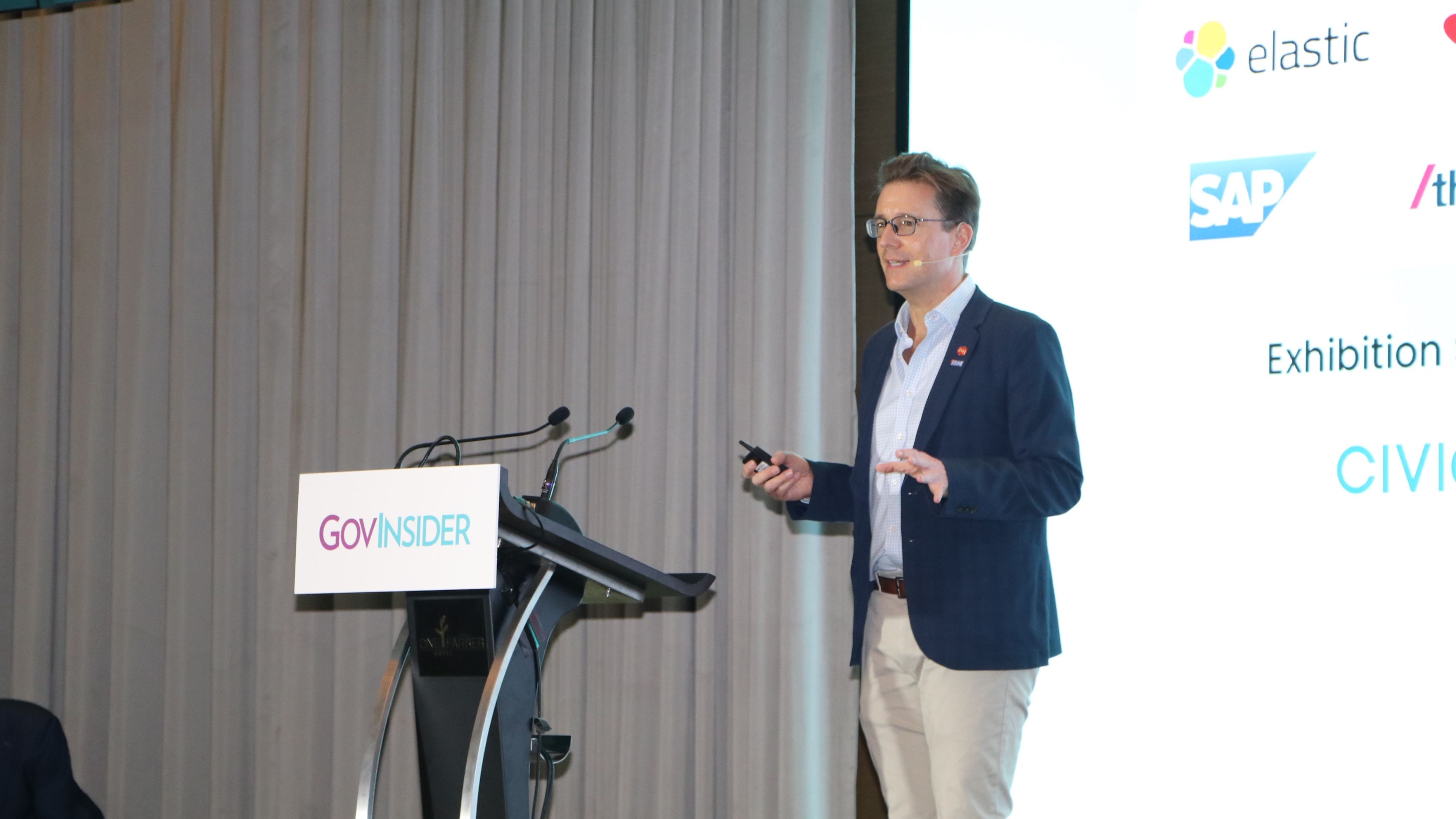
NHG Health’s Clinical Director and Chief Clinical Information Officer of Population Health, Jonty Heaversedge, giving his keynote address at this year's GovInsider Live: Healthcare Day 2025 event. Image: GovInsider.
Having achieved a life expectancy of 83.5 years, one of the world’s highest, Singapore’s healthcare system was now prioritising policies that would ensure that those extra years of life were spent in good health, free from chronic illness and disability.
Highlighting this point during his keynote address at this year’s GovInsider Live: Healthcare Day 2025 event on Tuesday, the NHG Health’s Clinical Director and Chief Clinical Information Officer of Population Health, Jonty Heaversedge, said the government’s focus was to target the root causes of chronic diseases and prioritise prevention.
“The goal is to ensure that residents not only live longer but also enjoy more vibrant, active, and independent lives,” said Heaversedge, who was also the Centre for Healthcare Innovation (CHI)’s Digital Innovation Office Director.
He shared some sombre statistics.
By 2030, one in four Singaporeans would be over the age of 65, and the country’s healthcare costs would reach S$30 billion.
The implications of this were far-reaching, he noted, adding: “Not only does this threaten the sustainability of the healthcare system, it also risks exacerbating inequalities in access and outcomes [in healthcare]”.
Singapore's healthcare system was facing a dual challenge: tackling persistent workforce shortages and meeting rising public expectations of seamless, digitally enabled experiences.
This required not only attracting and retaining talent, but also building a robust data infrastructure to integrate services.
“Addressing these multifaceted issues required a holistic approach that went beyond treating illness to promoting health, preventing disease, and ensuring equity in access and outcomes for all residents,” Heaversedge said.
To subscribe to the GovInsider bulletin, click here.
The need for a holistic approach to healthcare was a recurring theme throughout the day’s various presentations and panel discussions.
Inter-agency collaboration a must
Speakers at the opening plenary panel discussion, titled Whole-of-Government Health Transformation: Building a Resilient, Equitable, and Tech-Enabled Singapore, highlighted the critical role of inter-agency collaboration in driving healthcare transformation in Singapore.
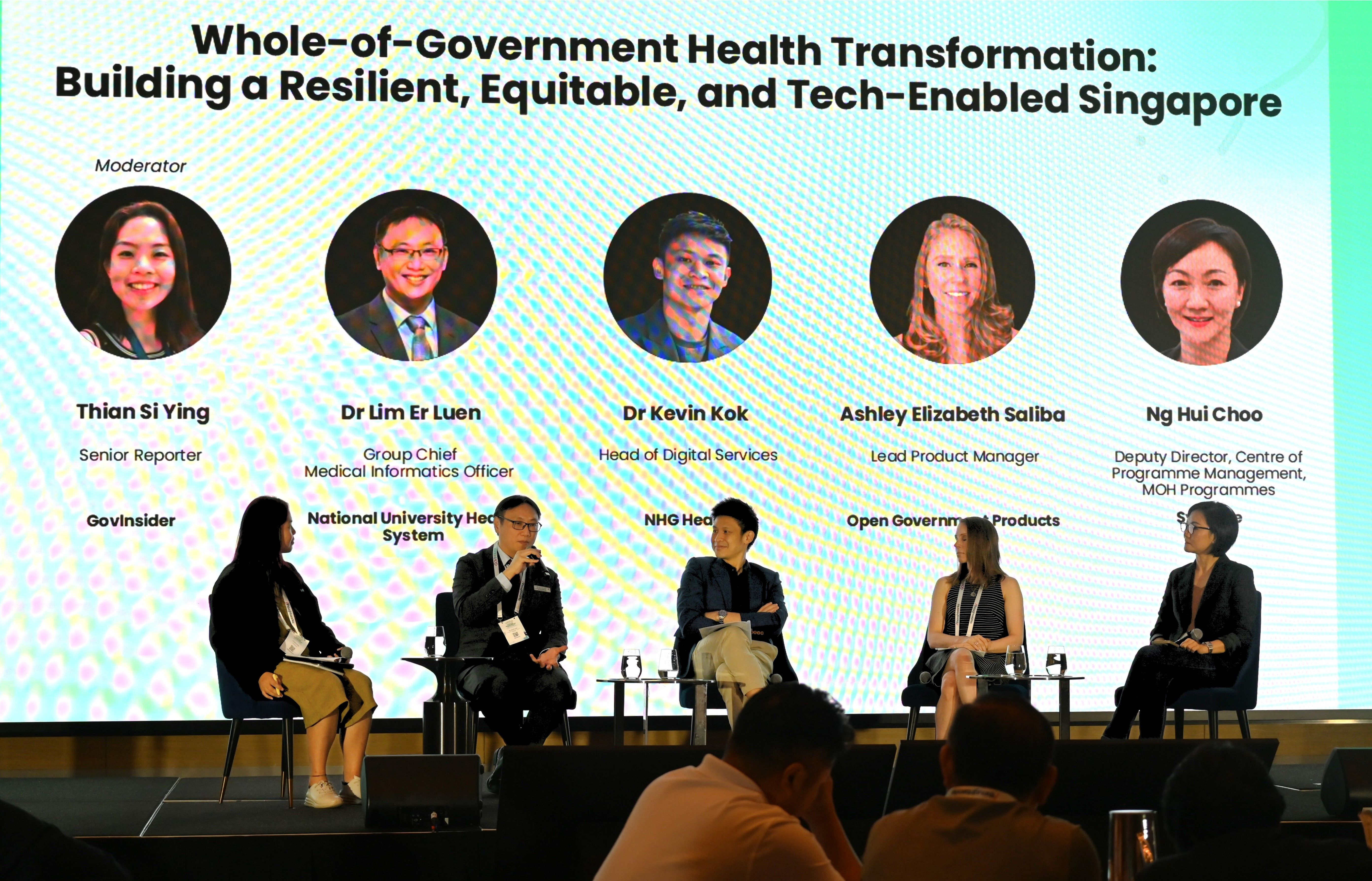
The speakers shared examples of successful partnerships between government agencies, healthcare clusters, and technology providers.
Programmes such as the implementation of integrated electronic medical records and Healthier SG were highlighted by the speakers.
NHG Health’s Head of Digital Services, Dr Kevin Kok, said foundational initiatives like SingPass enabled seamless digital identity verification, not only across healthcare but also in other sectors, fostering trust and accessibility.
Healthier SG was a prime example of moving from reactive to proactive healthcare, “where multiple agencies work together to encourage preventive health measures among citizens”, he said.
The National University Health System (NUHS)’s Group Chief Medical Informatics Officer, Dr Lim Er Luen, shared his experience leading the implementation of the Epic electronic medical records (EMR) system to manage patient data across NUHS’ network of healthcare institutions in Singapore.
Dr Lim emphasised that such large-scale digital initiatives were only possible through close collaboration with partners like Synapxe and other healthcare clusters.
Open Government Products (OGP)’s Lead Product Manager, Ashley Elizabeth Saliba, said her team worked closely with agencies like the Ministry of Health (MOH) and Synapxe to create tools that address real-world challenges faced by patients and providers.
One notable example she cited was the digital financial declaration process through Care 360, which replaced time-consuming, paper-based procedures with a streamlined online system.
Synapxe’s Centre of Programme Management, MOH Programmes, Deputy Director, Ng Hui Choo, highlighted the importance of designing solutions that were both inclusive and practical.
She advocated for co-designing and co-developing digital tools with stakeholders to ensure they fit real-world workflows and did not overburden providers or patients.
Distinction between policy and programmes
At another panel session, Data-Driven Policymaking and Smarter Resource Allocation, speakers explored the distinction between policy and programme layers in healthcare.
The speakers emphasised that while policies set strategic direction and end goals, programmes were the operational means to achieve these objectives.
The discussion addressed the challenges of data governance, integration, and trust.
NUHS’ Associate Professor, Patrick Chia, stressed that building a strong data foundation was crucial.
He said agencies needed to be clear on the purpose and use cases for data collection, especially since data serves multiple duties across clinical, research, and quality improvement.
Health Promotion Board (HPB)’s Deputy Director, Data Science and Analytics, Jeremy Tan, noted that maintaining citizen trust required transparency, robust data protection, and clear communication about how data was being used, while also ensuring that data sharing across agencies is guided by well-defined principles and audit trails.
The Ministry of Defence (MINDEF)’s Healthcare Regionalisation Project Office Head, Dr Magdalene Lee, described the military’s approach of piloting and operationally testing external research to ensure relevance and efficiency.
A*STAR’s Head of the Healthcare and MedTech Division, Institute for Infocomm Research, Pavitra Krishnaswamy, advocated for training more "bilingual" individuals who could bridge research and practice.
Mental health important part of well-being
Speakers at the day’s closing panel, Charting the Course for a Healthier Singapore, stressed the need to empower primary care doctors to serve as the first line of defence, developing personalised health plans, and encouraging individuals to adopt healthier habits such as better nutrition, sleep, and exercise.
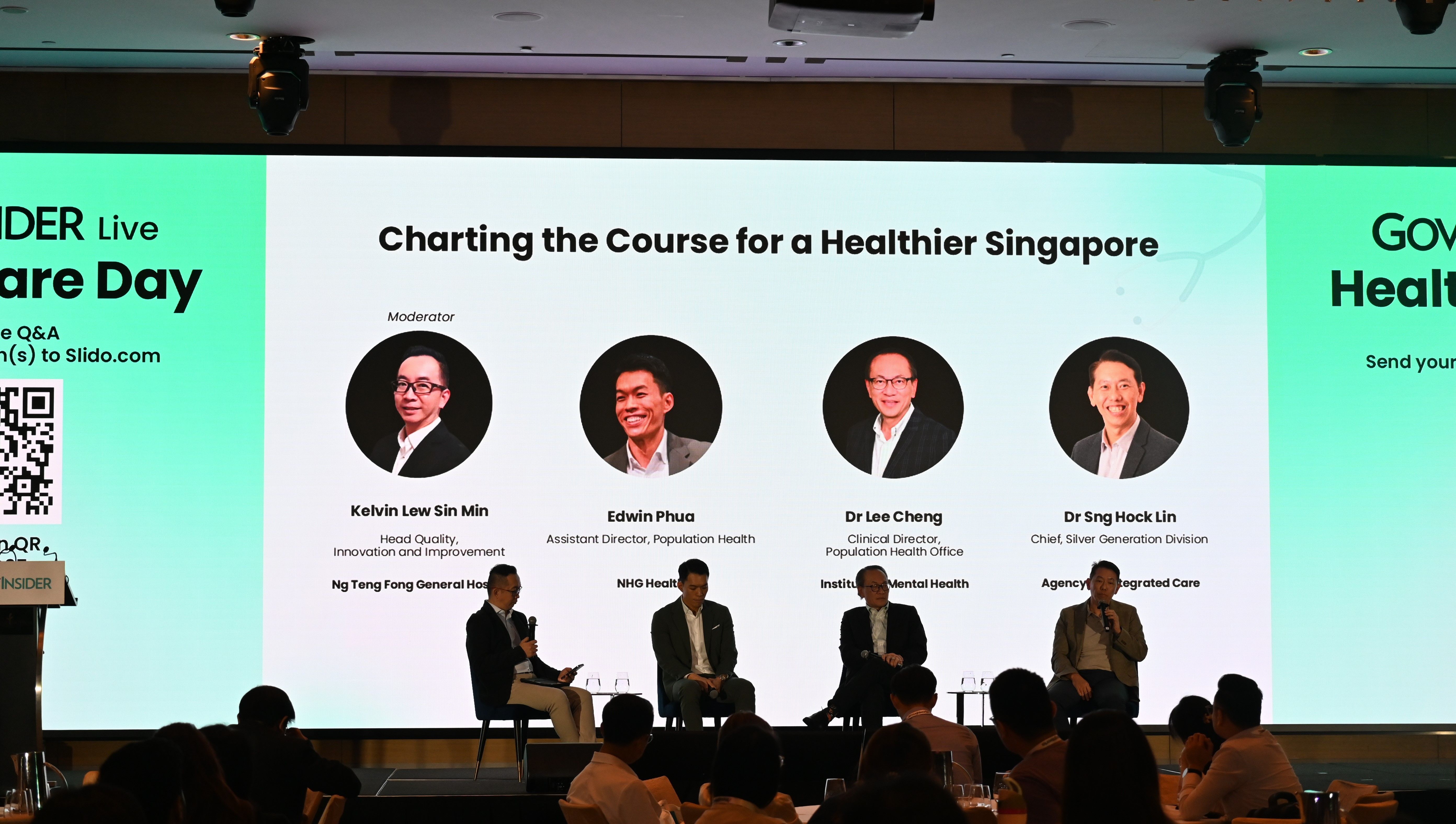
Mental health was highlighted as an equally important aspect of overall well-being.
The panellists noted that while there has been progress in moving away from custodial care towards community-based support in mental health, significant challenges remained, particularly around stigma and the treatment gap.
It was noted that many individuals with mental health conditions delayed seeking help due to societal perceptions.
The importance of social support networks was underscored, particularly for seniors who may be at risk of loneliness and social isolation.
Technology with human touch
The day’s events, which involved multiple other panel sessions and presentations, highlighted the need to integrate technology, particularly artificial intelligence (AI), into the national healthcare system, while maintaining a human touch.
This would help with data-driven policymaking and resource allocation, and this in turn would make it easier to address the country’s demographic shift towards an ageing population by enhancing healthcare accessibility with user-centric designs.
The broad conclusion was that by leveraging both human touch and digital tools, Singapore could build a holistic, resilient health ecosystem that addressed physical, mental, and social well-being for all its residents.