
Low-code powers a sailor-led digital transformation across the Singapore Navy
The Republic of Singapore Navy (RSN) is now focusing on integrating low-code solutions with existing pro-code systems, to ensure they work seamlessly together, says RSN’s Digital Transformation Office’s Head Vincent Aw.

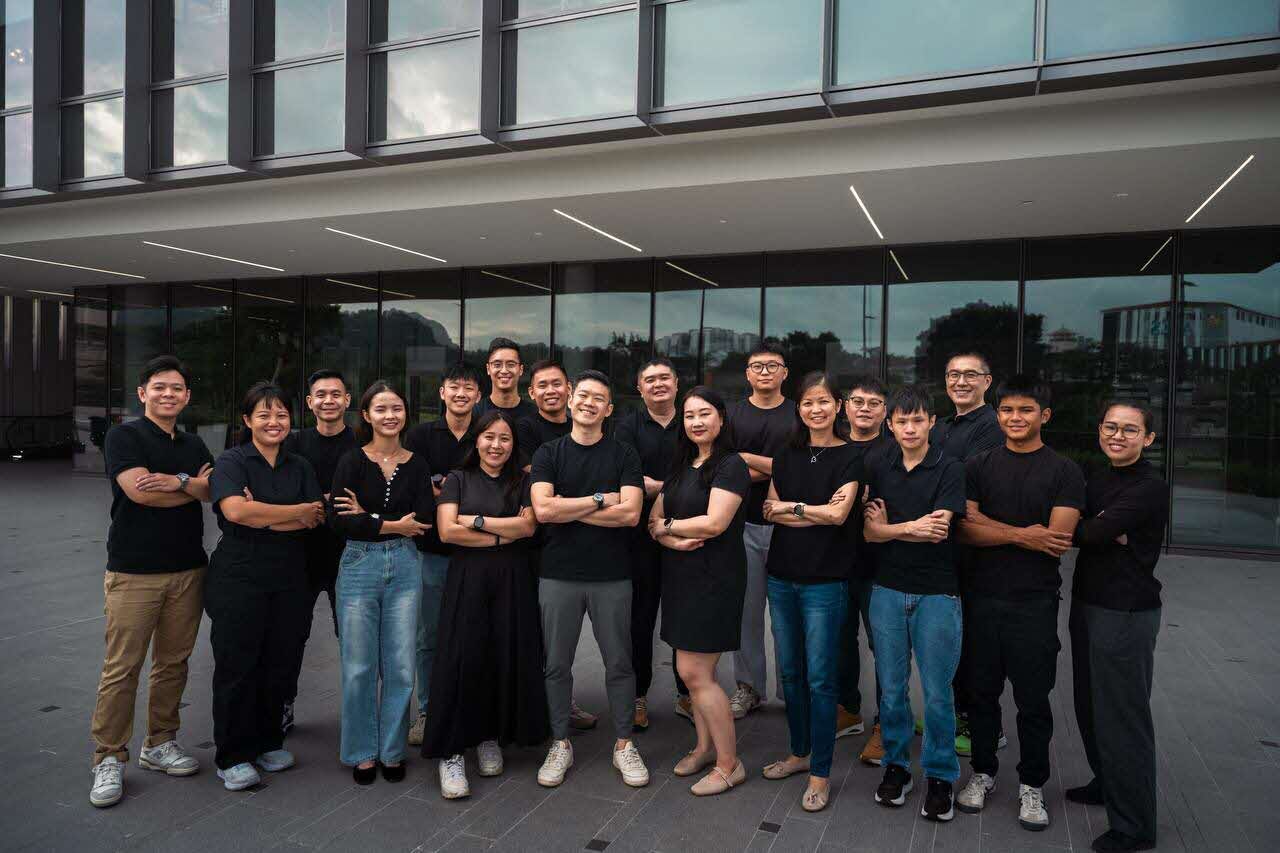
Republic of Singapore (RSN) was the winner at GovInsider's Festival of Innovation (FOI) 2026 awards for the "Transformative Agency of the Year" category. Image: GovInsider
For a long time, innovating in the military context has been known for its long procurement cycles, complex tenders and endless feedback loops.
But the tide is changing in the Republic of Singapore Navy (RSN), with the sailors themselves driving digital innovation with low-code tools.
It’s also a striking coincidence that the philosophy that initiated RSN’s low-code movement was coined by a fellow sailor from the US Navy, Rear Admiral Grace Hopper, who said “It’s easier to ask for forgiveness than permission.” Hopper is also a computer science pioneer.
This same energy was by chance what RSN’s Digital Transformation Office (RDTO) brought to their very first low-code product.
The product is the Personnel Accounting System for Ships (PASS), built on the Power Platform, that allows real-time visibility, remote signoffs and audit-ready records on crew and visitor movement onboard ships.
When stakeholders walked into a meeting, they were expecting a conceptual pitch and a distant delivery date. Instead, they got a working prototype for a real-world use case that was launched in just two days.
Speaking to GovInsider, RDTO’s Head Vincent Aw shares that low-code tools empower sailors to digitalise their daily work “on their own terms”, implying that the solutions developed tailored to their needs and at a pace they control.
“At a time when full-stack (pro-code) development dominated, often costly and slow to deliver, we challenged the norm,” he stresses.
RSN secured the win for the "Transformative Agency of the Year" at GovInsider's recent Festival of Innovation (FOI).
Aw shares more about his team’s journey scaling a low-code movement across the navy, and how DTO has redefined its role since the movement took off.
Low-code as ‘a serious, strategic alternative’
The Ministry of Defence’s (MINDEF) adoption of Microsoft 365 for its wider ecosystem led the three-man team at RDTO to explore the untapped potential of its low-code platform, says Aw.
“We identified significant untapped potential in the Power Platform suite, specifically Power Apps and Power Automate, to meet ground-level digitalisation needs,” he adds.
Within two months, the team has been able to scale the working prototype of their first low-code product to full product delivery and widespread adoption across a Flotilla of RSN ships.
The product was later adapted and deployed across five RSN Flotillas.
“This rapid turnaround disrupted conventional thinking and positioned low-code development as a serious, strategic alternative,” he explains.
Aside from leadership buy-in, Aw shares that the low-code development has also empowered sailors by placing the tools of digitalisation directly in their hands.
Today, the navy sees a range of low-code solutions deployed in real-world use cases across planning, tracking, and process automation.
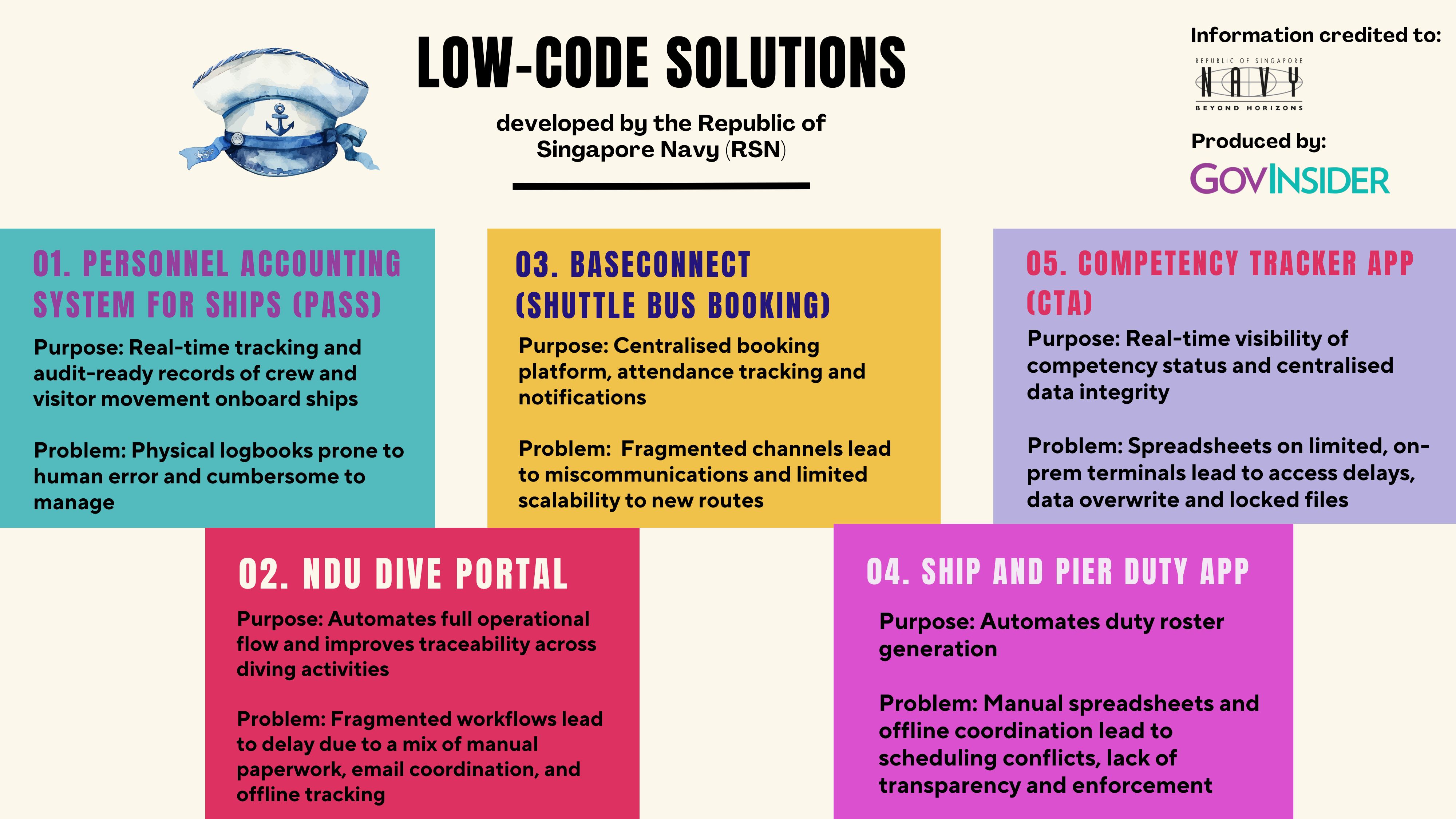
DTO’s role from developer to enabler
While these early wins proved low-code's viability, the real breakthrough came when the RDTO shifted its focus from building solutions for the sailors to enable them to build their own use cases, says Aw.
The team partnered with a ground unit that became the early adopters of low-code. Within four months, the unit was able to develop and deploy three apps across six ships, he explains.
Instead of a top-down mandate, the development of the solutions has been spearheaded by the officers on the ground, with strong support from the leadership, he notes.
“This marked a paradigm shift in our units from passively waiting for solutions to be delivered, to actively shaping and accelerating their own digital transformation,” he explains.
The RDTO team provided technical support, coding assistance, and backend management to ensure the success of the initiatives.
The formal support is accompanied by an informal network of coders to facilitate knowledge sharing and mutual support.
“We established a clinic help desk and various development pathways, including Code-For where we handle the coding entirely, Code-With for collaborative development, and Self-Code for independent coding.
“Beyond backend technical, licensing, and coding support, we also implemented UI/UX assistance to enhance user experience,” he says.
Aw adds that his team also collaborates with institutes of higher learning (IHLs) to design and roll out training courses for sailors to better understand the Power Platform’s potential, guide developments and even code independently.
To date, around 200 personnel have been trained.
Bridging the gap between low-code and pro-code
While the speed of low-code is impressive, the long-term strategy isn't working in a vacuum.
“We advocate for the integration of low-code and pro-code solutions, emphasising that they must work seamlessly together,” says Aw.
Since 2023, Aw shares that the team has been advocating for policy reforms, including cybersecurity reviews and licensing adjustments, to support Power Platform adoption, as well as operationalising end-to-end app development.
According to him, the RDTO team is currently working on integrating low-code solutions with the RSN's existing pro-code systems through data engineering.
The goal of digital transformation in the navy is not so much to replace the backend infrastructure, but to empower officers to build the “last mile” of their own digital tools.
“Our [RDTO’s] focus remains on delivering value and enhancing user experience. Centrally coordinated, we can recommend the best solutions and pathways that align with our objectives,” he explains.
By integrating agile, sailor-led solutions with robust systems, the navy is ensuring that innovation can both happen at scale and be tailored to the specific, evolving needs of the fleet.