
Lucia Velasco, Head of AI Policy, United Nations Office for Digital and Emerging Technologies
Meet the Women in GovTech 2025.
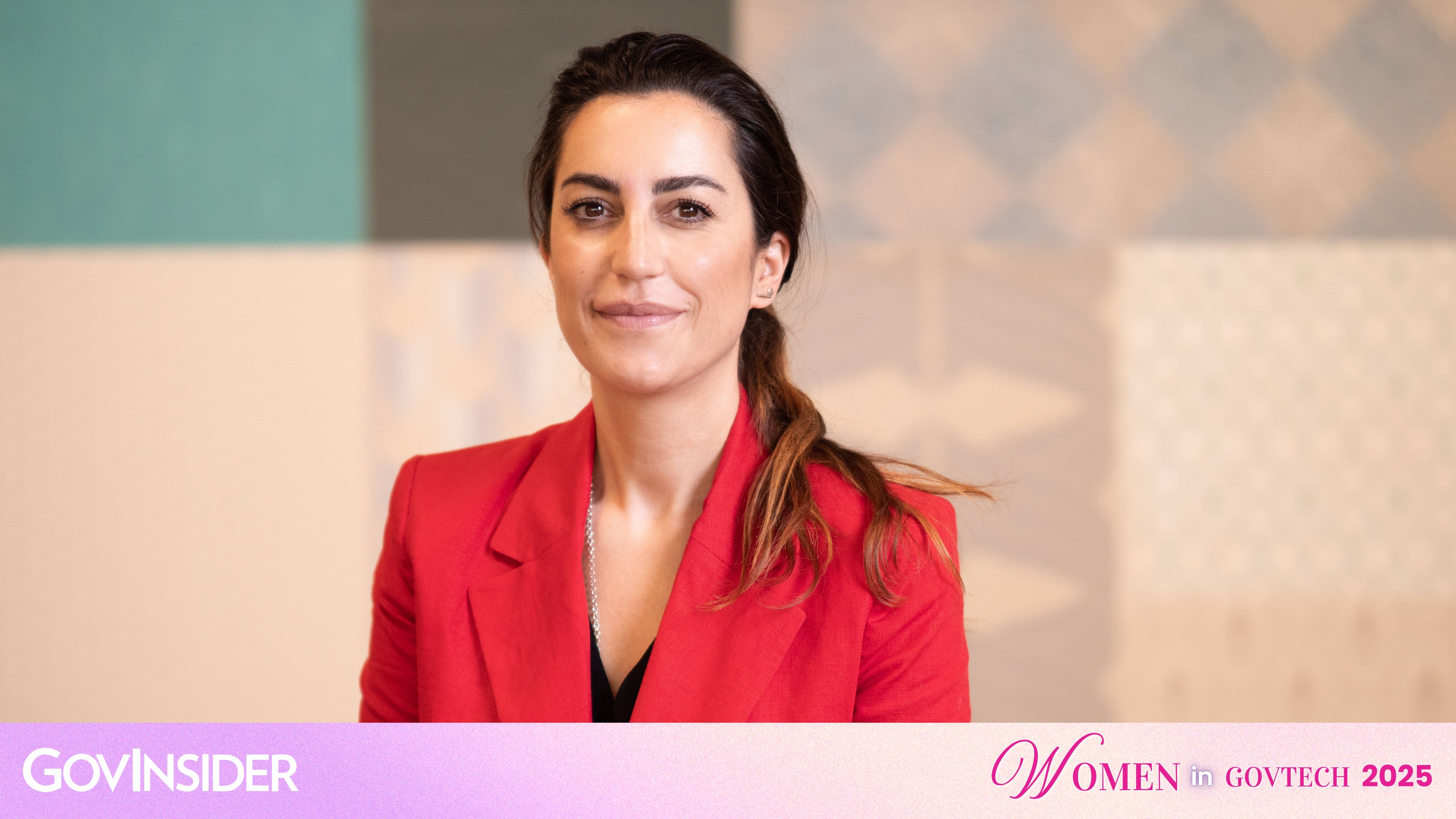
Lucia Velasco, Head of AI Policy, United Nations Office for Digital and Emerging Technologies, US, shares about her journey.
1) How do you use your role to ensure that technology and policy are truly inclusive?
In my work at the United Nations, I focus on the public-interest dimensions of digital technologies.
This means grounding policy design in evidence, understanding unequal access to data, compute, and digital infrastructure, and ensuring that global frameworks consider the needs of countries that are still building foundational capacity.
Much of my role involves convening governments, researchers, and private-sector actors to improve, the way AI impacts public services, labor markets, and development.
When policies begin with the realities of people’s lives rather than the assumptions of technology developers and others, they are more likely to be inclusive, trusted, and sustainable.
2) What’s a moment in your career when you saw firsthand how technology or a new policy changed a citizen’s life for the better?
During my years in the Spanish government, I saw how digitalisation can genuinely improve people’s daily lives.
A clear example was when we started using AI to speed up public procurement. Automating routine steps and flagging issues meant payments moved faster, and support reached citizens and service providers without unnecessary delays.
We also automated repetitive tasks that were draining for public servants. This freed them to focus on cases that needed judgment and human interaction, which made services more responsive and improved morale.
And creating a secure personal space through a national app. where people could access their information and complete procedures online. made a real difference for those who cannot easily take time off work or care duties to stand in line.
Seeing those barriers come down was one of the moments that stayed with me.
3) What was the most impactful project you worked on this year, and how did you measure its success in building trust and serving the needs of the public?
Supporting the establishment of the UN General Assembly-mandated independent international scientific panel on AI has been one of the most impactful.
The aim is to create a globally representative mechanism that can provide independent scientific assessments to all the governments.
Representation from the Global Majority, transparent selection processes, gender balance, and the panel’s ability to inform the first universal global dialogue on AI governance are key indicators of trust and relevance.
4) What was one unexpected lesson you learned this year about designing for real people? This can be about a specific project or a broader lesson about your work.
A lesson that emerged repeatedly is that people experience AI systems as part of a broader ecosystem of rules, incentives, and institutions.
In consultations with policymakers, workers, and civil servants, it became clear that trust is built when systems are understandable and challengeable.
Even well-designed tools can undermine confidence if they create a sense of opacity or reduce people’s agency.
Designing for real people requires understanding their working conditions, constraints, and expectations. Without that, even technically sound systems can fall short.
5) We hear a lot about AI. What's a practical example of how AI can be used to make government services more inclusive and trustworthy?
AI-enabled translation is a concrete example. Public institutions increasingly serve multilingual populations.
Real-time translation can help expand access to essential information, support migrants and refugees, and reduce miscommunication in high-stakes situations such as healthcare or social services.
These tools require careful validation and monitoring for accuracy, but when deployed responsibly they can lower barriers and increase trust in public services.
To subscribe to the GovInsider bulletin, click here.
6) How are you preparing for the next wave of change in the public sector? What new skill, approach, or technology are you most excited to explore in the coming year?
The next wave of change will come from treating AI not as a stand-alone tool, but as part of a much wider layer of public infrastructure.
This affects how governments plan energy systems, locate and regulate data centres, deal with environmental externalities, and understand how new investments reshape local economies and labour markets.
I am focusing increasingly on how we build the analytical and institutional capacity to anticipate these effects rather than reacting once problems appear.

I am particularly interested in strengthening foresight and early warning mechanisms.
This means combining AI and data systems with economic analysis to anticipate, for example, how rising demand for compute will affect energy grids, water use, housing, or employment in specific regions, and how AI adoption is changing the global distribution of work.
Building this capability requires new skills inside governments. the ability to interpret complex models, to connect them with social and labour market indicators, and to translate insights into practical regulation and investment decisions.
At the same time, preparedness is not only technical. As services become more data driven, it is important to keep meaningful human channels so that people can question decisions, explain their circumstances, and feel that they are dealing with an institution that listens, not just an automated system.
7) What advice do you have for public sector innovators who want to build a career focused on serving all citizens?
Learn how power actually works. Then use that knowledge to change the system, not just navigate it.
Build alliances with people who want transformation, not performance. Move fast. The problems you're solving are accelerating and people can't wait for your pilot program to scale.
Be the change. Bureaucracy will try to make you docile, patient, appropriate. The best public servants refuse. They maintain a relentless focus on what should exist, not what's politically convenient.
Technology is power. Every algorithm decides who gets seen, who gets served, who gets left behind. Make sure you're building systems that expand opportunity, not just automate inequality.
Fight to redefine who counts as "all citizens." Make the invisible visible. Give voice to the unheard.
Be relentless. This work is never done.
8) Who inspires you to build a more inclusive and trustworthy public sector?
I'm inspired by public servants who refuse to accept things as they are.
The ones who work under impossible constraints, underpaid, under-resourced, yet remain committed to serving people, not systems.
The health workers, educators, sanitation workers who keep our societies running. The civil servants who expose corruption, who question the status quo, who use whatever power they have to make systems fairer.
They prove every day that public service isn't about grand gestures.
It's about showing up, pushing back, and believing that a more inclusive and trustworthy public sector is possible—then building it, one decision at a time.
9) If you had an unlimited budget, what would your dream project be?
The ambition would be simple. every country should have the capacity to decide how it wants to use AI for its own development priorities, supported by the skills, infrastructure, and evidence to do so.
10) Outside tech, what excites you the most?
Outside tech, I get most excited about simple things that help me reset. good books, long conversations, and discovering great food with friends.
And whenever I can, I like to be outdoors. a walk, a bit of sun, or sitting by the water always clears my head.
This feature was made possible in partnership with GovStack.