
Ma Cristina Mae S. Ilaw, S&T Human Resource Education Research and Promotions Division, Department of Science and Technology - Science Education Institute (DOST-SEI), The Philippines
By Sol Gonzalez
Meet the young public sector officials in the inaugural Young & Official Report 2026.
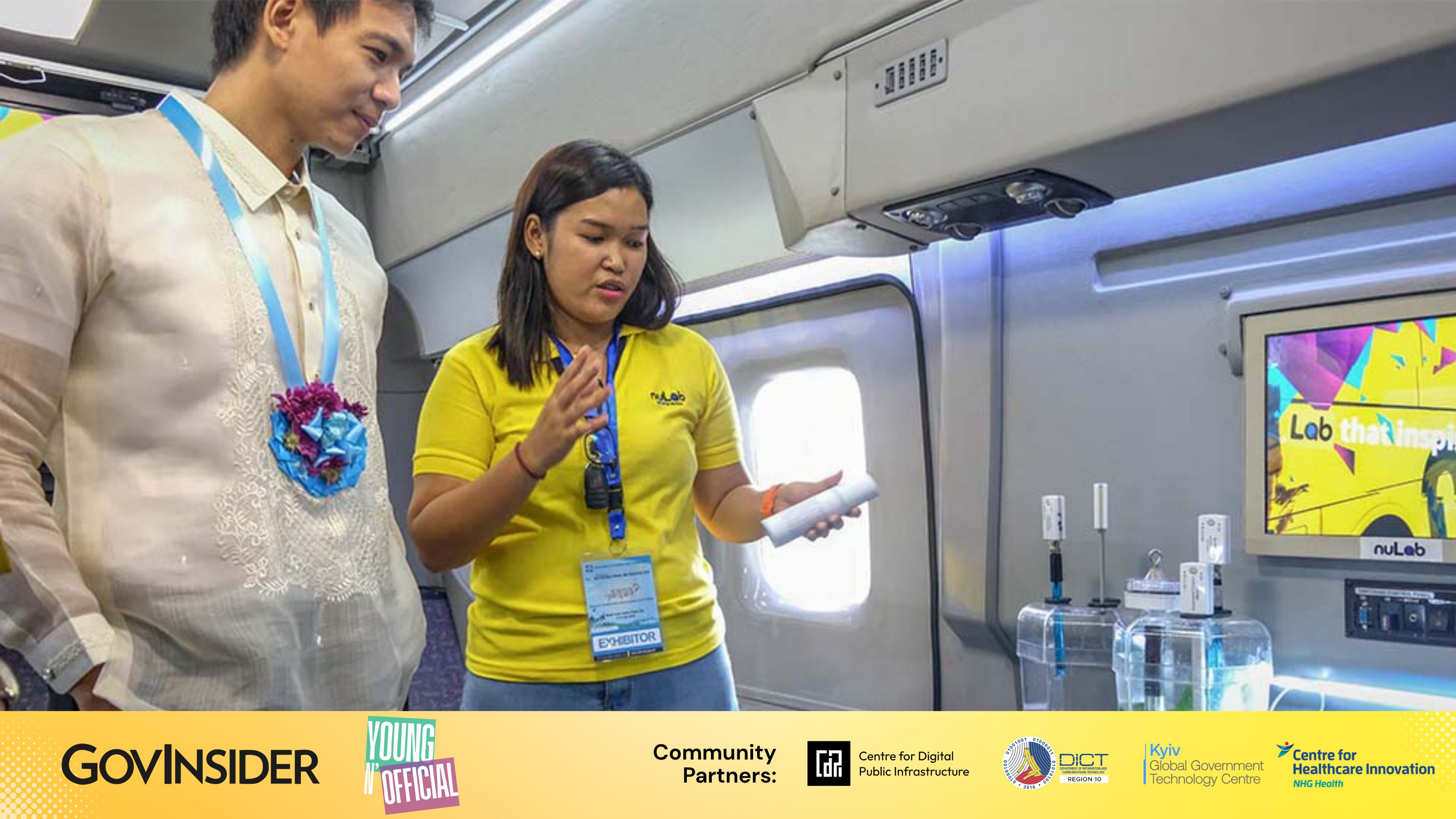
Ma Cristina Mae S. Ilaw, S&T Human Resource Education Research and Promotions Division, Department of Science and Technology - Science Education Institute (DOST-SEI), The Philippines. Image: Cristina Ilaw.
1) What does public service mean to you? Can you share more about your role in the public
sector?
Public service for me means going beyond what is expected of me – fulfilling my duties, serving to the best of my abilities and creating lasting impact. It also means using my skills and leadership to empower communities and young learners by providing opportunities and access they might not have.
In nuLab: STEM in Motion, we aim to make science accessible to students in remote area through fun-filled learning activities and make them aware of the countless possibilities in STEM.
2) Tell us about a project you championed. What impact did it have on the community?
I am the project leader of the nuLab: STEM in Motion, a mobile learning facility for students in the basic education level. It is being organised by DOST- Science Education Institute, a government agency mandated to administer the DOST Scholarships, undertake science education and training and promote a culture of science among the youth.
In this project, I am joined by my small team: one (1) Captain/Driver of the Mobile Lab (a bus), one (1) Logistics Coordinator, and myself as the Project Lead.
At nuLab, we aim to allow students discover their potential in STEM by letting them experience hands-on experiments, expose them to significant careers and pathways in STEM and open opportunities for them.
In my role, I am coordinating with top scientists and researchers in the Philippines and bring them together to develop and facilitate application-based modules of different concepts and topics in science, engineering, technology and mathematics.
Our initiatives are designed not only to deepen students’ understanding but also to ignite curiosity and a passion for learning.We also work closely and partner with local government units, the Department of Education and the Department of Science and Technology Regional Offices to gather support in the planning and implementation of activities for young learners in their communities.
Beyond student engagement, this project also opens platforms for Scientists and Experts to do science communication. Their interaction with the community provides them opportunities to share their science, research and findings.Thru their developed modules, students are deepening and enriching what they learn in the classroom. Real-world application and translating complex ideas into relatable experience connects students closely to the science.
We call is daily science, because we believe, students will be able to appreciate science more if they can relate to it and use it in their everyday lives.
I believe raising students really do takes a village. One inspiring example is a school in a remote area in Luzon that was able to build its own science classroom after their exposure in nuLab. The teachers were motivated by the experience and reconnected with us after hosting nuLab in their school. They have adapted our modules for their science class.
Today, the school has successfully applied to offer a Science, Technology, Engineering class to entice more students to purse STEM pathways.
3) As a young professional, how has your unique background or perspective allowed you to identify a solution that others in your organisations might have overlooked?
My years working in DOST made me realize that innovation should be relevant to its intended users. This perspective allowed me to recognize that many developed technologies or programs fail to create impact because they are not grounded in the realities of the communities they aim to serve.
This insight drove my work in nuLab: STEM in Motion by bringing together scientists, experts, the school and communities to work together.
We emphasized hands-on experiences, contextualized examples, and direct interaction with our scientists ensuring the students be able to connect with what they are learning and make science useful to them and their families.
4) What is your personal strategy for maintaining your creative energy when faced with bureaucracy?
Bureaucracy is difficult but I always reconnect my purpose to be of best service to the people. I ground myself in the impact we aim to create and for the students and communities we serve thru nuLab.
I approach this not as a barrier but a structure that can be navigated. I focus within my control and communicate clearly with our stakeholders, finding small actionable ways to move initiatives and continue going forward.
In nuLab, we are also limited by annual budgets and support. As a public servant, I am trying to gather support from the private sector, engaging industry partners, organizations and advocates who share the same vision of strengthening STEM education in the country.
5) If you had just one area to invest in to accelerate transformation in the public sector (regulation, technology, talent, etc.), which one would you choose and why?
Sustainable transformation is ultimately driven by people and I believe for this to happen, we must bring quality education to our learners.
Investing in talents strengthens the very foundation of innovation and public service.
In my work in nuLab, I have seen how early exposure to STEM shapes a student’s aspiration and confidence.
Many young learners simply needs access, opportunities and mentorship, and that is what we are trying to address. We aim to nurture the next generation of Filipino STEM talents through meaningful learning experience. Investing in the development of Filipino STEM talents today, creates a pipeline of skilled, passionate individuals who can lead evidence based policymaking, drive technological advancement, and strengthen national development.
6) What is your greatest ambition as you grow in your public service career?
My greatest ambition is to contribute and help to build a future where young Filipinos will have fair access and opportunities that will allow them to pursue their dreams and passion.
Growing up as the eldest, I am directed to pursue on what is practical and necessary, prioritizing the need to support my family. In college, I received a scholarship and be able to pursue the course I liked in STEM but was not able to follow the career I envisioned for myself.
However, this experience shaped what my purpose. Today, I am proud to be a public servant and strive to help students create pathways and provide access so they can explore their interests freely and build futures that are not limited by circumstance but guided by their aspirations.
7) What is a “universal value” that connects everyone in your department – from interns to
directors – and how do you use that to drive collaboration?
Our office, the Science Education Institute believes in service, excellence and people centeredness. Everyone has an important role in the attainment of our goals and vision. Projects like nuLab brings everyone together, fostering a culture of openness and mutual respect.
Collaboration works bests when people regardless of position, feel their inputs are valued and contributed to shared mission.
8) What is the best piece of advice you’ve got for the next generation of public servants?
The world is constantly changing, do not be afraid to explore ideas that will help you achieve your true potential and be of service to the people. Stay curious, remain open to learning, and do not limit yourself to what has always been done. Most importantly, always ground your work in purpose. Public service is not just about fulfilling tasks, but about creating meaningful impact in the lives of others. Even in the face of challenges, remember that your role, no matter how small it may seem, may contribute to something bigger.
9) What is a myth you wish to debunk about young public servants?
That Public Servants are passive and resistant to change. I work with young public servants and I have seen them highly driven to change and become innovative. They are committed to making systems work better and are creative in addressing limitations through collaboration and resourcefulness.
10) Write a letter to your future self in 2035.
To future Me:
I know you are still pushing on to the same purpose that drives you today. The purpose to serve, to uplift, and to create opportunities for others. I hope that even after years in public service, you have not lost your sense of wonder, your curiosity, and your belief that change is possible.
I hope that you can look back and see students whose lives were transformed—students who found their confidence, pursued their passions, and are now contributing to nation building in their own ways. I hope nuLab were able build partnerships and expands its reach to communities that once felt distant and underserved.
I also hope you have been kind to yourself. That you allowed yourself to grow, to rest, and to celebrate small victories. Public service is not easy, and I hope you learned to carry its challenges without losing your light.
Above all, I hope you are still choosing to serve—not out of obligation, but out of love for the people and the country you believe in.
Keep going and I am always proud of you.