
Malaysia aims to be a global leader in responsible AI innovation
To achieve this, the country’s National AI Office is adopting a dual strategy of driving AI implementation and crafting regulations to foster innovation and ethical use of AI, says the agency’s CEO Sam Majid.

NAIO adopts a dual strategy on driving AI implementation in industry while strengthening the regulatory landscape. Image: GovInsider
How do governments effectively nurture the artificial intelligence (AI) industry while mitigating its potential risks?
This central question underpins the strategic approaches adopted by nations worldwide in managing both AI development and its governance.

For the CEO of the newly established National AI Office (NAIO) in Malaysia, Sam Majid, this means striking a delicate balance by adopting a dual strategy on driving AI implementation in industry while strengthening the regulatory landscape.
The government set up NAIO last December with the aim of accelerating the adoption of AI by different sectors to drive innovation, enhance productivity, and boost country's competitiveness on the global stage.
Speaking to GovInsider on the sidelines of the Festival of Innovation (FOI) event, Majid shares that he believes in creating a “structured yet flexible regulatory environment” that can be achieved through “continuous dialogue with stakeholders, including industry leaders, academics, policy makers and civil society.”
He underscores the importance of having a clear regulatory framework to boost investor confidence, ensure ethical and stable AI solutions, and foster public acceptance through transparent and fair AI usage.
NAIO’s strategy entails helping startups and businesses to navigate available funding and incentive schemes to leverage AI, while also taking up the mandate of establishing clear regulatory guidelines and ethical standards around the technology.
To subscribe to the GovInsider bulletin click here.
Capacity building and public-private partnerships
To support public agencies in implementing AI solutions, NAIO facilitates capacity building efforts through training and workshop programmes.
One such programme is AI at Work 2.0, a joint initiative by the Ministry of Digital and Google Cloud to equip public officers with Google Workspace’s generative AI (GenAI) tools.
According to Digital News Asia, the initiative has trained 270 public officers from various government agencies with more than 90 per cent of participants indicating that the GenAI tools had enhanced their work quality and efficiency.
Majid adds that NAIO establishes sandboxes for public agencies to test AI solutions in a controlled environment.
The agency has also taken the lead in establishing specialised working groups, including the AI Regulatory and Policy working group and the AI Governance and Ethics working group.
“These groups focus on developing policies, regulations, and governance models to address emerging AI challenges and ensure ethical alignment,” he explains.
The case of public sector
According to Majid, Malaysia’s public sector will focus on leveraging AI to streamline government operations, enhance citizen engagement and address societal challenges in healthcare, education and urban planning.
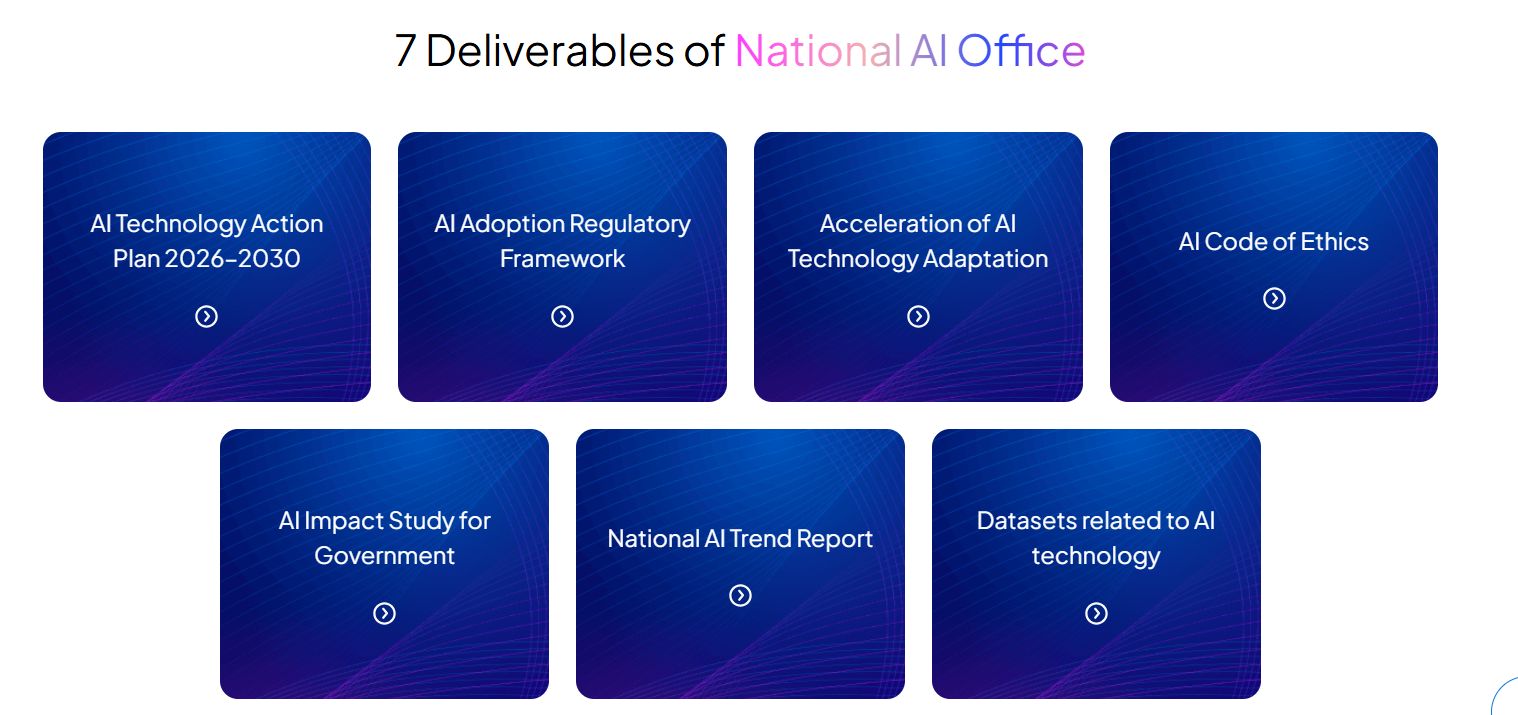
At the same time, NAIO works closely with other public agencies to adhere to guidelines, including the AI Adaptation Guidelines for Public Servants as well as the AI Adoption Regulatory Framework for the industry at large.
The latter is currently a work-in-progress, and is one of NAIO’s expected seven deliverables listed on its website.
The other deliverables focus on developing case studies, datasets for target groups to implement tailored solutions, key performance indicators (KPIs), as well as impact assessments to measure the success of AI transformation in Malaysia, he says.
The certainty brought about with regulations was emphasised by Jabatan Digital Negara (JDN)’s Director-General, YBhg. Datuk Ts. Dr Fazidah binti Abu Bakar, in an earlier interview with GovInsider.
She said that the guidelines were needed to address the potential risks arising from deploying AI, particularly with GenAI and large language models (LLMs).
Tackling global AI uncertainties
Majid underlines the importance of collaborating with regional and global partners to ensure that Malaysia not only address local needs but also remains aligned with international standards.
NAIO also carries out scenario planning and foresight exercises to anticipate future challenges, alongside public engagement initiatives to build trust and awareness.
Dynamic regulatory frameworks, proactive risk management and ethical AI deployment are three characteristics that define NAIO’s strategy, he says.
Adopting a flexible and forward-looking strategy helps prepare Malaysia for potential disruptions and ensure its adaptability and resilience in the AI landscape, he adds.
He notes that these potential disruptions include rapid technology advancements, ethical concerns, cybersecurity threats, global regulatory fragmentation, workforce displacement and the environmental impact of AI.
“These challenges could hinder AI adoption, erode public trust, and create compliance and sustainability issues,” he says.
Shaping the narrative through international collaborations
Malaysia envisions to be a “proactive and collaborative leader” when it comes to shaping narrative in global AI governance and ethics.
According to Majid, Malaysia focuses on championing equitable AI development and bridging the digital divide – ensuring that AI benefits all segments of society including marginalised communities and developing nations.
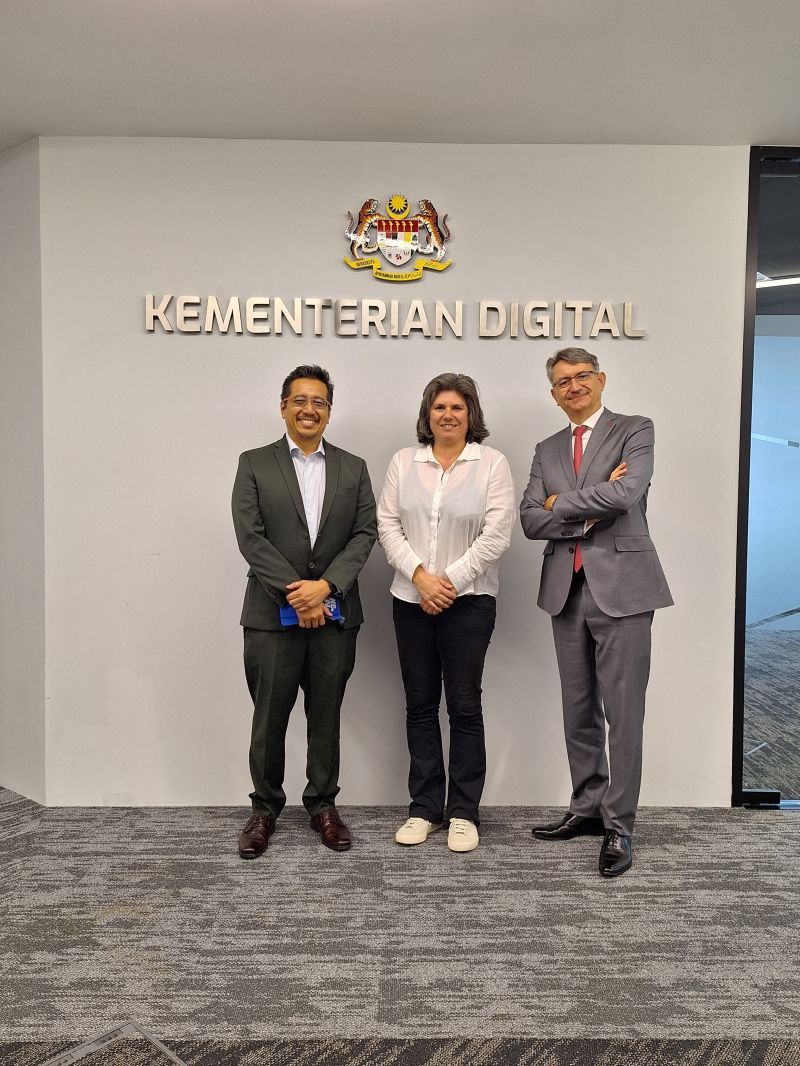
“By partnering with other nations and industry leaders, Malaysia fosters a global ecosystem of trust and cooperation,” he explains.
He says that the government actively participates in global forums hosted by multilateral organisations like the United Nations (UN), Organisation for Economic Co-operation and Development (OECD) and the Global Partnership on AI (GPAI).
International collaborations are as important to tackle other cross-border challenges like cybersecurity and data privacy, he notes.
Malaysia also leverages bi- and multilateral agreements to boost its capabilities in AI R&D, policy development and capacity building initiatives. For example, there have been calls to promote cross-border data sharing within ASEAN.
As we came towards the end of the interview, Majid could not emphasise enough the importance of multistakeholder governance.
“Establishing multistakeholder platforms can help governments create inclusive, well-rounded AI strategies that address the needs of all stakeholders,” he says.
Through regular reporting and stakeholder feedback, governments can then further refine their measures to ensure continuous improvement and alignment with global best practices, he notes.
Majid recently spoke as a panelist at FOI in the “Fireside Chat: 100 Experiments vs Platforms in Government” alongside GovTech Singapore and JTC Corporation’s James Tan. You can find the panel recording on-demand here.