
Malaysia digitalises public sector document management
Jabatan Digital Negara (JDN)’s Digital Document Management System 2.0 has been rolled out to 395 agencies with over 56,000 users.

The Malaysian government has developed its Digital Document Management System 2.0 (DDMS 2.0) in recognition of the importance of digital document management for seamless service delivery. Image: Canva
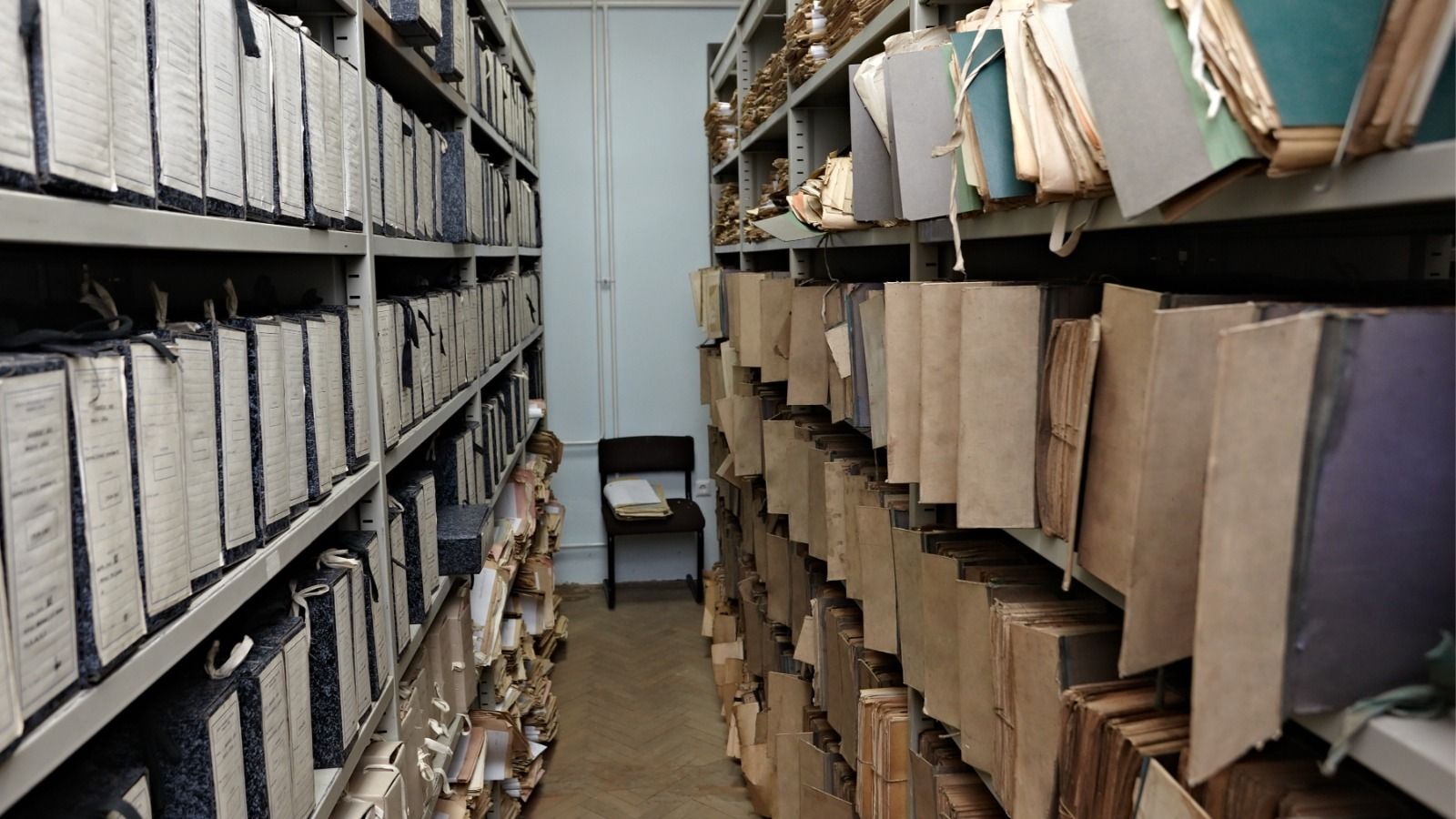
Before computerisation, the iconic view of document storage and record keeping seen in movies and pictures was rooms filled with racks of neatly arranged filing cabinets.
Finding the correct file from these huge stacks of records was once considered an art form mastered by skilled file keepers who meticulously catalogued and arranged the records.
Fast forward to today.
With the digitalisation of government services, the files and records have transitioned from physical files to digital ones.
But the task of finding, tracking, and ensuring the authenticity and security of the documents has remained.
Recognising the importance of digital document management for seamless service delivery, the Malaysian government has developed its Digital Document Management System 2.0 (DDMS 2.0).
The system controls the document during its entire life cycle, from the process of creation and capture to storage and maintenance, use and access, as well as digital disposal.

Speaking to GovInsider, Jabatan Digital Negara (JDN)’s Director-General, Ts Nik Zalbiha binti Nik Mat, shares that the DDMS 2.0 adopts a whole-of-government (WOG) approach to ensure a unified, structured, and collaborative rollout across all agencies.
JDN was formed in 2023 under the Ministry of Digital to promote the digital transformation within the government to help citizens better access public services.
Zalbiha adds that, by using shared digital infrastructure, standardised technologies and integrated applications, DDMS 2.0 promotes cross-agency data sharing and minimises systems duplication.
“This coordinated implementation strategy not only enhances efficiency and consistency in document management but also supports the broader objective of delivering seamless and citizen-centric digital services across the public sector,” she notes.
One major advantage has been enhanced traceability and accountability, as every transaction and instruction within DDMS 2.0 is digitally recorded and audit-ready.
DDMS 2.0 has not only modernised records management but also contributed to a more responsive, green, and efficient public service delivery model, she adds.
To subscribe to the GovInsider bulletin, click here.
At this year’s Festival of Innovation, JDN’s DDMS 2.0 system won an award in the Inter-Agency category, which recognises projects that highlight inter-agency collaboration to achieve a common goal.
Creating a unified system
Zalbiha notes that inter-agency collaboration was top of mind when designing DDMS 2.0, as it aims to “create a unified, impactful system that delivers win-win outcomes for all participating government agencies”.
DDMS 2.0 is a joint initiative between Arkib Negara Malaysia (ANM) (the National Archives of Malaysia) and JDN.
“This partnership combines policy leadership with technical implementation expertise, enabling the system to address both governance and operational needs across agencies,” she adds.
Implementing DDMS 2.0 across 395 agencies with over 56,000 users has been challenging, she notes, attributing this to the scale, diversity, and varying digital maturity levels across government entities.
One of the major issues has been that not all agencies have the same level of infrastructure, digital capability, or experience in records management, thus leading to inconsistent adoption rates.
Zalbiha adds that a cultural shift is required when moving from manual or legacy systems to digital records.
As a result, the change management team faces resistance from users who are unfamiliar or uncomfortable with new technologies.
Migrating legacy records from various formats and structures to the DDMS 2.0 platform also requires intensive planning, quality control, and validation, she shares.
“Implementing a uniform file classification system across a large number of agencies has been a challenge due to the differences in agency functions and processes.”
Phased implementation strategy
To tackle both technological and cultural challenges, JDN adopts a phased implementation strategy, starting with pilot agencies before scaling up.
“This allows for testing, learning, and refinement before broader deployment”, she adds.
JDN works closely with ANM to promote the use of a functional file classification system, ensuring consistency in records creation, storage, and retrieval across agencies.
Comprehensive training programmes, workshops, and technical support are also available to ensure users are well-prepared to adopt and use DDMS 2.0 effectively, Zalbiha notes.
JDN has established a dedicated technical team to support data migration, ensure system performance, and provide continuous monitoring and assistance to agencies.
“Clear policies, guidelines, and governance structures have been introduced to align agency practices with national digital records management standards,” she adds.
Through these coordinated efforts, JDN successfully navigated the complexities of large-scale implementation, ensuring that DDMS 2.0 could be adopted smoothly and effectively across a diverse and complex public sector landscape.
Zalbiha notes that DDMS 2.0 has brought about a significant, measurable transformation in day-to-day records management for public officers.
“Since the implementation, public officers are no longer required to access physical files to minute instructions; all actions and approvals are now carried out online through the system, making the process faster, more transparent, and easier to track,” she adds.
Filing process sped up
Studies conducted post-implementation have shown a reduced time spent on filing processes due to the elimination of redundant steps.
Zalbiha adds that declined paper usage has “not only reduced operational costs but also supports Malaysia’s commitment to the United Nations' Sustainable Development Goals (SDGs)”.
The system has been built on a strong legal and regulatory foundation, anchored by the National Archives Act 2003 (Act 629), which ensures that public records and archives in Malaysia are accessible, well-preserved, and legally governed, she shares.
“This legislative backing provides the authority and clarity necessary for uniform implementation across the public sector.
“DDMS 2.0 is developed in compliance with MS ISO 16175-1:2012 on Information and Documentation – Principles and functional requirements for records in electronic office environments, ensuring the digital records created can be managed systematically from the creation stage to disposal,” says Zalbiha.
She adds that DDMS 2.0 has gained international recognition as a reference model for centralised government records management due to its structured, policy-driven approach and alignment with global standards.
“What sets Malaysia’s system apart is its holistic transformation of the entire records management lifecycle, from creation to disposition, within a digital and centralised framework.
“One distinctive feature of DDMS 2.0 is its ability to eliminate the need for excessive physical copies by enabling agencies to manage both digital and physical records centrally,” Zalbiha shares.
This shift has significantly reduced duplication, improved traceability, and enhanced operational efficiency across government agencies, she adds.