
Malaysia is creating industry pathways for quantum intelligence
By Valeryn Liaw
MIMOS Berhad is advancing quantum tech through Quantum Intelligence Centre (QIC), which is dedicated to commercialising quantum solutions. MIMOS’ head, Dr Saat Shukri Embong, and QIC’s head, Ts. Ir. Dr Nordin bin Ramli, share more.
-1792737558864.jpg)
Ministry of Science, Technology and Innovation (MOSTI)'s Secretary-General, YBhg. Dato' Ts. Dr. Nagulendran Kangayatkarasu, at the MIMOS Quantum Day on September 30. Image: MIMOS
The same technology that solves complex industrial problems can one day compromise the digital locks protecting personal data.
This is the promise and security risk of quantum technology.
The challenge for Malaysia is turning its potential into practical applications while ensuring the investment brings positive growth.
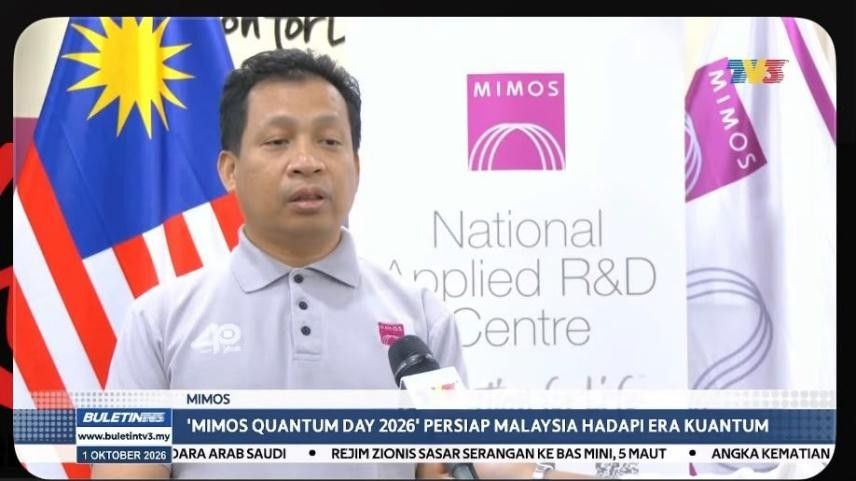
Speaking at the MIMOS Quantum Day 2026 on September 30, Ts. Ir. Dr Nordin bin Ramli, Head of the Quantum Intelligence Centre (QIC) at Malaysia's national applied research and development centre (MIMOS Berhad), highlighted quantum as a national mandate, and the need to translate the emerging research into operational priorities.
“This means deciding which capabilities Malaysia must control, which industry problems deserve investment, how pilots will be governed, and what evidence will justify procurement,” he added.
MIMOS Berhad is parked under the Ministry of Science, Technology and Innovation (MOSTI).
Executing the national mandate through partnerships
“Malaysia is building quantum readiness through policy direction, research laboratories, early pilots, partnerships and emerging talent. These are essential assets, but they do not automatically produce adoption,” Dr Nordin said.
“The missing link is a nationally applied delivery mechanism that owns the journey from problem definition to deployment evidence,” he added.
This is where QIC bridges the gap.
Launched in February 2025 by MOSTI, QIC brings together diverse stakeholders together to address the challenge through four delivery functions:
- Shared facilities to provide infrastructure access to universities, researchers and companies.
- Applied R&D, commercialisation and innovation to translate research into prototypes, intellectual property (IP) and adoption.
- Use-case deployment and pilots to connect technical work with industry needs.
- Talent development to build specialists and industry-ready teams.
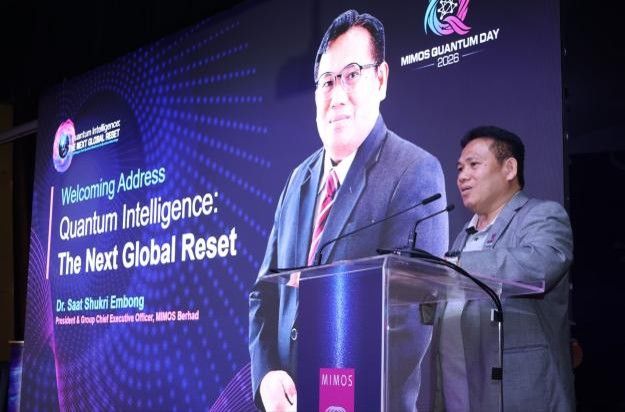
Technological risks can outpace the development and deployment of quantum solutions, particularly in areas tied to national security, where testing and procurement could take a longer time.
To address this, MIMOS has developed proof-of-concept (POC) projects with diverse stakeholders.
“Through partnerships and collaboration, the POC projects allow us to validate solutions in real-world environments and ensure they are capable of addressing emerging risks effectively,” Dr Saat Shukri Embong, MIMOS President and Group CEO, tells GovInsider.
For a POC to progress towards adoption, a use case must demonstrate technical performance and procurement readiness through the processes:
- Defining the need and baseline
- Developing a prototype in a testbed
- Validating through sandbox or pilot
- Establishing standards and assurance
- Procurement only when the evidence is strong enough
This pipeline requires coordinated effort across research, industry and government.
“QIC supplies the shared engineering and evidence. Consortium members provide problems, data and operating sites.
“Regulators and standards bodies define the rules. We need all three groups working together from the start,” Dr Nordin said at the event.
This cross-sector collaboration is reflected in how MIMOS brings together complementary capabilities to address industry needs.
For example, by collaborating with a Swiss quantum tech firm, IDQuantique, MIMOS alongside Malaysian universities and telecommunications company, Telekom Malaysia, has established a quantum communication channel across 52 kilometres of standard fibre-optic cable.
This channel has helped organisations such as banks and government agencies securely exchange the digital keys used to protect sensitive information and detect attempts of interception.
“Customers need a solution to a business, security or operational problem. QIC must therefore connect quantum technology with classical computing, artificial intelligence, cybersecurity, domain knowledge and deployment engineering,” Dr Nordin said.
While partnership facilitates quantum innovation, MIMOS also recognises each partner’s ownership and decision-making authority, especially when it involves sensitive data, critical infrastructure or national security.
“We create shared opportunities based on each partner’s expertise, capabilities and capacities,” Dr Saat says.
What’s next for Malaysia’s quantum innovation
In the long run, MIMOS strives to connect policy ambition with engineering delivery, moving Malaysia from quantum readiness towards quantum advantage to achieve a stronger digital economy and technology sovereignty.
“Within the first 90 days, we propose a National Quantum Consortium working session, a structured call for use cases, and the selection of three to five pilots with named owners,” Dr Nordin said.
Government agencies and industry partners can start by identifying an operational challenge and assigning a team to assess its suitability for quantum applications.
“Malaysia advances when stakeholders commit to real problems, real operating environments and a credible decision to deploy.”