
Malaysia’s Registry of Societies improves governance with the cloud
By James Yau
Director General of Malaysia’s Registry of Societies, Dato' Mohd Zulfikar bin Ahmad, shares how the modernisation of its eROSES platform with cloud-native capabilities marks a shift toward more citizen-centric and data-driven governance.
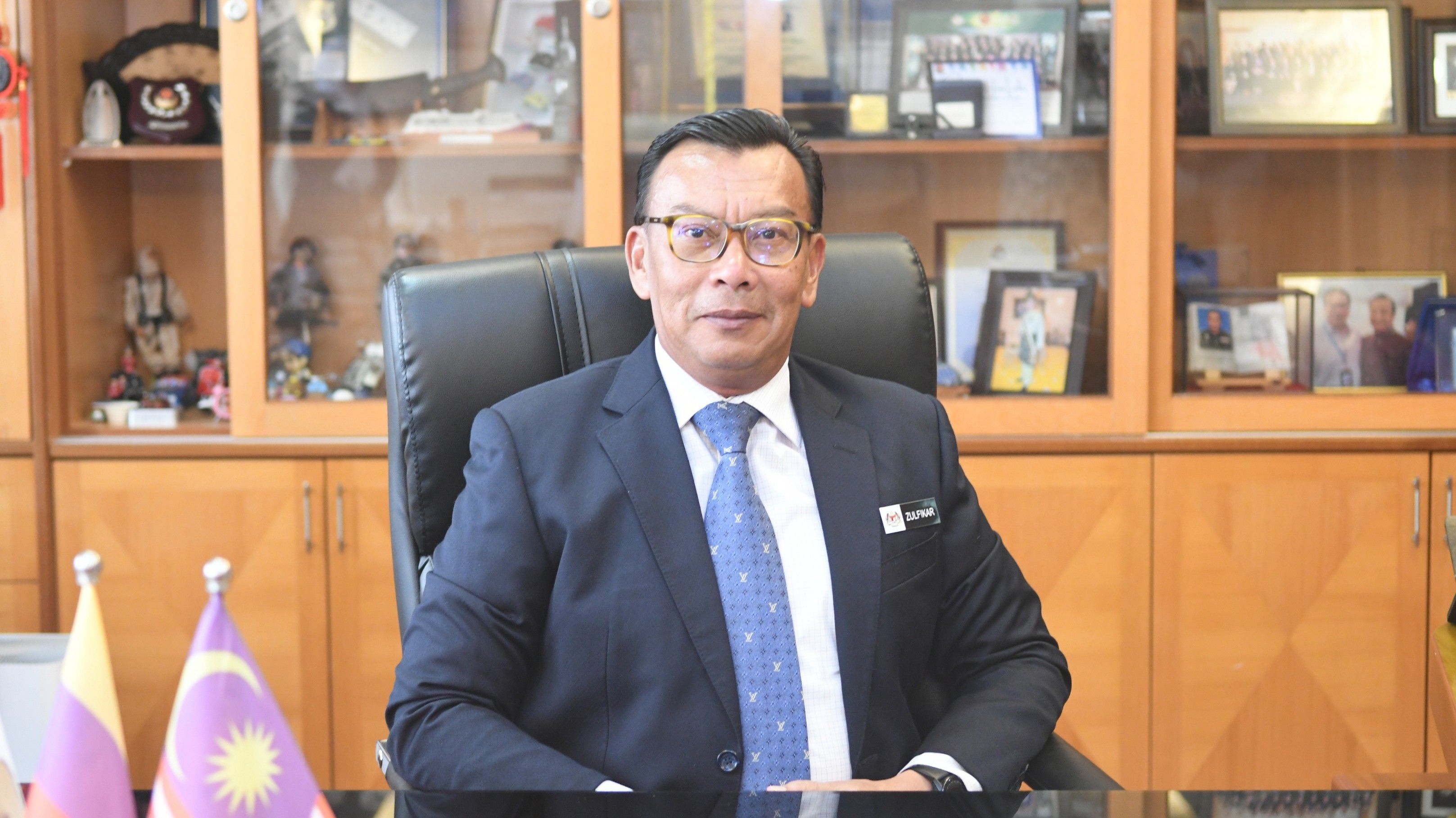
Dato' Mohd Zulfikar bin Ahmad. Image: Registry of Societies
In Malaysia, it is not uncommon for residents to speak in different languages at different times and places of the day - Malay for formal proceedings, English for business, and dialects at home.
This diversity is seen across the different religions, gastronomy, and ethnicities of its populace.
Among these diverse groups of the Malaysian community, the Registry of Societies (ROS) acts as a key bridge between the civic society and public sector by regulating and supervising over 200,000 registered associations.
ROS has been tasked to ensure that the activities conducted must not contradict or go against national security interests, public order, and/or morality.
The associations under ROS’ purview include political parties and non-governmental organisations (NGOs) across 10 categories such as charitable, social, religious, and more. As the agency witnesses a rapid growth of associations registered, ROS’ Director General, Dato' Mohd Zulfikar bin Ahmad, shares that it is crucial for its service delivery to be faster, more transparent and user centric.
This effort is embodied in the development of eROSES v2.0, a cloud-native, AI-powered platform designed to digitalise ROS’ core business, that will be launched by the end of the year.
“Although our present system has served us well, it's no longer technically viable to meet current demands. Therefore, we are not just upgrading - we are rebuilding and [reforming] the whole system,” says Dato’ Zulfikar to GovInsider.
Maximising agility on the cloud
According to Dato’ Zulfikar, the current eROSES system lacks flexibility and adaptability to the growing needs for quicker and user-friendly services.
ROS has been using the system since 2012 to facilitate its registration and supervising processes.
For the v2.0 system, ROS has adopted a cloud-native architecture to deliver these capabilities.
“By using cloud services, we can maximise agility to build a system that evolved based on people needs with smarter systems and faster delivery,” he says.
The modernisation has transformed a monolithic architecture into one that prioritises microservices.
This cloud-native abilities provides ROS with the technological ability to adapt and evolve for future business changes, he explains.
For example, cloud infrastructure enables automatic disaster recovery, which supports systems updates with minimal interruption. This ensures consistent availability and operational resilience for all users.
He adds that he pay-per-use model of cloud service providers (CSPs) offers significant cost benefits to the government.
This, combined with artificial intelligence (AI)-driven features like AWS Lambda, allows for cost optimisation through automatic scaling based on real-time usage and on-demand storage, eliminating wasted resources from idle capacity.
He shares that the adoption of cloud services across government agencies was facilitated by the MyGov@CFA (MyGov Cloud Framework Agreement) national initiative led by the Malaysia’s National Digital Department, Jabatan Digital Negara (JDN), appointed CSPs and the government.
“Through this initiative, agencies like ROS gain wider access to secure and scalable cloud solutions, while ensuring compliance with national data sovereignty requirements and optimising procurement processes and cost efficiency,” Dato’ Zulfikar says.
To subscribe to the GovInsider bulletin, click here.
AI features in eROSES 2.0

Dato’ Zulfikar says that several key AI features of eROSES v2.0 have become increasingly important for service delivery due to its ability to improve the speed and accuracy of operations.
First, an AI chatbot named “Rosie” is able to communicate in four main Malaysian languages - Malay, English, Mandarin, and Tamil - helping users with queries about registration, annual return submissions, and application status checks.
Second, computer vision can help analyse logos submitted by the associations.
“This AI-powered feature ensures their imposed logos comply with the relevant standards, not duplicating other registered logos or indicating any symbol that is against the law and public morale,” he explains.
Third, the platform integrates business intelligence (BI) through interactive dashboards, enabling ROS to conduct trend analyses, support data-driven decision-making and optimise resource allocation.
Altogether, these AI tools are helping ROS to deliver smarter, faster, and more responsive digital services to the public, he adds.
Citizen-centric governance
Going beyond technological upgrades, Dato’ Zulfikar notes that more steps are needed to ensure that cloud initiatives truly drive citizen-centric and data-driven governance.
To ensure data integrity and a seamless user experience, ROS has established integrations with key agencies such as the National Registration Department (Jabatan Pendaftaran Negara) and myDigital ID (Malaysia’s national single sign-on identity management system).
Integration efforts between ROS and other agencies are also underway to enable ROS to better verify and monitor the activities of registered associations.
These agencies include the Royal Malaysia Police (PDRM), Immigration Department of Malaysia (Jabatan Imigresen Malaysia), and Malaysian Prison Department (Jabatan Penjara Malaysia).
The system is also equipped with Role-Based Access Control (RBAC) that ensures only authorised personnel can access specific information based on their roles and responsibilities, providing public trust in the digital government ecosystem.
“It is our aspiration that these digitalisation efforts will significantly improve the agency’s delivery system and public interactions, by simplifying the process with safer and more transparent platforms,” he says.