
Markus Ng, Lead Analyst, Data, AI & Innovation-Engineering, Synapxe, Singapore
By Sol Gonzalez
Meet the young public sector officials in the inaugural Young & Official Report 2026.
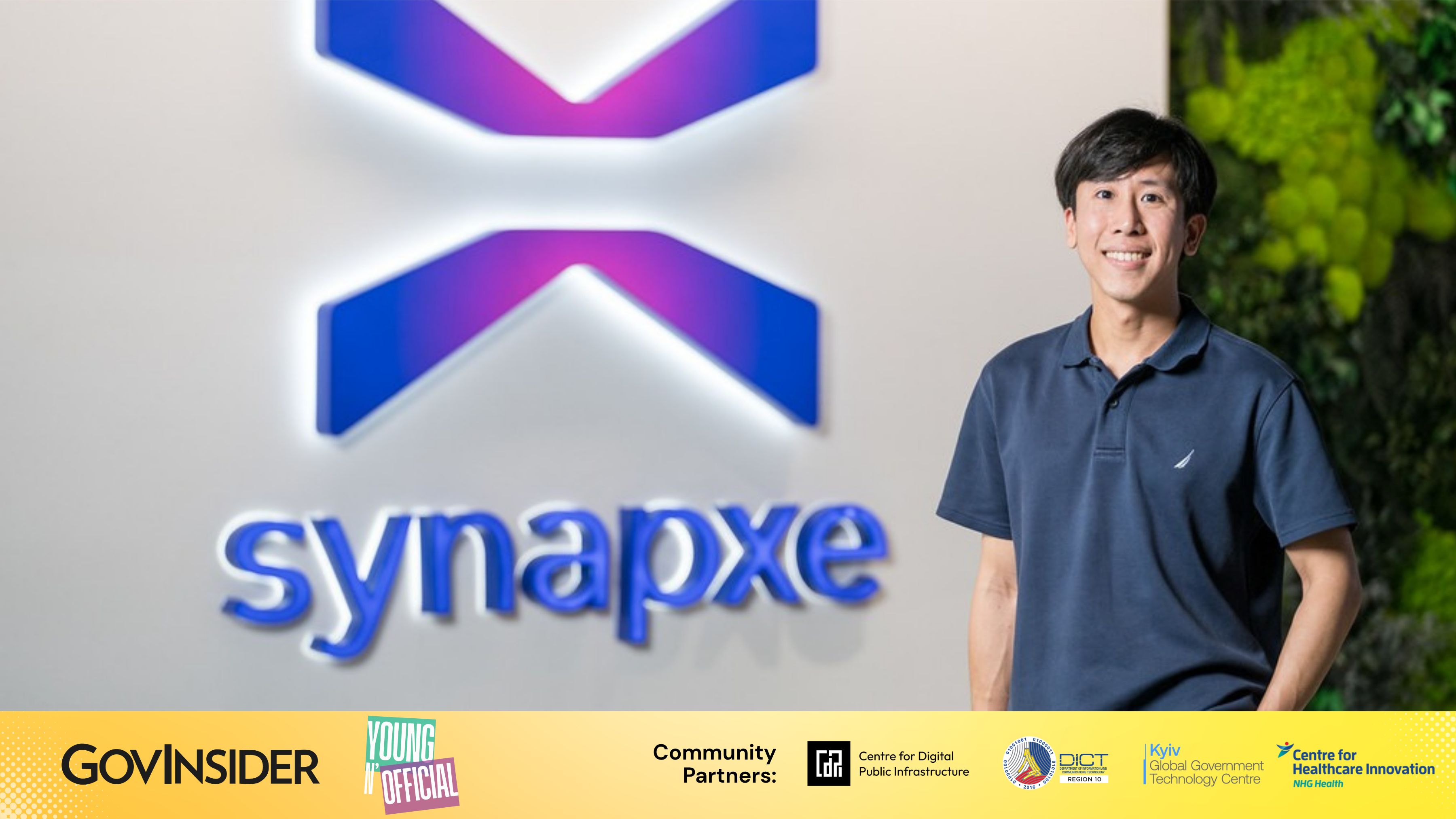
Markus Ng, Assistant Lead Analyst, Data Analytics and Artificial Intelligence Department, Synapxe, Singapore. Image: Synapxe
1) What does public service mean to you? Can you share more about your role in the public sector?
I currently work as a Lead Analyst at Synapxe, Singapore’s national HealthTech agency, where I contribute to driving data‑driven innovation in healthcare.
To me, delivering public service means having the opportunity to create meaningful impact by reshaping systems – not just improving products within existing ecosystem or constraints, but rethinking and redesigning how healthcare can be delivered for the greater good.
2) Tell us about a project you championed. What impact did it have on the community?
I contributed to the development of HEALIX, a comprehensive cloud-based analytics platform for the whole public healthcare sector.
HEALIX securely consolidates the sector’s data needs on a single platform, enabling users to enjoy faster access to a more comprehensive set of de-identified data for analytics projects.
By fostering trust and simplifying access, HEALIX empowers the sector to collectively tackle complex challenges — from optimising resource allocation to improving patient care pathways— that no single institution could have solved alone.
Examples of such challenges include the management of chronic diseases like diabetes.
Beyond its technical capabilities, the platform has strengthened a culture of collaboration, supporting continuous innovation for better patient outcomes across the entire healthcare system.
3) As a young professional, how has your unique background or perspective allowed you to identify a solution that others in your organisations might have overlooked?
My year-long internship in Silicon Valley exposed me to a culture that dares to try, fail, and discover solutions where none existed before.
At the same time, I saw how rapid technological progress can unintentionally leave people behind, widening gaps for those who are already struggling. This dual perspective shaped my conviction that innovation must uplift everyone, not just the early adopters.
When I returned to Singapore's public healthcare sector, the opportunity to act on this desire was realised through my work on HEALIX. We collaborated with all 14 healthcare entities to innovate together.
By addressing diverse technical needs through a shared platform, we ensured that smaller institutions were not left behind as larger ones advance – allowing technology to become a true equaliser rather than a divider.
4) What is your personal strategy for maintaining your creative energy when faced with bureaucracy?
I have learned to reframe bureaucracy not as a barrier to innovation, but as a catalyst for more thoughtful, sustainable solutions. While some may see bureaucracy and agility as opposing forces, I see them as complementary – bureaucracy provides the standards, checks, and transparency needed for ideas to scale effectively across the public sector.
My approach is to view bureaucratic requirements as design constraints that sharpen creativity. Much like how architects create beautiful buildings within structural limitations, I see bureaucratic frameworks as guardrails that challenge me to innovate more strategically.
When faced with complex approval processes or compliance requirements, I often ask myself, "How can I design a solution that not only meets these standards, but exceeds them in ways that create lasting value?"
Ultimately, this mindset helps me stay energised and purposeful, knowing that even within constraints, there is always room to create meaningful and lasting impact.
5) If you had just one area to invest in to accelerate transformation in the public sector (regulation, technology, talent, etc.), which one would you choose and why?
I would invest in talent, and not just in skills or competencies. The world has no shortage of capable people. What truly drives transformational change in the public sector is something deeper: cultivating leaders with both vision and character, who are committed to doing the right thing and doing it right.
The most powerful investment we can make is not measured in dollars or infrastructure, but in the time and intention a generation spends nurturing those who come after them.
When experienced individuals invest in mentoring emerging leaders, they create a multiplier effect that compounds across decades.
Each generation of leaders shaped by this commitment to service and excellence influences the next, building a self-sustaining culture of innovation, integrity, and impact.
Technology will continue to evolve, and systems will change, but the character and vision of the people leading that change will determine whether transformation truly serves the public good.
6) What is your greatest ambition as you grow in your public service career?
I have experienced this firsthand in my own journey. Mentors who invested their time in me did not just teach me technical skills, they also modelled what it means to lead with purpose, to navigate complexity with integrity, and to stay focused on the mission of public service even when the path is difficult.
That investment has shaped not just my capabilities, but my commitment to pay it forward. Today, I have come to see success not just in the projects I complete, but in the leaders, I help develop and the impact they may create long after me.
7) What is a “universal value” that connects everyone in your department – from interns to directors – and how do you use that to drive collaboration?
Trust is the universal value that connects everyone in our department. It serves as both the fuel and glue for collaboration.
As fuel, trust inspires wholehearted commitment. When we trust each other's intentions and capabilities, we naturally go the extra mile and stretch beyond our comfort zones for a shared mission. Trust dissolves tribal mindsets, allowing us to see ourselves as one team working toward shared purpose rather than competing units.
As glue, trust binds individuals with differing viewpoints and enables productive tension. In innovation, we constantly navigate unfamiliar approaches and untested ideas.
Trust creates psychological safety where team members feel empowered to challenge assumptions, propose unconventional solutions, and experiment boldly, knowing their judgment will not be questioned if ideas do not work out.
I try to cultivate this by being transparent, making space for every voice, following through on commitments, and being open when I don’t have all the answers. Ultimately, trust becomes the invisible foundation that allows teams to move faster, take smarter risks and achieve what wouldn’t be possible otherwise.
8) What is the best piece of advice you’ve got for the next generation of public servants?
“Do the right thing and do the thing right” - this was a guiding compass that was shared with me. A reminder to do what truly matters rather than what is merely convenient or expected, and then to commit to doing it excellently.
9) What is a myth you wish to debunk about young public servants?
There’s often a perception that we are idealistic dreamers who do not understand "how things really work." But I see it differently – Idealism is not the opposite of pragmatism; instead, it is the fuel that makes pragmatism worth pursuing.
We do not ignore constraints; we simply choose to not to be limited by them. Sometimes the most practical thing you can do is imagine a better way.
10) Write a letter to your future self in 2035.
Dear Me,
Do you remember when being young in public service felt like constantly having to prove yourself? I hope you have since learned that our value lies not in mimicking those with decades of experience, but in offering fresh perspectives that create impact.
Did you stay curious? Did you keep questioning "why" even when it was uncomfortable? I hope you found the balance between honouring institutional wisdom and having the courage to enact change.
Most importantly, I hope you never lost the idealism that brought you here — the belief that governance can, and should, work better for the people we serve. That was not naivety. That was purpose.
Keep going.
Your younger self.