
National and local initiatives driving digitalisation in the Philippines
By Yen Ocampo
The Digital Bayanihan movement of the Department of Information and Communications Technology (DICT) has focused on upskilling MSMEs and startups while building relationships with digitally advanced countries.
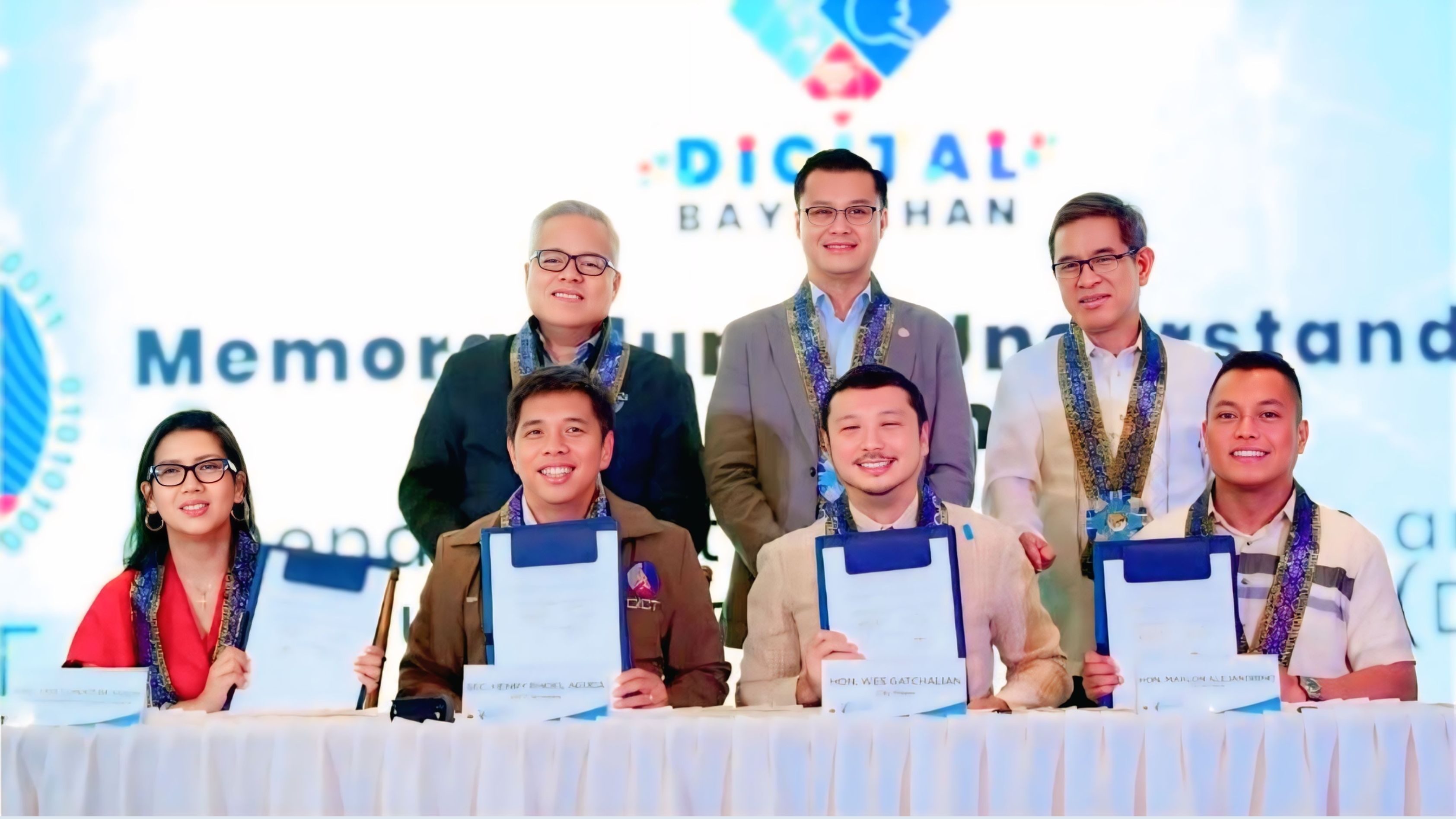
The Philippines National ICT Month 2025 focused on upskilling micro, small and medium enterprises (MSMEs), as part of its mission to empower families, improve livelihoods, and bring hope. Image: DICT
A major focus area of the recently concluded National ICT Month 2025 in the Philippines has been the upskilling of micro, small and medium enterprises (MSMEs).
In an interview with GovInsider, Department of Information and Communications Technology (DICT)’s Undersecretary for Special Concerns and the Chairperson of the National ICT Month 2025 Steering Committee, Christina Faye M. Condez-De Sagon, emphasises the importance of MSMEs adapting digital platforms and e-commerce tools.
She mentions that the ICT Literacy and Competency Development Bureau (ILCDB) supports MSMEs by providing access to digital marketing tools, cybersecurity, and digital literacy training, and cloud platforms through Tech4ED and digital transformation centres (DTCs).
“Our commitment is to ensure that even small entrepreneurs in remote areas can thrive in the digital economy,” says Condez-De Sagon.
The ILCDB also offers free training for digital marketing, social media marketing, and digital literacy programmes through Project SPARK, formerly known as DigitalJobsPH.
These programmes help MSMEs integrate into the digital value chain, contributing to the Philippine Development Plan (PDP) around innovation-led development.
No Filipino too far, no community too small
The emphasis on upskilling MSMEs is part of the Digital Bayanihan movement promoted by DICT, whose motto is “No Filipino too far, no community too small” vision.
The month-long National ICT month celebration has covered the whole of the country from the northernmost and southernmost parts of the Philippines - empowering families, improving livelihoods, and bringing hope, according to DICT.
The government ensures digital inclusivity through targeted programmes that prioritise geographically isolated and disadvantaged areas (GIDAs), the agency adds.
These include the free wi-fi for all programme, DTCs, and digital literacy training, partnering with local governments, communities and the private sector to deploy connectivity infrastructure and upskill communities.
Local governments have been key enablers in providing logistical, regulatory, and community support for DICT programmes, as well as championing local ICT development by integrating digital initiatives in their governance and budget planning, thus accelerating grassroots-level transformation.
Condez-De Sagon adds that the Philippine government is fostering a future-ready country by supporting startups through mentorship, funding, and research and development (R&D) under the Philippine Startup Development Programme and inter-agency collaborations, aligned with national development goals and global competitiveness.
International cooperation, global alignment and leadership
The DICT is also pursuing cooperation with other countries, as well as non-state actors, through various Memoranda of Understanding (MoUs) in terms of knowledge sharing and capacity development.
To subscribe to the GovInsider bulletin, click here.
DICT has signed MoUs with countries like Estonia, Japan, Denmark, Thailand, and Malaysia to facilitate the exchange of policy insights on e-governance, cybersecurity, and innovation.
It has partnered with international institutions such as the Global AI Council to advance women's empowerment through technology.
Much work has also been done with ASEAN and the International Telecommunication Union (ITU) on the inventory of critical information infrastructure to boost cybersecurity.

“We ensure the alignment with global standards and best practices by cooperating with the ASEAN and the ITU, which guides national ICT initiatives through the ASEAN Digital Masterplan and the World Summit on the Information Society,” Condez-De Sagon adds.
Partnering with the ITU, the DICT has launched the Adolescent Health Education and Practical Training (ADEPT) initiative, which aims to bridge the communication gap between adolescents and healthcare providers.
ITU acceleration centres further serve to enhance capacity in technopreneurship, thus positioning the country as a regional digital innovation hub.
Moreover, the Digital Innovation for Women Advancement (DIWA) programme focuses on advancing women’s participation in tech, mentorship, and female-centric digital spaces, making the government’s digital efforts more inclusive.
Condez-De Sagon emphasises the plan to enhance the Philippines’ leadership role in ASEAN and global digital policy-making arenas by 2030 by continuing to participate actively and chair regularly the ASEAN Digital Ministers Meeting as well as the ASEAN Digital Senior Officials’ Meeting.
“It [Philippines] shall continuously host regional conferences on cybersecurity and innovation,” she adds.
Lessons from the Philippines’ approach
When asked what lessons other developing countries can learn from the Philippines’ approach to inclusive digital governance, Condez-De Sagon says that one key lesson is the importance of strategic partnerships with international organisations in addressing the digital divide.
The Philippines has adopted this global best practice through the establishment of DTCs, which aim to empower marginalised, rural, and indigenous communities by providing training, internet connectivity, and co-working spaces.
Another lesson is the value of digital platforms in enhancing local governance and ensuring that services are accessible to all.
Through its eLGU system, the DICT has enabled automation and digitisation of LGU services, making it easier for citizens - particularly those in geographically isolated areas - to transact with their local governments without the need for physical visits.
Furthermore, the development of the eGov PH mobile application demonstrates how a unified, citizen-centric platform can streamline government transactions and reduce economic and logistical burdens on the public, Condez-De Sagon adds.
By integrating services from various agencies into a single app, the DICT Philippines promotes transparency, efficiency, and accessibility - principles that other developing countries can adopt to strengthen their e-governance ecosystems, she concludes.
“Building a Digital Philippines requires collective effort, with citizens, government, private sector, civil society, and academe working together to promote digital inclusion, infrastructure, literacy, and responsible internet use to ensure no Filipino is left behind,” she ends.