
Philippines Customs pushes for digital reforms ahead of ASEAN 2026 chairmanship
By Yen Ocampo
The country’s Bureau of Customs (BOC) is tapping into a mix of internal digitalisation efforts, global partnerships and capacity building efforts to strengthen its supply chain and expand market access for MSMEs.
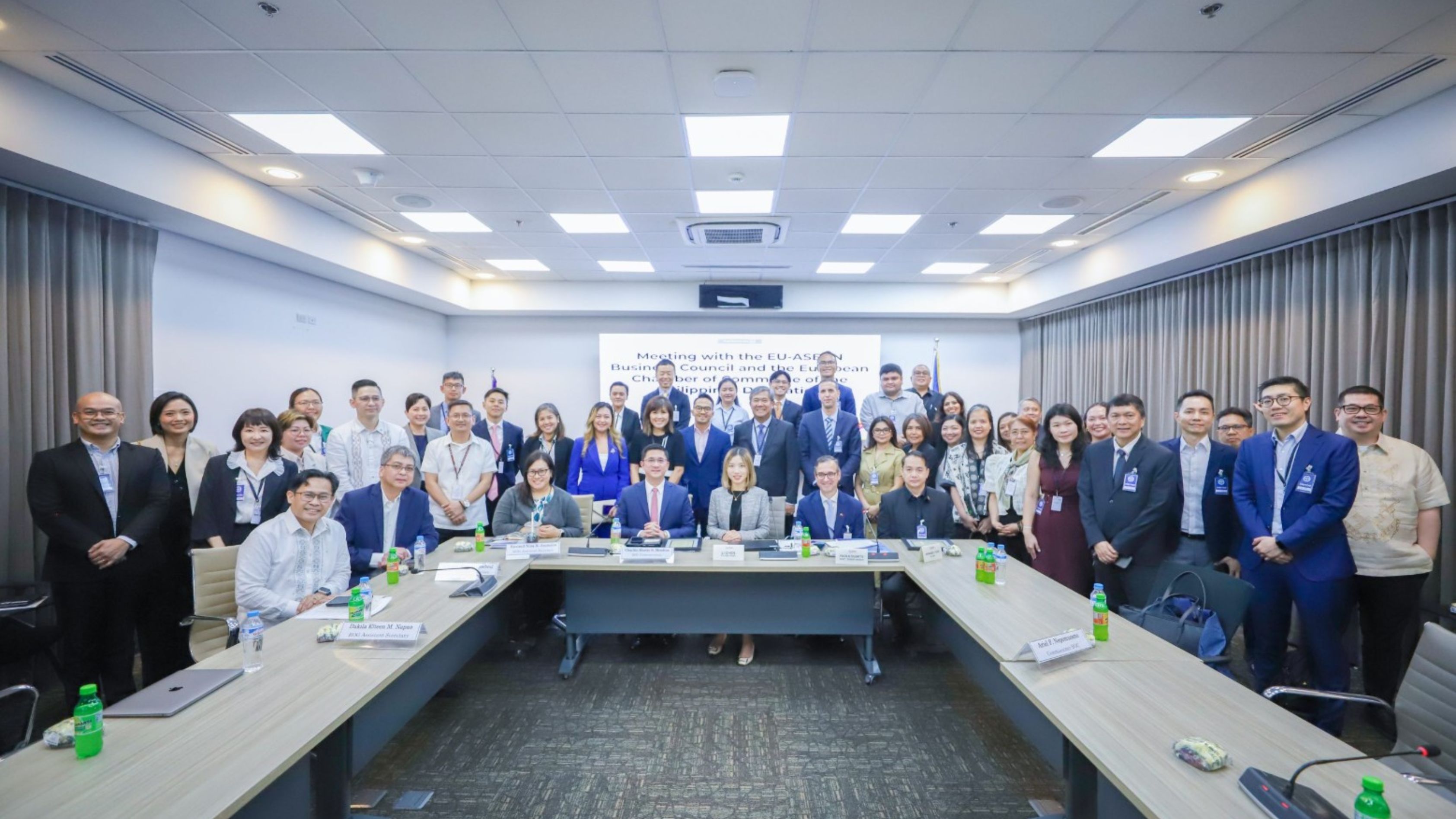
The Philippines’ Bureau of Customs (BOC) participated in a courtesy meeting with the EU-ASEAN Business Council, the European Chamber of Commerce, and its member organisations in December to discuss trade and customs issues and the discussions highlighted efforts to enhance customs procedures in preparation for the Philippines’ ASEAN chairmanship in 2026. Image: The Philippines Department of Finance.
Commissioner of the Philippines’ Bureau of Customs (BOC), Ariel F Nepomuceno, touts a fully-digitalised customs as the “top solution” to combat smuggling and corruption in the country.
He was speaking to GovInsider on the sidelines of the meeting between BOC, the EU-ASEAN Business Council, the European Chamber of Commerce, and their member organisations.
Held in December last year, the meeting focuses on improving customs procedures and preparing for the Philippines’ ASEAN chairmanship in 2026. The meeting was led by the Department of Finance (DOF)’s Undersecretary Charlito Martin R Mendoza.
Speaking to a room of business leaders, Nepomuceno emphasised the agency’s commitment to listen and respond to their concerns, acknowledging the critical need for faster, clearer, and more consistent processes.
Mendoza shared with GovInsider that the DOF looked forward to participants supporting capacity building efforts by sharing global best practices, drawing on industry expertise, and helping the Philippines upskill its workforce while nurturing the next generation of Filipino innovators.
Digital customs to fight smuggling
Nepomuceno said that one of BOC’s digitalisation efforts was the Customs Processing System (CPS), which was being developed to simplify trade procedures, reduce costs and manual handling.
The BOC has been working closely with other government agencies and the private sector to ensure that new systems, such as pre-border technical verification and electronic invoicing, are practical and responsive to business needs.
“The primary objectives of full digitalisation extend beyond securing proper revenue collection, though that remains the most immediate and critical outcome, as it also addresses the broader challenges posed by smuggling,” Nepomuceno says.
Curbing smuggling would yield significant economic benefits. He explained that this would boost investor confidence and ensure fair competition by eliminating the loopholes currently exploited by smugglers, while also leading to higher revenue and more efficient processes.
To address this, he proposes the end-to-end digitalisation of import functions (submissions, assessments, and release), supported by technologies such as scanning systems, CCTV monitoring, and surveillance.
Nepomuceno expected these reforms to be implemented within the next one to one and a half years, which would strengthen transparency in the supply chain.
Global partnerships to streamline e-commerce processes
To modernise and streamline e-commerce processes in the country, the BOC and the International Trade Centre (ITC) launched the Joint Programme on Inclusive, Competitive and Responsible Digital Philippines (JP Digital-PINAS) Output 3.2 Project.
The online kick-off meeting focused on developing an ICT-enabled e-commerce clearance system to enhance trade facilitation and advance BOC’s digital transformation initiatives.
The project was expected to streamline trade via simpler, more cost-effective processes and establish a secure, transparent e-commerce system that ultimately strengthens public trust and benefits consumers.
The official release also highlighted the project’s aim to bridge the digital divide by empowering Micro, Small, and Medium Enterprises (MSMEs) to thrive in the digital economy.
The project is funded by the United Nations Joint Sustainable Development Group Fund and co-implemented by the Department of Information and Communications Technology (DICT), United Nations Development Programme (UNDP), ITC, International Labour Organisation (ILO), and other partners.
Sustained efforts through capacity building
The ASEAN Regional Integration Support - Philippines Trade- Related Technical Assistance (ARISE Plus Philippines) project was also recently completed in November 2025.
The project was funded by the European Union (EU) and implemented between the BOC and ITC.
To subscribe to the GovInsider bulletin, click here.
The five-year project has helped expand market access for MSMEs in the EU and ASEAN, and supported the modernisation of customs operations, quality infrastructure, and export systems.
According to Nepomuceno, the main achievement of the five-year ARISE Plus Philippines was the modernisation of customs operations, particularly through strengthened digital trade facilitation measures.
The project supported the implementation of integrated risk management systems, enhancements to the Authorised Economic Operator (AEO) Programme, and improved cross-border controls for e-commerce.
These reforms reduced manual procedures, accelerated cargo clearance, lowered compliance costs, and improved supply chain security for businesses and consumers, he explains.
The BOC reported these accomplishments during the project’s final Steering Committee Meeting, where government agencies and partners reviewed the project’s impact and sustainability plans.
A major milestone has been the publication of the AEO Operations Guidelines in the last quarter of 2025, providing a clear, standardised, and technology-enabled framework for traders.
The impact of these reforms was reflected in the Philippines’ improved performance in the 2025 United Nations Global Survey on Digital and Sustainable Trade Facilitation, where the country’s score rose from 86 per cent to 91 per cent.
Following the completion of ARISE Plus Philippines, Nepomuceno emphasises that the Philippines remains committed to maintaining and strengthening the digital systems, policies, and institutional capacities established through these projects.