
Sebastian Soon Hong Kwan, Senior Officer, Science & Technology Division, ASEAN Secretariat, ASEAN
By Sol Gonzalez
Meet the young public sector officials in the inaugural Young & Official Report 2026.
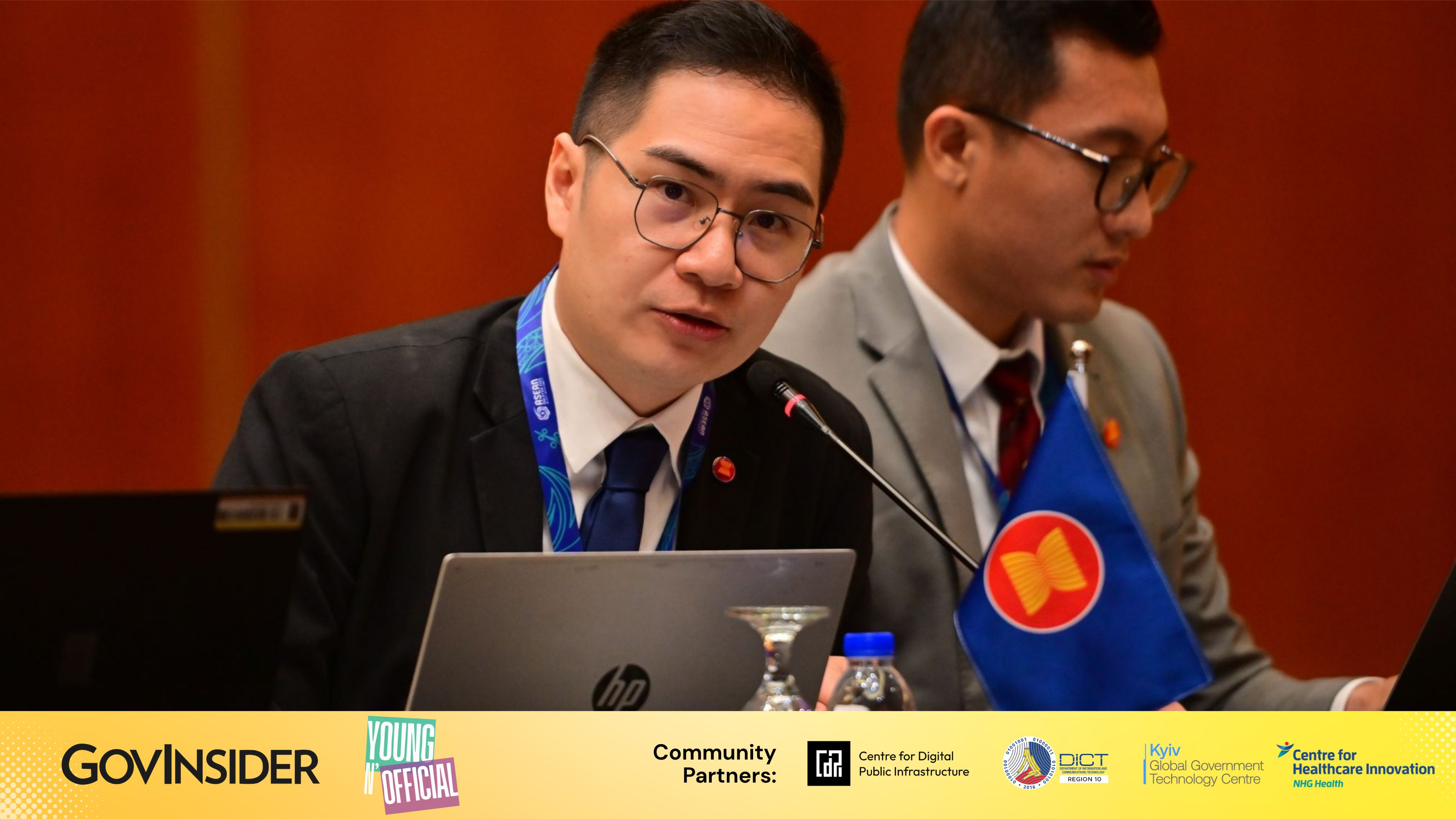
Sebastian Soon Hong Kwan, Regional Cooperation (Science, Technology & Innovation), ASEAN Secretariat, ASEAN.
1) What does public service mean to you? Can you share more about your role in the public sector?
To me, public service means using knowledge, networks, and institutions to improve lives at scale. Public service creates the conditions for people, communities, and countries to thrive together, especially in a region as diverse as ASEAN.
My own path into public service has not been linear. I began as a scientist, trained in molecular biology, and over time moved into the policy space because I became increasingly interested in how science could be translated into real societal impact.
Today, I serve at the ASEAN Secretariat, where I work on regional cooperation in science, technology and innovation. My role involves helping ASEAN Member States and partners align priorities, shape initiatives, and move ideas into practical cooperation.
That means working at the intersection of policy, diplomacy, and delivery. One day, I may be supporting a regional strategy on science and innovation. Another day, I may be coordinating partners around the blue economy, AI, space cooperation, or innovation ecosystems.
2) Tell us about a project you championed. What impact did it have on the community?
One of the projects I am most proud to have led is the development of the ASEAN Plan of Action on Science, Technology and Innovation (APASTI) 2026–2035. This is ASEAN’s ten-year strategic roadmap for regional cooperation in science, technology and innovation, and it helps set the direction for how our Member States work together to strengthen innovation ecosystems, develop emerging technologies, and address shared challenges through science-based solutions.
What made this especially meaningful was that APASTI was not developed as a paper exercise. I helped drive the process over several months, bringing together inputs from across ASEAN through consultations, discussions, and foresight-based engagements. The challenge was to build consensus across countries with diverse priorities, capacities, and levels of development, while maintaining an ambitious, practical, and forward-looking framework.
The impact of this work is not always as visible as that of a single community project, but its reach can be far greater.
A regional plan like APASTI creates the foundation for future programmes, partnerships, and investments that can strengthen research, innovation, talent development, and technology cooperation across Southeast Asia. In the long run, that means better tools to address issues that matter to communities, whether in health, food systems, climate resilience, digital transformation, or sustainable development.
For me, the most rewarding part was knowing that this was about helping ASEAN prepare for the future in a more coordinated way. Good public service is not only about solving today’s problems, but also about building the systems that allow societies to respond better to tomorrow’s challenges.
3) As a young professional, how has your unique background or perspective allowed you to identify a solution that others in your organisations might have overlooked?
My background gave me the advantage of being able to speak across worlds that do not always naturally connect. I come from a scientific background, but I now work in a highly political and diplomatic environment. That has taught me to appreciate both evidence and process.
Because of that, I often look for solutions that are technically sound but also institutionally realistic. In regional organisations, a good idea is never enough. It needs legitimacy, trust, timing, and ownership from multiple stakeholders.
I think my scientific background helps me ask sharper questions, while my policy experience helps me frame solutions in a way that different actors can rally behind.
It also helps that I have worked across several countries in Asia. Exposure to different institutional cultures has made me more sensitive to context.
Sometimes what is overlooked is not a grand new invention, but a better bridge between people, sectors, or systems. Much of my work has involved building those bridges.
4) What is your personal strategy for maintaining your creative energy when faced with bureaucracy?
My strategy is simple: I stay focused on the purpose behind the process. Bureaucracy can be frustrating, but in public service, it is often part of how ideas gain legitimacy, support, and scale. So instead of seeing it as a barrier, I try to see it as something to navigate well.
I also keep my creative energy by staying curious. I learn from people outside my immediate circle, keep up with new ideas, and remind myself that even within formal systems, there is always room to improve how things are done.
Most importantly, I try not to get lost in paperwork alone. I stay connected to the bigger mission and to the people the work is ultimately meant to serve. That helps me keep perspective, stay motivated, and continue looking for better solutions.
5) If you had just one area to invest in to accelerate transformation in the public sector (regulation, technology, talent, etc.), which one would you choose and why?
I would invest in talent.
That feels personal to me because my own journey has shown how important talent development is. The opportunity to grow, adapt, and serve across different countries has shaped how I work and how I see public service.
Without investing in people, I do not think institutions can truly transform, no matter how much technology or funding is available.
Strong public servants are those who turn ideas into action, build trust among stakeholders, and keep institutions moving through complexity. In today’s environment, we need people who are not only technically capable but also adaptable, collaborative, and able to work across cultures and sectors.
At the same time, developing talent is only half the story. Retaining talent is just as important. Many institutions struggle not because they cannot find good people, but because they cannot keep them motivated, supported, and given room to grow.
If we want real transformation in the public sector, we need to create systems that value, challenge, and enable talented people to make a meaningful difference.
6) What is your greatest ambition as you grow in your public service career?
My greatest ambition is to help shape institutions and partnerships that make our region more future-ready, more inclusive, and more confident in its own capabilities.
I want to continue building bridges between science, policy, and society. Too often, important knowledge remains trapped in reports, laboratories, or closed conversations.
I would like to help create systems where good ideas move faster into implementation, where regional cooperation becomes more meaningful, and where ASEAN can position itself not only as a consumer of innovation, but as a contributor to it.
On a personal level, I also hope to grow into the kind of leader who expands opportunities for others.
Public service is not only about what you deliver yourself. It is also about the people you mentor, the confidence you build in teams, and the institutional culture you leave behind.
7) What is a “universal value” that connects everyone in your department – from interns to directors – and how do you use that to drive collaboration?
For me, that value is trust.
In a regional organisation like ours, people come from different nationalities, cultures, and working styles, and we do not always speak in exactly the same way, even when we use the same language. On top of that, we also work closely with Member States and external partners. In that kind of environment, trust is what holds everything together.
I have learned that without trust, nothing really works. You can have meetings, plans, and frameworks, but collaboration will remain shallow if people do not trust one another’s intentions, judgment, and commitment. Trust allows teams to work across differences, have honest conversations, and move forward even when the process is complex.
I try to build trust by being consistent, respectful, and reliable. I also believe in giving people space to contribute and taking their perspectives seriously. When trust is present, collaboration becomes much easier, because people feel that they are working with one another, not around one another.
8) What is the best piece of advice you’ve got for the next generation of public servants?
Stay idealistic, but learn how systems work.
A lot of young public servants enter with energy, conviction, and fresh ideas. That is valuable and should never be lost. But impact also requires patience, listening, and the ability to work through institutions rather than simply criticising them from the outside.
I would also say: build depth, not just visibility. Learn your subject well. Understand the people you serve. Write clearly. Speak thoughtfully. Be dependable. In the long run, credibility matters more than performance.
And finally, do not underestimate the power of relationships. Public service is ultimately a human enterprise. Trust, respect, and consistency will often open more doors than brilliance alone.
9) What is a myth you wish to debunk about young public servants?
One myth I would like to debunk is that young public servants are a burden or are not yet ready to contribute meaningfully.
In reality, young public servants are often a real driver of innovation. They bring fresh perspectives, new energy, and a stronger openness to technology and new ways of solving problems. They are often quicker to question outdated practices and more willing to explore better ways of working.
That does not mean experience is less important. It means young officers bring a different kind of value that institutions need. When given the right support and trust, they can help public institutions become more adaptive, forward-looking, and responsive.
For me, young public servants should not be seen as people who need to wait quietly for their turn. They are already helping shape the future of public service now.
10) Write a letter to your future self in 2035.
Dear future me,
I hope that by 2035, you have stayed true to what has always driven you: using science, innovation, and ideas to make society better.
I hope you never lost your curiosity or your belief that knowledge should not remain confined to papers, meetings, or institutions. It should improve lives, open opportunities, and help communities face the challenges ahead with more confidence and dignity.
I hope you continued to build bridges between science and society, between policy and people, and between countries trying to navigate change together. The real value of innovation was never in novelty alone, but in whether it made life fairer, more sustainable, and more hopeful for others.
Life can be uncertain, but often it is that very uncertainty that leads us to greater heights. I hope you embraced that, rather than feared it. Some of the most meaningful opportunities may not have come from perfect plans, but from having the courage to step into the unknown.
I also hope you remained humble. No matter how far you have gone, remember that progress is always collective.
Keep learning. Keep building. Keep contributing.
Soon Hong