
Singapore General Hospital's virtual nursing team that works away from the bedside
Keeping a high-risk patient safe used to tie a nurse to one bedside for hours. SGH's Assistant Director, Nursing Safety & Quality, Virtual Nursing, Teo Kai Yunn, shares how virtual nurses use tech and their clinical experience to change that.
Piloting the AI monitoring device, known as LASSO, across more than 90 monitoring cases since December 2025, has returned more than 20,000 hours of bedside observation time to ward staff, she says. Image: Canva
What if a nurse's work didn't need to happen at the patient's bedside?
Singapore General Hospital (SGH) experimented with this idea through the setup of its virtual nursing unit in November last year.
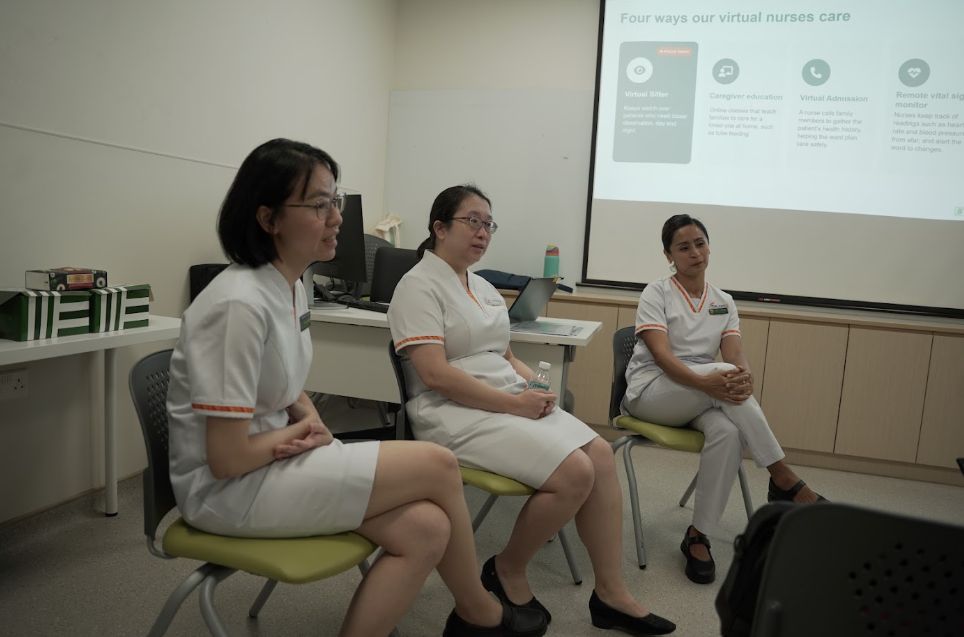
In this new unit, virtual nurses monitor, assess and support patients remotely from a central hub, while still being able to activate ward nurses to provide direct, bedside care to patients.
"The idea is to move work that does not need a nurse at the bedside to a central team," says SGH's Assistant Director, Nursing Safety & Quality, Virtual Nursing, Teo Kai Yunn, to GovInsider.
This is as SGH released early results in late-September from implementing an artificial intelligence (AI)-powered virtual sitter programme to monitor patients needing closer observation in the ward.
Piloting the AI monitoring device, known as LASSO, across more than 90 monitoring cases since December 2025, has returned more than 20,000 hours of bedside observation time to ward staff, she says.
SGH's virtual nursing unit now handles four services.
Besides virtual sitting, virtual nurses support with online patient and caregiver education, virtual assessments for patients, as well as remote vital signs monitoring.
"Virtual nursing supports, rather than replaces, bedside nurses. By using technology to pool nursing resources, we can deliver care more effectively and efficiently," she says.
Teo shares more about the skills virtual nurses need, how the virtual nurses worked with the vendor to fine-tune its tech, and what it takes to scale a pilot.
What it takes to be a virtual nurse
Teo makes the point that virtual nurses don't end up replacing bedside nurses altogether.
As hospitals start adopting new technologies, digital care skills will be increasingly important for nurses to pick up.
"What is new is assessing and engaging with patients without being physically in front of them," she says.
In fact, Teo highlights that those who do well as virtual nurses tend to be registered nurses with years of clinical experience, and are keen and comfortable to use technology.
Since the role of the virtual nurse remains high-touch despite being done remotely, virtual nurses need to be skilled in diversion techniques, she adds.
This means talking to confused or distressed patients in a calm and clear way before they are attended to.
According to Teo, the training for virtual nurses covers learning to operate the various monitoring services, practising diversion techniques, and learning to tell accurate patient data from incorrect monitor readings caused by the patient's sudden movement.
Tech as an enabler
The virtual sitter programme shows the impact of complementing tech with care.
The ward nurses refer patients who need closer observation to virtual nurses.
These patients include elderly patients who are confused, delirious or unsteady on their feet, or patients under suicide prevention.
The virtual nurses will then inform the patient's caregiver of LASSO's setup at the patient's bedside.
Caregivers will also be given a brochure on how the system works and what nurses can see.
To address privacy concerns, nurses explain to caregivers that LASSO shows the patient’s silhouette instead of their face, and that teleconferencing data is not stored.
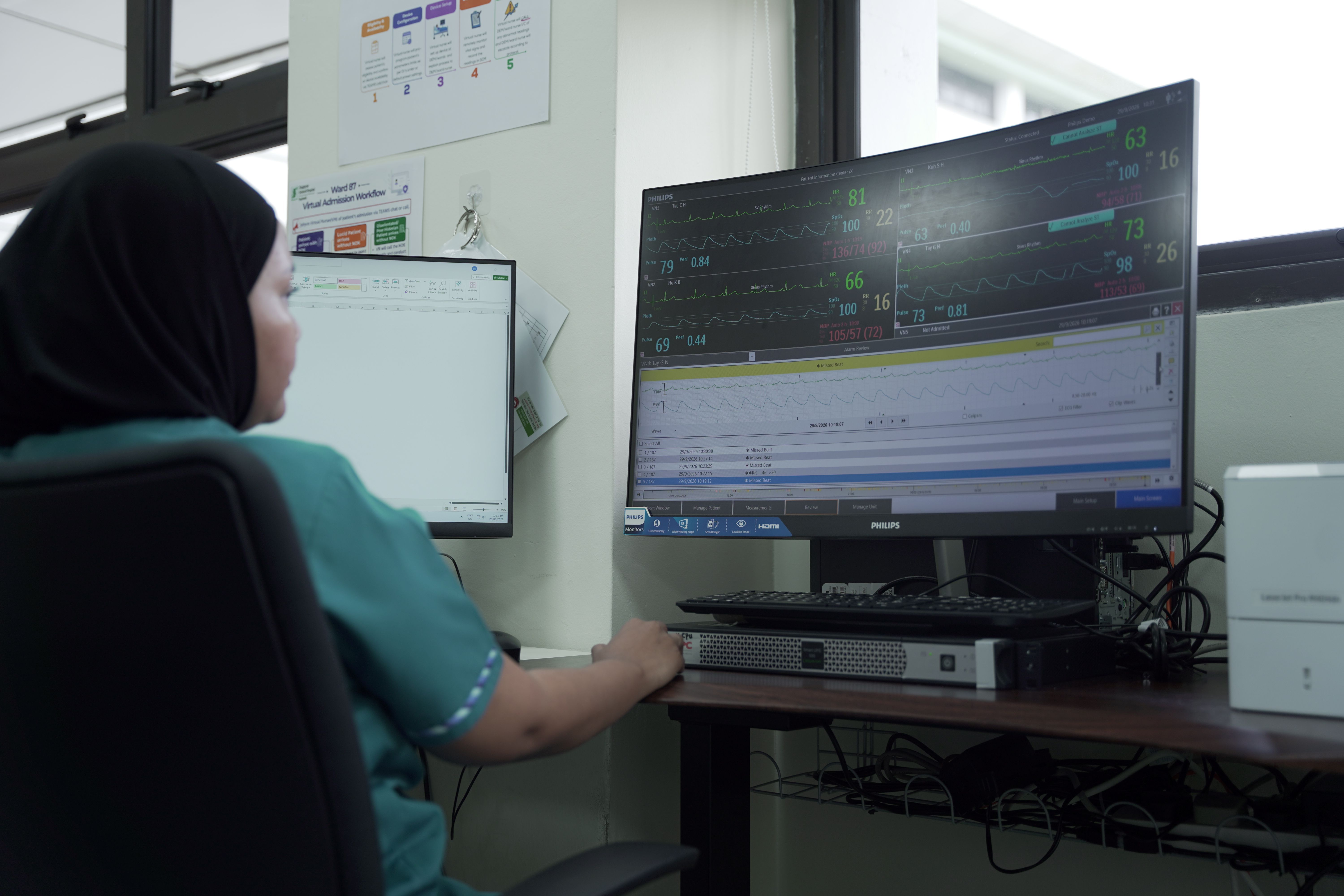
At the central hub, these nurses access a single dashboard to receive results of the LASSO device and engage with the patient in real-time when needed.
As the monitoring is automated, they don't have to keep their eyes on the patients all the time.
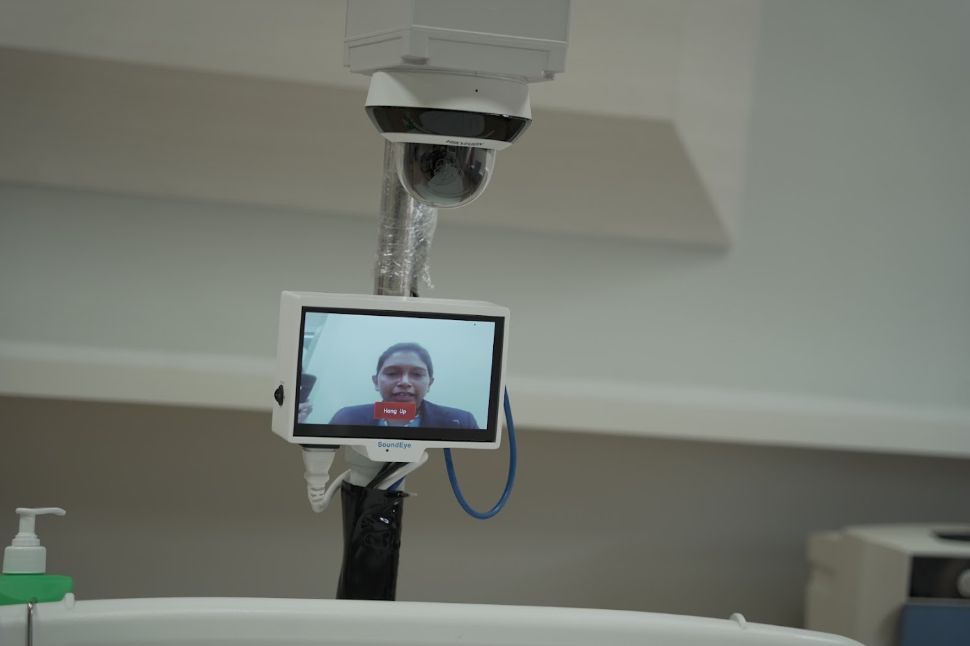
When LASSO detects movement, the virtual nurses are alerted within seconds, which then allows the nurse to engage the patient through a teleconferencing link.
Virtual nurses can activate ward nurses to the patient's bedside if further support is needed.
Of the 90-odd patients monitored, two-thirds were initially physically restrained.
During the pilot, 53 per cent of them had their restraint points reduced, with the remaining not having any restraint at all.
Over 90 per cent of families and over 95 per cent of the 92 staff surveyed also gave positive feedback.
"Patients held still for long periods lose muscle strength and joint movement and become more prone to pressure injuries and skin tears.
"Easing restraint gives patients back some movement, and the virtual sitter is what makes that possible," Teo says.
When AI mistook a bolster for the patient
For this pilot, virtual nurses worked with the vendor to refine detection algorithms as early results come in.
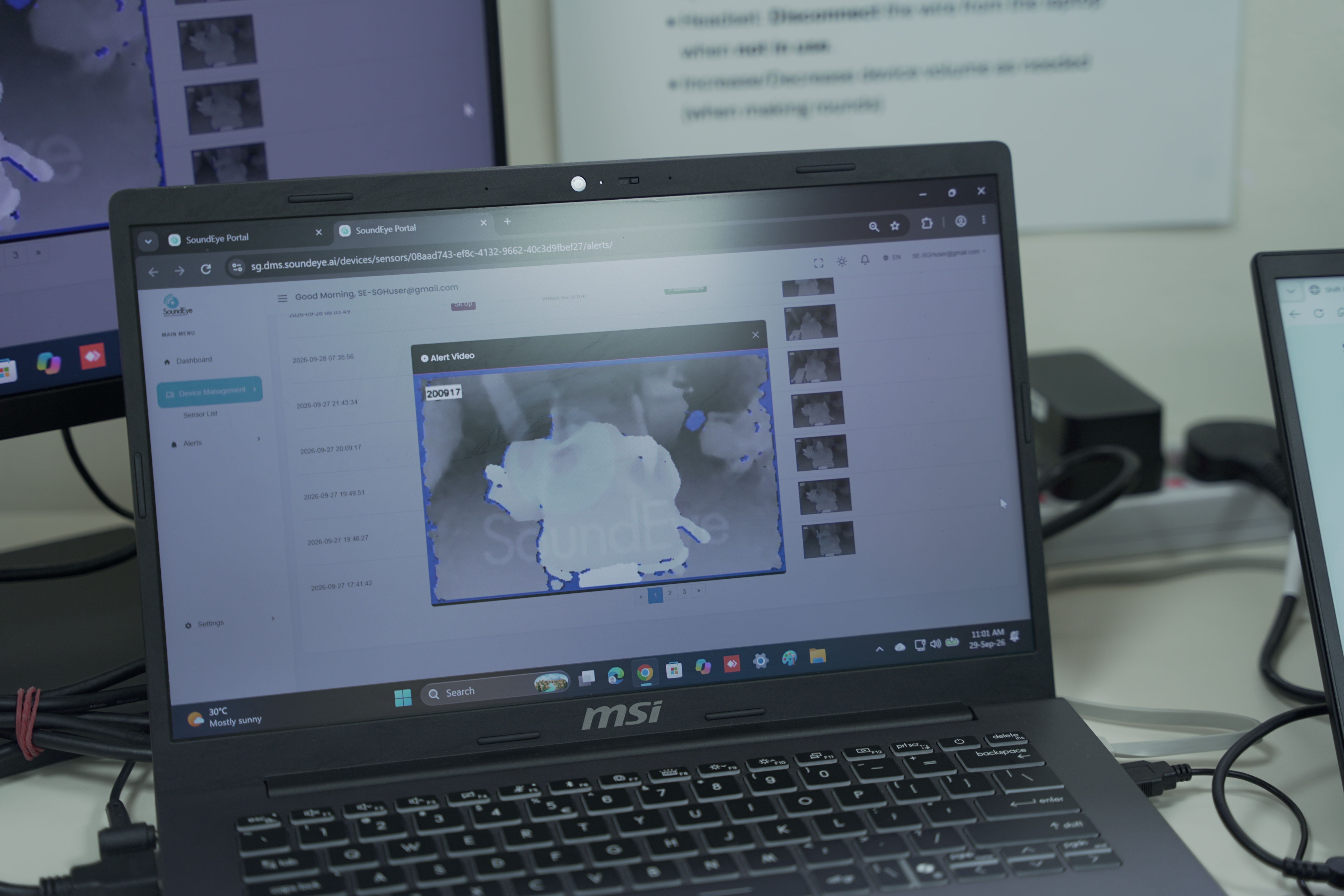
"The device itself does not make clinical decisions. Its job is to get a nurse’s attention quickly. Every alert is checked by a nurse, who decides what to do next," Teo notes.
Beyond the alerts, nurses watch how each patient's condition changes.
When the patient's conditions improve, nurses then advocate for the removal of physical restraints or termination of virtual sitter.
Virtual nurses partnered with Singapore company SoundEye to customise it for the wards, including how alerts are set and escalated.
The nurses gave feedback on the need to retrain the AI to recognise bolsters as bedding and pillows, instead of patients, so LASSO doesn't raise a false alarm.
They also asked SoundEye for a two-way teleconferencing function, so they could speak to patients in real time instead of only watching them.
Lessons on scaling pilots in bedside settings
Both tweaks to the systems came from nurses using the system in an acute care setting, says Teo.
She stresses the importance of involving end users in the pilot as they identify workflow issues that do not show up in a tech demo.
She cautions against copying the solution wholesale into other hospitals. Each hospital should adjust the solution given different clinical routines and patient profiles.
SGH plans to add more LASSO devices so the service can reach more patients, says Teo.
It also wants to scale up its existing remote vital signs monitoring services, which allows virtual nurses to track vital sign trends for patients and intervene when needed.
As the services grow, the unit will need to train more virtual nurses and its ward teams to know when and how to refer patients, as well as to keep the same checks on safety, privacy and patient outcomes.
On what it takes to scale a pilot, Teo says that the following principles are adhered to.
These included to start with a clear clinical need, pilot first and measure what matters, make sure the infrastructure is ready for scaling, design systems with end users in mind, and provide clear and transparent information to patients and caregivers from the start.