
Singapore hospital on what it takes to scale telehealth and redesign care delivery at home
By Cindy Peh
Clinicians need to have access to the information, tools, and support services required to make good clinical decisions regardless of where the consultation occurs, says Tan Tock Seng Hospital’s Chief Clinical Informatics Officer, Dr Ravi Sachdev.
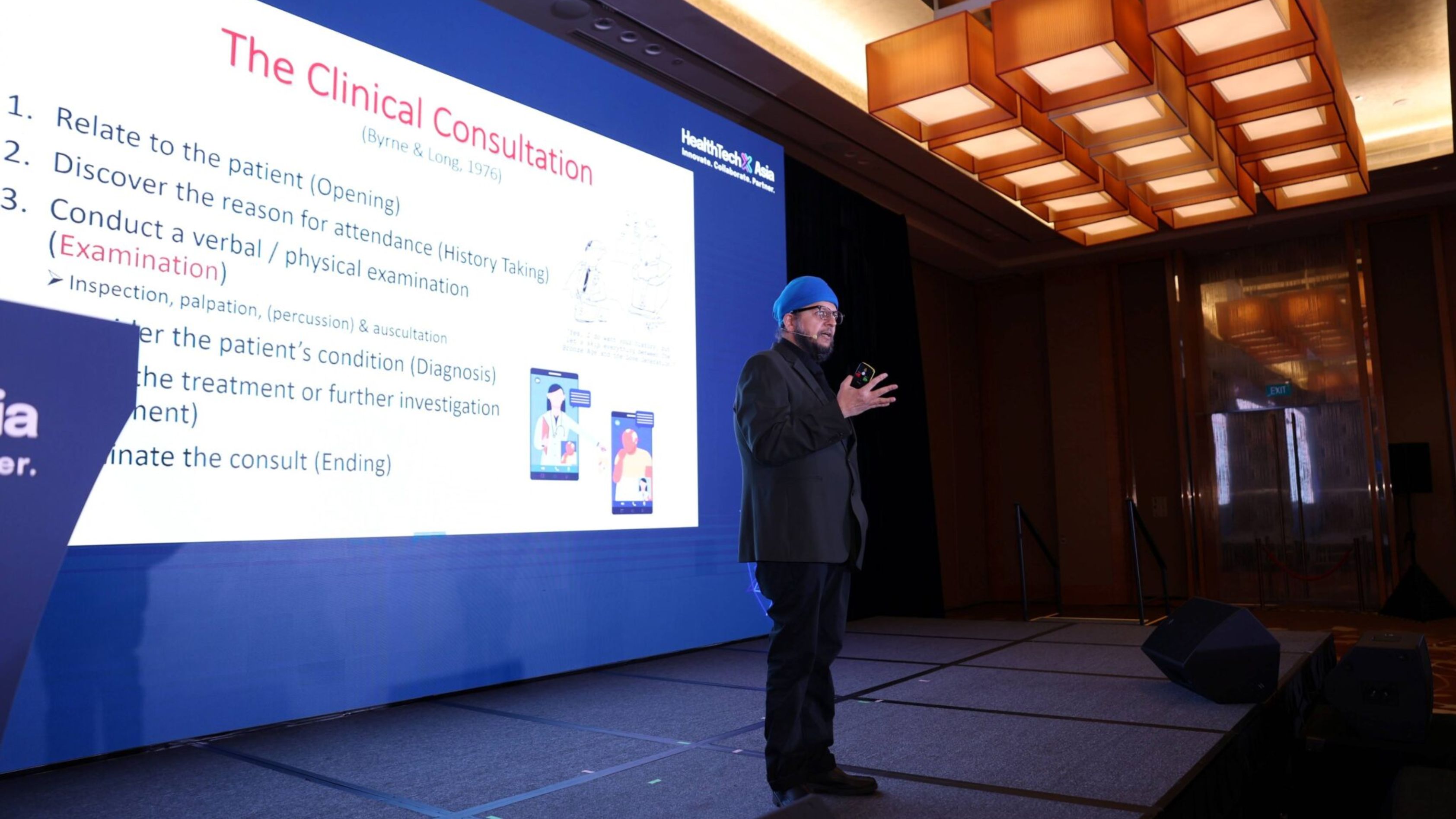
Tan Tock Seng Hospital’s Chief Clinical Informatics Officer, Dr Ravi Sachdev, presenting at HealthTechX Asia 2026 event in Singapore. Image: HealthTechX Asia
At HealthTechX Asia 2026 event in Singapore, Dr Ravi Sachdev, Chief Clinical Informatics Officer at Singapore’s Tan Tock Seng Hospital, outlined a vision for “24/7/365/360” healthcare.
This was a model that gives patients greater flexibility over how and when they receive care while empowering them to take a more active role in managing their health using easily available tech tools.
The concept centres on two key principles: care should be data-driven, and technology-enabled.
With virtual care, remote monitoring, artificial intelligence (AI), and connected devices, providers today do not have to rely solely on face-to-face encounters and are better positioned to deliver personalised and accessible services.
Virtual care as an experience, not just a tool
The term ‘virtual care’ is often associated with telemedicine or video consultations. But Dr Sachdev emphasised that virtual care is much broader.
“Telehealth is a tool. Virtual care is the experience, how the provider interacts with the patients,” he said.
Virtual care encompasses the entire patient journey, integrating technologies such as wearable devices, remote diagnostics, digital health platforms, and AI-supported decision-making.
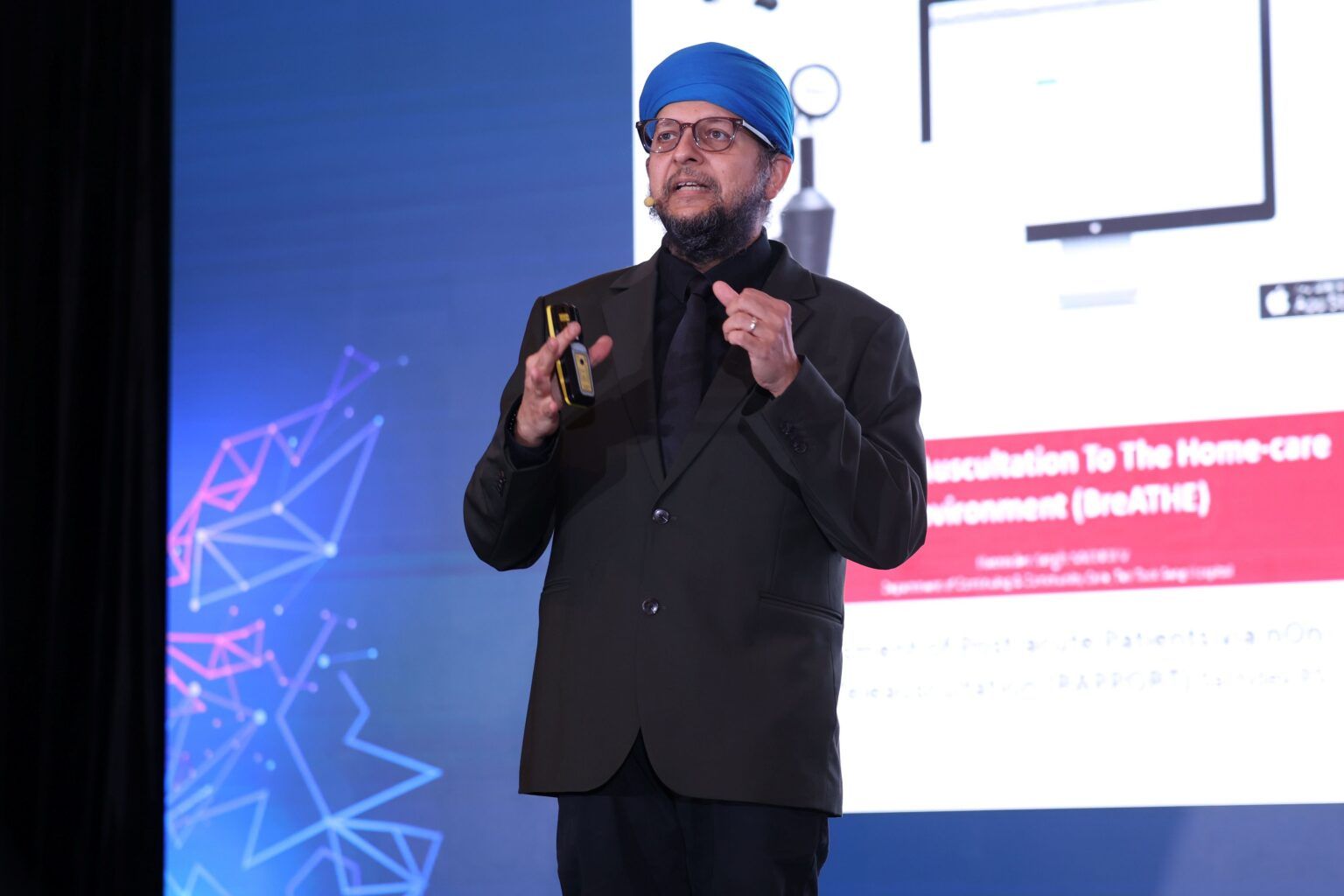
The goal is not simply to replicate physical consultations online, but to redesign how care is delivered.
Singapore already possesses many of the building blocks needed to support this transformation, including high smartphone adoption, widespread broadband access, and growing familiarity with digital tools across all age groups.
The challenge, according to Dr Sachdev, is not whether patients can use these technologies, but whether healthcare providers offer opportunities for them to do so.
Evidence suggests that patients are ready.
Studies consistently show strong patient demand for virtual care, with 74 per cent of patients reporting that they are comfortable communicating with doctors using technology rather than in-person, and 67 per cent saying telemedicine increases their satisfaction with care.
Virtual-First Seamless Care model
One model gaining traction globally is virtual-first care (V1C), where patients have the ability to initiate care anywhere.
Dr Sachdev proposed combining this approach with “seamless care” — ensuring clinicians have access to the information, tools, and support services required to make good clinical decisions regardless of where the consultation occurs.
Together, these concepts form Virtual-First Seamless Care (V1SC).
Under this model, a patient visiting a general practitioner (GP) who requires specialist input would no longer need to wait weeks for a hospital appointment.
Instead, they could access a specialist consultation within hours or a few days, through a virtual setup or Telepod located near the GP clinic.
With remote examination tools and integrated access to medical records, specialists could assess patients, order investigations, initiate treatment, and determine whether a hospital visit is necessary.
Some patients may still require in-person care, but many could continue receiving follow-up support virtually.
“You find that this brings that patient through the healthcare journey much, much more efficiently,” said Dr Sachdev.
This could reduce specialist waiting times for patients, ease pressure on hospitals, and strengthen collaboration between specialists and primary care providers.
It also aligns with Singapore’s Healthier SG strategy, which aims to strengthen the role of primary care and encourage more continuous patient-GP relationships.
A common concern surrounding virtual care is also whether clinicians can adequately assess patients remotely.
Dr Sachdev argued that advances in virtual examination technologies are rapidly expanding what is possible.
At Tan Tock Seng Hospital’s Centre for Virtual Care, clinicians can conduct teleconsults in purpose-built Telepods, equipped with digital stethoscopes, vital signs monitoring devices, and EMR access.
Patients can also be guided to perform self-assessments, as guided by providers.
Increasingly advanced remote monitoring technologies
Studies have been done for years on conducting auscultation – the medical practice of listening to internal body sounds – remotely.
Results have been encouraging, with clinicians able to diagnose conditions based on quality recordings of lung, abdominal, or heart sounds.
There is also Remote photoplethysmography (rPPG), a contactless technology that uses videos of faces to extract health parameters, such as heart rate.
Many solutions in the market have demonstrated high accuracy – the next step is to see whether these results can be replicated across different patient populations.
Looking ahead, Dr Sachdev sees consumer health technologies and wearables becoming increasingly sophisticated and medical-grade, offering providers rich streams of real-time patient data.
In addition, virtual care is set to evolve and expand to become ‘healthcare everywhere’; while AI-driven clinical decision support goes mainstream.
“The virtual-first seamless care approach is eventually going to change how care is delivered,” he noted.
“AI is not going to replace the clinician. But as providers, we will be able to empower our patients to manage their own health, and turn to us when they need specialist input or more advanced treatment.”
“There will always be a role for physicians, and there is a role for AI and definitely a very, very big role for virtual care.”
The article was originally published in Hospital Management Asia here, and edited.
----------------------------------
Cindy Peh is the Content and Community Manager at Hospital Management Asia, which showcases trends and best practices in healthcare management via in-person and digital events, as well as an online publication.