
Singapore launches Institute of Digital Government to scale digital and AI skills among public officers
Public officers will first build foundational skills in product thinking, including understanding user needs and defining the right problem to solve before considering how tech can help, says Senior Minister of State, Jasmin Lau.
-1789964775578.jpg)
Acting Minister for Manpower and Senior Minister of State for Digital Development and Information Jasmin Lau delivering an address and launching the Institute of Digital Government at the AI Tech Festival 2026. Image: Ministry of Digital Development and Information (MDDI)
By the end of 2028, Singapore wants to train more than 150,000 public officers to use technology in their work and deliver better citizen services.
Launched last week, the Institute of Digital Government (IDG) aims to do just that by offering structured learning pathways for public officers across different proficiency levels, artificial intelligence (AI) sprints, and learning communities.
IDG was jointly established by the Ministry of Digital Development and Information (MDDI) and the Civil Service College (CSC).
At the launch event, Senior Minister of State Jasmin Lau shared that over the past two years, nearly 150 senior leaders including Permanent Secretaries, Deputy Secretaries and heads of agencies, have completed foundational trainings in digital capabilities.
Senior leaders were trained in product thinking, modernisation, cybersecurity & resilience, data and AI.
More recently, she noted that these senior leaders tried building with AI such as developing briefs and creating personal agents.
"By trying these digital tools themselves, leaders can better understand what is useful, what the frustrations and risks are, ask better questions, and give their teams the confidence and space to experiment," said Minister Lau.
Product thinking skills as the first step
For a start, all public officers will undergo yearly training in areas spanning cybersecurity, data protection and AI literacy.
Singapore public officers can access the courses via CSC’s learn.gov.sg platform.
When it comes to learning to apply AI in their work, public officers will first need to attend a training on product thinking, before taking courses based on their different starting points.
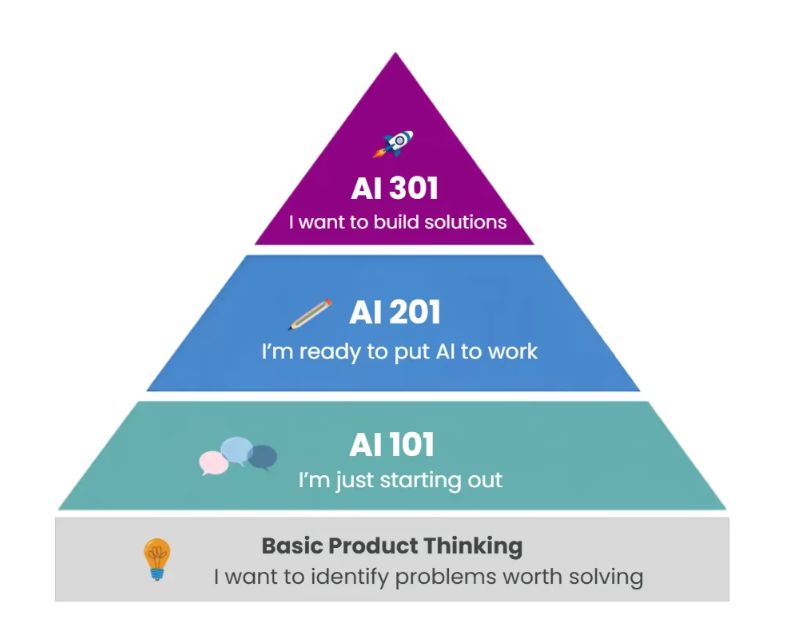
Product thinking skills entail understanding user needs and defining the right problem to solve before considering how technology can help.
Instead of asking "What can AI do?", the learning process needs to start with "What are we trying to do better?" Minister Lau explained.
She noted that AI is not the core job for most officers, and that they "still have policies, cases to handle, services to deliver, people to manage and Singaporeans to serve."
After gaining the product thinking foundations, public officers can opt to attend the courses at their own pace under one of the three levels of proficiency:
- AI 101 for learners new to AI, and the focus is on understanding AI’s capabilities and limitations, learning basic prompting techniques, and establishing safety habits.
-
AI 201 for learners who want to apply AI in their daily work, and the focus is on use cases that save time and increase output quality.
-
AI 301 for learners looking to scale individual AI solutions to reusable, automated solutions for their teams. The focus is on learning about rapid prototyping via vibe coding, and building agentic workflows.
IDG's website has also put forth a 12-week learning plan to support teams in moving through the three levels.
After attending the courses, learners will work on a practical exercise, like completing a quiz or building a solution, to track their learning outcomes.
According to the official statement, IDG aims for all public officers to reach AI 201 proficiency level to apply tech effectively in their domain work.
Beyond courses: Learning by doing
IDG also plans to organise workshops for individual public agencies to provide officers the dedicated time and space to apply digital and AI skills in their work.
During the workshop, officers will apply the product thinking skills they learn to frame problems, and the AI skills to rapidly prototype and test solutions, contextualising solutions to their respective agency's work.
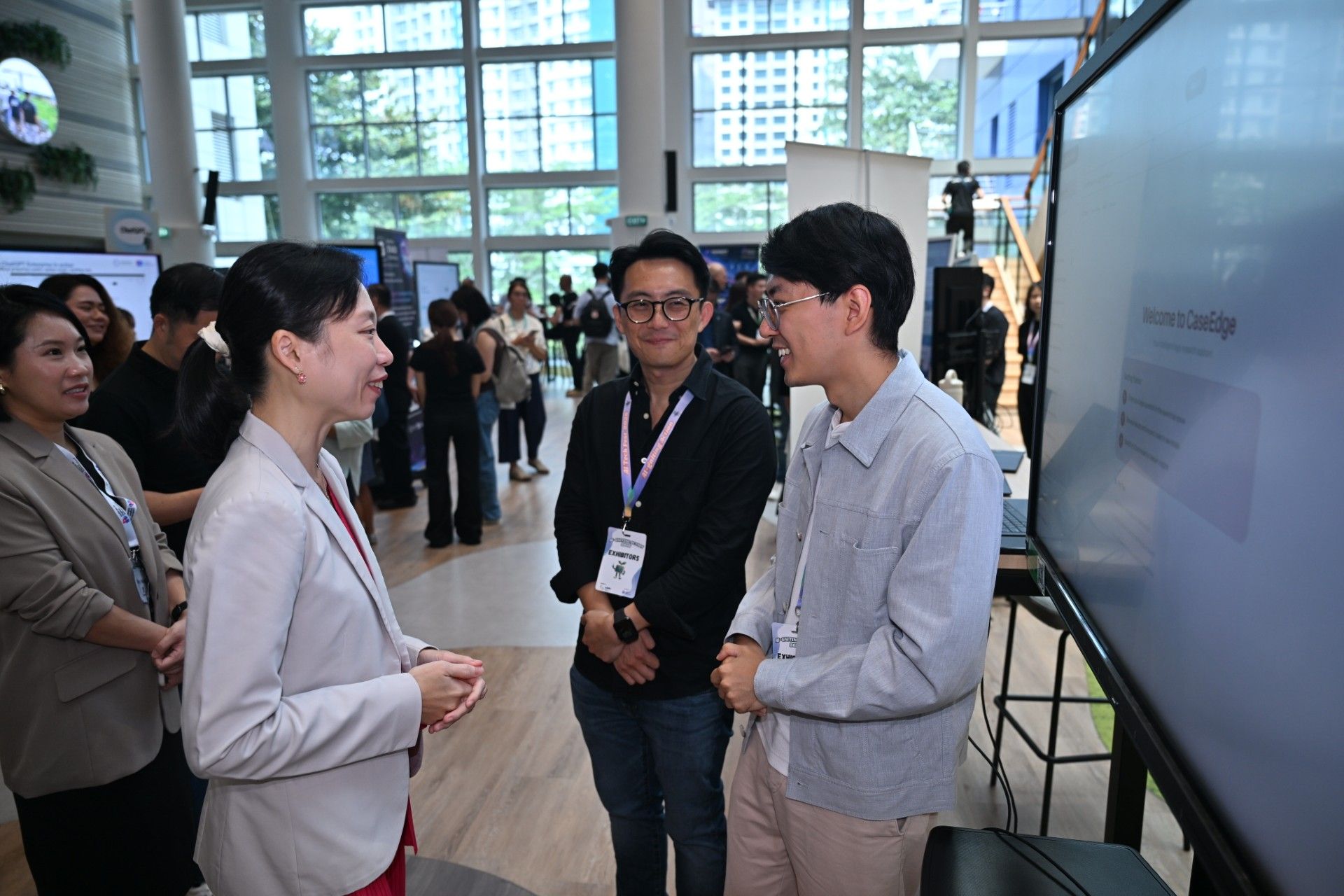
The statement noted that the AI sprints conducted since this May have reached more than 1,000 officers across the government.
To cross-pollinate learnings between agencies, IDG has also been setting up learning communities that bring officers across different agencies to share useful products and practices.
For example, IDG piloted the Champions of AI Transformation (CATs), which is a community of public officers from non-technical roles who are driving AI-enabled workflow redesign within their agencies, to share their learnings with peers from other agencies.
On what IDG's success looks like, Minister Lau stressed that technology is not the mission, but just a means of getting to better public services.
That means IDG's success is not measured by the number of courses run or the AI products deployed, but how digital and AI technologies are changing workflows for public officers.
"Because every workflow we change has a person on the other side: an elderly resident trying to redeem a voucher, a young mother navigating healthcare forms late at night, or a small business owner waiting for an approval for a grant," she noted.