
Singapore prison officers show what ground-up innovation looks like
By Sol Gonzalez
Team FIFA from the Singapore Prison Service shares how a supportive culture of innovation can turn ideas into prototypes that deliver real impact.
-1786935435852.jpg)
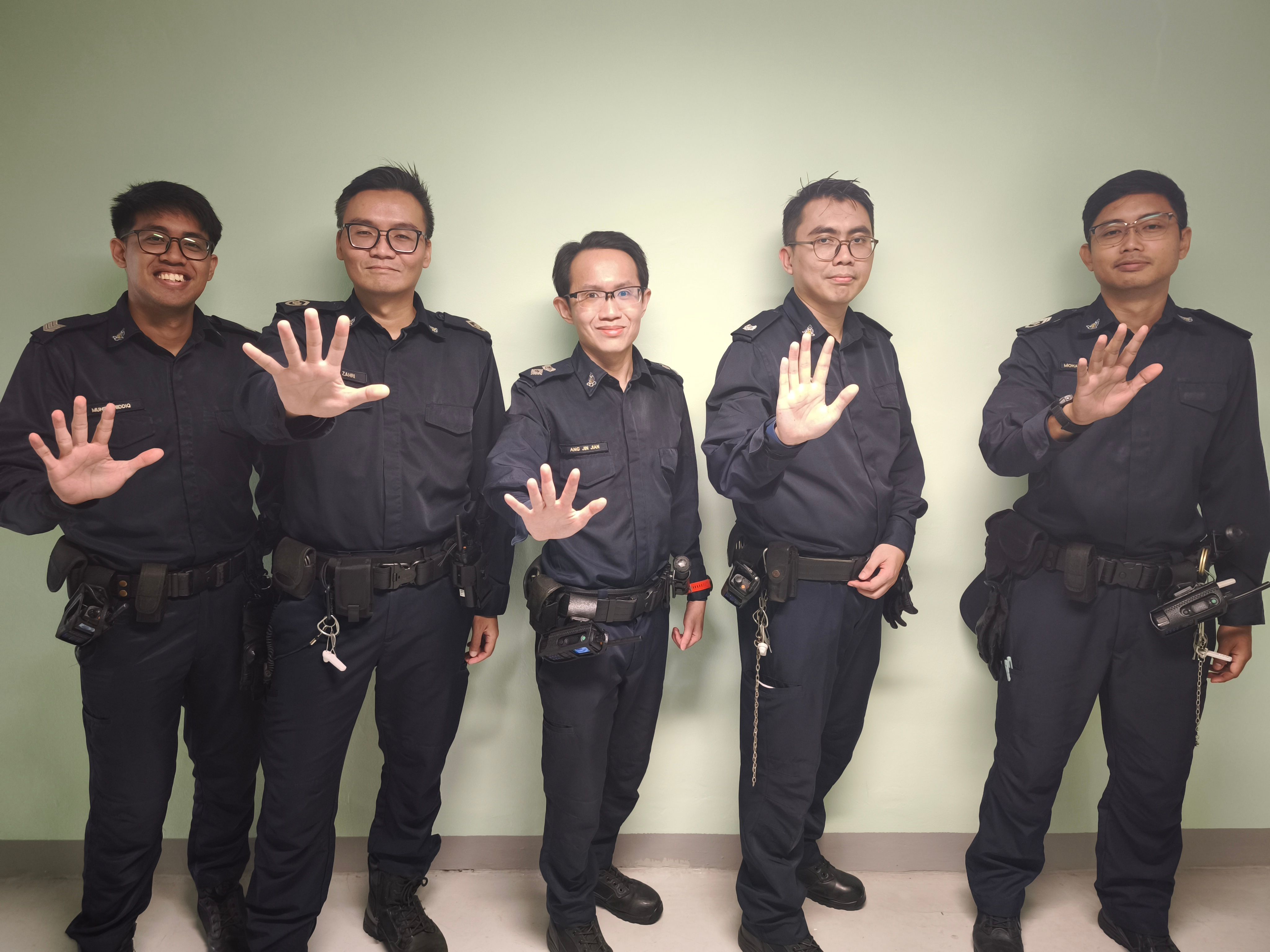
Team FIFA won first place in the SPS’s annual iDare Make-a-Pitch initiative and received a special mention at GovInsider's Festival of Innovation Awards in recognition for the efforts to design innovative solutions from the ground up. Image: Team FIFA.
The people best placed to identify problems are often frontline workers who encounter them every day.
This is the mindset that Singapore Prison Service (SPS) seeks to foster as part of its efforts to build a culture of innovation, says Ang Jin Jian, Officer-In-Charge of a Correctional Unit in Institution A5.
It was through one of SPS’s innovation initiatives that Team FIFA was formed, Ang tells GovInsider. The team’s name was a nod to the memories its members shared while playing football video games during team bonding sessions.
Comprising officers from different ranks and backgrounds, the team participated in the SPS’s annual iDare Make-a-Pitch initiative, which encourages officers to develop innovative solutions to improve operational effectiveness.
The team identified an opportunity to streamline the manual process of submitting and screening photographs for inmates. This led to the development of a digital photo submission system that leverages artificial intelligence (AI) to support the screening process.
“None of us started with a grand vision. We simply identified a problem that we had been facing and decided to do something about it,” says Ang on behalf of Team FIFA.
“That’s what ground-up innovation really looks like in practice. It does not require people to be visionaries from the outset.
“Instead, it requires an organisation that lowers the barriers enough for ordinary officers to raise their hands and say, ‘This could be better’”.
Team FIFA’s innovative solution won a Special Mention for the 'Dare to Do Award' at GovInsider’s Festival of Innovation (FOI) Awards 2026.
The courage to say: ‘This could be improved’
Before the development of the digital photo system, the submission and screening of physical photographs for inmates involved several manual processes.
Under SPS’s Progressive Privilege System, inmates may earn privileges based on their conduct and progress during incarceration. These privileges may include items that help them maintain ties with their families, such as physical photographs.
The process required family members to print physical copies of photographs and submit them at a visit centre for screening.
The management of physical photographs also involved administrative processes for officers, including keeping track of the number of photographs in an inmate’s possession when the inmate was transferred between housing units.
Recognising that the process of managing inmate photographs was tedious, Team FIFA explored how technology could be used to improve the existing workflow.
During the innovation challenge, Team FIFA attended courses and workshops that helped to map out the pain points experienced by different stakeholders, including the submission journey for families and the workflow for officers.
“It became clear quite quickly that the solution needed to do two things: make the photo submission process more convenient for families while ensuring that the screening process remained rigorous and manageable for officers.
“That was how the concept of Digital Photo Submission with AI Moderation took shape,” shares Ang.
Drawing on their operational experience, the team researched how photo recognition and AI technology could be applied to automate and enhance the photo screening process.
Leveraging the team’s operational experience with the technical expertise of a Home Team Science and Technology (HTX) officer, Team FIFA developed a working prototype that allows family members to submit their photographs online for inmates to access.
The system uses AI to support the screening of the submitted photographs. Photographs flagged by the system are categorised and routed to a staff portal for further review. Approved photographs can be subsequently accessed by inmates thorugh their electronic tablets.
The prototype won first place at an SPS innovation platform and is currently being further developed for implementation.
Nurturing a culture of ground-up innovation
Just like how Team FIFA was able to design a solution to tackle their problem, their experience reflects how a supportive culture of innovation can empower officers to identify opportunities for improvement, experiment with new ideas and develop practical solutions to operational challenges.
Ang says the resources and training provided through the SPS’s innovation initiatives helped the team examine the problem from the perspectives of different stakeholders and develop skills in areas such as research, process mapping and structured problem-solving.
“We came to appreciate that redesigning a process, even one that seems small or administrative, can have a meaningful ripple effect on the people it touches, whether that is an officer spending less time on manual screening or a family member who no longer has to take half a day off work just to submit a photograph,” shares Ang.
He adds that the experience gave the team greater confidence in identifying opportunities to improve existing processes and strengthened their belief in officers’ ability to drive meaningful change.
“If there is one thing we would love for others to take away from our experience, it is that you do not need to have all the answers before you start. Sometimes the most important thing is simply being willing to raise the problem and see where it leads.
“We hope that, in some small way, our journey encourages more officers across the public sector to do exactly that,” says Ang.