
Singapore turns youths from learners to co-creators to become a ‘Silicon Valley for good’
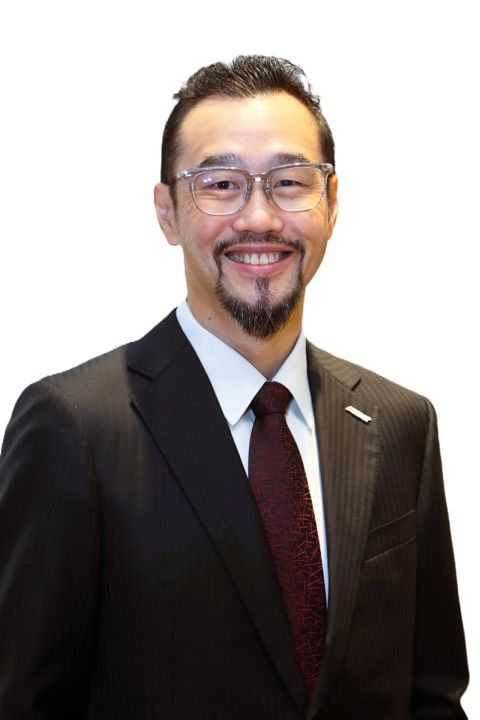
AI Singapore’s Director of Talent & Ecosystem, Koo Sengmeng, aspires to bring the world’s toughest problems home and tap on the local ecosystem to create purpose-driven AI solutions.
-1783589980022.jpg)
What Singapore can offer is a testing ground to become a “Silicon Valley for good,” as AI Singapore puts it, “bringing the world’s most difficult problems and most pressing problems of the future here.” Image: AI Singapore
While schools do their part to build artificial intelligence (AI) literacy among youths, what's missing is exposure to real-world problems, and to how AI can be applied to solve them for public good.
That's the gap that AI Singapore’s Director of Talent & Ecosystem, Koo Sengmeng, wants to close.
He believes youths already have the instinct to do good, and what Singapore can offer is a testing ground to become a “Silicon Valley for good,” as he puts it, “bringing the world’s most difficult problems and pressing challenges of the future here.”
He says this gives students the chance to apply their technical skills and challenge them to become “global thinkers of the future.”
GovInsider speaks with Koo on the sidelines of the inaugural AI for Good Festival organised by AI Singapore on July 8 in Republic Polytechnic to understand how AI Singapore has evolved in its approach to design and scale talent development at the national level.
Rethinking what AI-literate means
Koo highlights how AI literacy has evolved with the mainstreaming of AI with the rise of ChatGPT in around 2023.
For years, AI talent fell into one of two camps: AI creators, who are typically technically-proficient computer scientists or engineers, and AI users.
But ChatGPT broke that binary and led to a third category of AI practitioners, as outlined in the National AI Strategy 2.0 (NAIS 2.0).
Practitioners don't need to become computer scientists, Koo argues. What they need is fluency in applying AI within whatever field they already work in, which is what Singapore’s digital minister coined as “AI bilingualism.”
“The more experience you have in your field, the better position you’re in to understand how AI will help you, not a pure computer scientist,” he says.
This distinction matters just as much for how AI Singapore approaches talent development over the years, by offering multiple pathways from broadbased literacy to demystify AI to more advanced courses.
Koo admits that talent wasn’t part of the blueprint when AI Singapore was formed in 2017.
The agency was first built around three pillars to explore the research value of AI, its industry value as a productivity force, and its policy value through national AI platforms with key ministries.
“All the value of AI wouldn’t be able to translate without solving the talent layer,” he says.
Until 2023, AI Singapore has trained close to 140,000 Singaporeans with basic AI literacy, and more than 30,000 in advanced courses.
Koo also cites the programmes targeting youths that combine both domain expertise and AI.
These include the AI Student Developer Conference to shape youths into employable AI practitioners and National AI Student Challenge to match problem statements submitted by companies and non-profits with the students’ technical expertise.
Such programmes also offer more systemic pathways for students to be employed eventually in the workforce to continue working on and scaling their solutions.
Reframe youths from learners to co-creators
Koo shares how youth development isn’t just a straightforward pipeline of training young people technically, so they’re ready for AI jobs later.
Pushing that timeline forward, youths don’t have to wait until they’re job-ready to contribute. According to him, they already carry something valuable: the insight into community problems around them.
“I think our youths, especially the Gen-Z, already have a very natural element to look beyond the easy affordances of technology and are wired to think of what AI means for public good,” he explains.
That shift from building AI prototypes for their own sake to solving real-world problems is visible in how AI Singapore designs its youth development programmes.
Through the AI Ready ASEAN Youth Challenge, students across all 11 ASEAN member states tackled real community problems where they live, before finalists converged in Singapore during the recent ATx Summit to compete.
“We want our students to have a broader mindset,” Koo says, explaining that it is not only about ensuring youths are technically capable, but also attuned to challenges beyond their own borders.
What every programme tries to instill is a deliberate emphasis on purpose: “We always talk about even as you acquire knowledge about AI, you need to be grounded in purpose and ask, ‘why are you developing the solution?’”, he says.
The festival itself also showcased how Singapore’s youths are co-creating AI solutions alongside industry and community partners to solve public challenges.
For example, students at Republic Polytechnic partnered with the Singapore Association of the Visually Handicapped (SAVH) to build an AI-powered mobile app to help visually-impaired commuters travel confidently and safely on buses.
“Expose young people to real problems early, and support them to use AI to address those problems now,” he stresses.
Bringing the world's problems home
Beyond matching problem statements with technical expertise, Koo has a bigger ambition to turn Singapore into a “Silicon Valley for good.”
Singapore would be a convening point where global problems meet local and regional talent, rather than a hub built for commercial gains.
“Can we find a way to bring all the challenges and problems of the future into Singapore?” he asks.
This leans on something Singapore already has: International foundations which have their offices in Singapore to do public good.
He hopes that the problem statements of the world can be channeled through the AI for Good Alliance, a branch of initiatives under AI Singapore’s talent development initiatives, giving students a line to apply their skills to solve and learn from these problems.
“We need to shape an ecosystem where our students are able to think beyond Singapore, expose themselves to the challenges of the future and how to tackle them,” he says.