
Singapore university integrates into Punggol Digital District’s smart city platform
The successful integration of the Singapore Institute of Technology (SIT)'s digital platform into the Open Digital Platform demonstrates that the plug and play approach can be used at scale, says JTC's David Tan and SIT’s Prof Steven Wong.
-1761815940601.jpg)
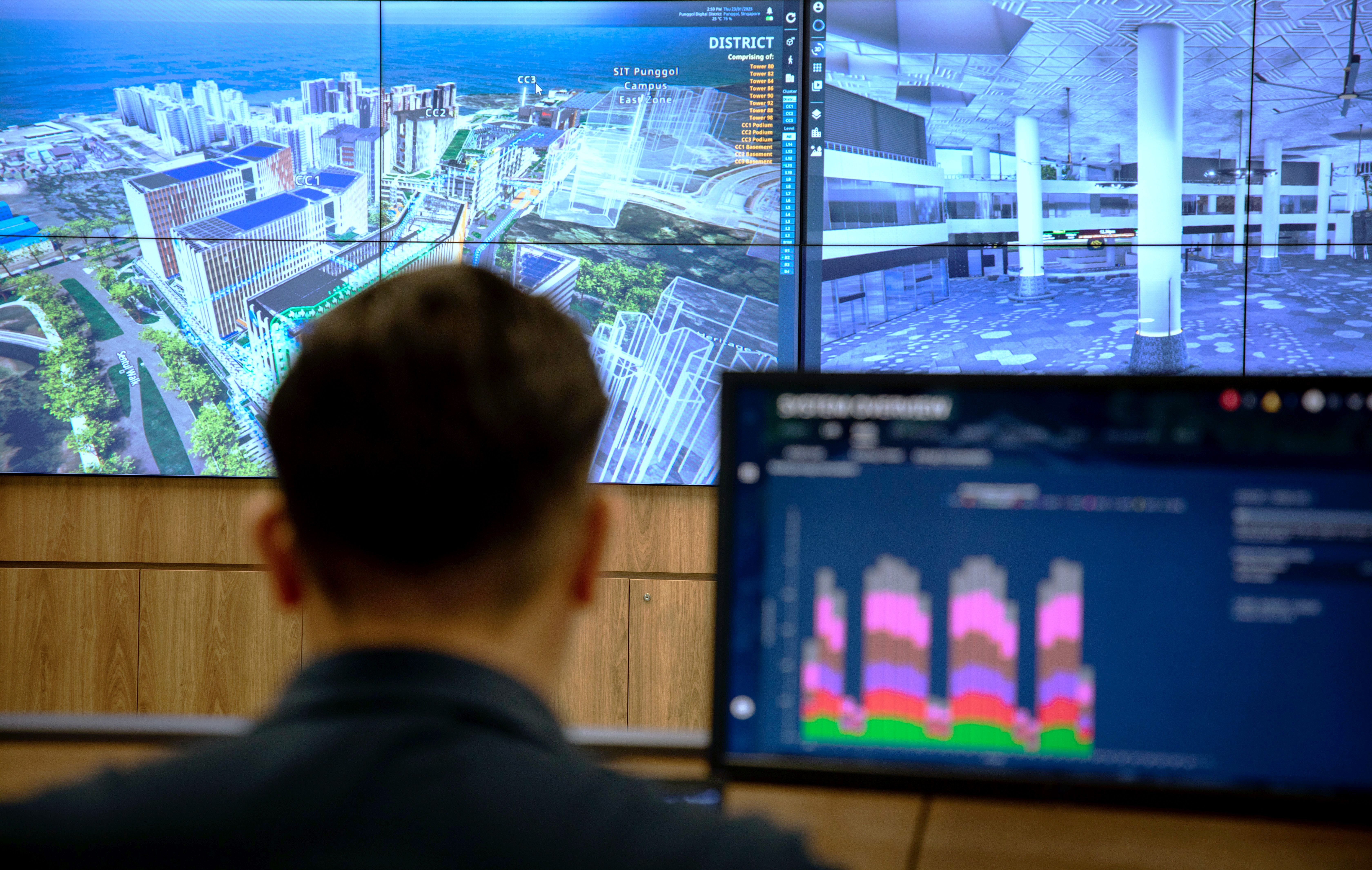
In September, the newly opened SIT connected its internal digital platform, the Living Lab Network, to JTC's Open Digital Platform (ODP), at Singapore’s first smart district. Image: JTC
Imagine a robot moving seamlessly across different environments: First delivering lunch to a university student, guiding a visitor through a mall, and then returning to the lab with a package.
It requires imagination to visualise this because traditionally, most service robots are locked in their environments, limited to single buildings or contained spaces.
The ability to manage complex, multi-environmental journeys is a smart city breakthrough.
And it’s made possible through the Open Digital Platform (ODP), a central operating system co-developed by JTC Corporation and GovTech Singapore.
In September, ODP saw its first major integration when the newly opened Singapore Institute of Technology (SIT) connected its internal digital platform, the Living Lab Network, at the Punggol Digital District, Singapore’s first smart district.
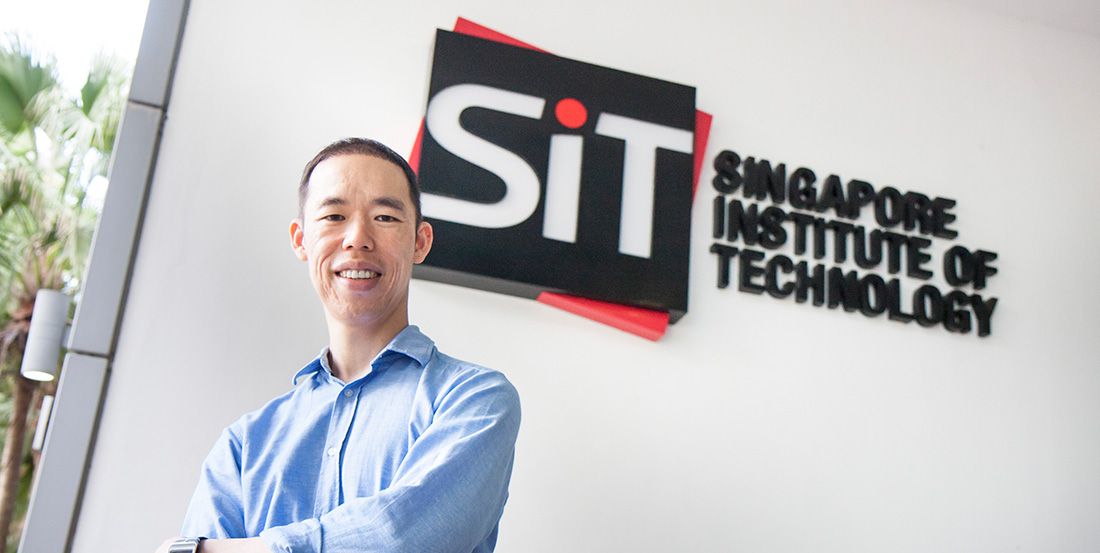
According to SIT’s Director, Centre for Digital Enablement, Professor Steven Wong, this integration would enable SIT to push the boundaries of robotics.
He identifies robotics as one of the most immediate and practical areas for innovation following the ODP integration.
The ODP links various building management systems, making it a crucial testing site for not only robotics, but also for improving embodied artificial intelligence (AI) solutions and for addressing complex cybersecurity challenges across different operating environments, he says.
To subscribe to the GovInsider bulletin, click here.
Scaling plug and play on a district level
Speaking to GovInsider, JTC’s Assistant CEO David Tan highlights that the integration marks JTC’s “first opportunity to see how the plug and play approach works at scale”.
Instead of creating a customised, one-off solution to connect SIT with district, the ODP serves as the underlying shared architecture, proving its function as a scalable digital backbone, he says.

Punggol Digital District is the first space in Singapore to co-locate a business park and university.
This setup allows business park tenants to tap into SIT's researchers and students across key fields like AI, robotics, and cybersecurity to collaborate on innovations, says Tan.
Currently, JTC uses the ODP to manage the digital infrastructure, complementing the statutory board’s current role in managing the physical infrastructure.
According to Tan, other public agencies also supported the development of ODP to ensure that the resulting frameworks complied with national standards for data, connectivity, and cybersecurity.
PDD’s business park tenants can now access ODP to test new technologies in the real-world setting, as well as tap on the data of integrated systems to run artificial intelligence (AI) models and simulations.
A robotics company with an office in PDD, for example, can onboard robots to navigate around the smart district with customised access permissions, he shares.
Facility managers can also locate these robots within their digital twins due to their localisation capabilities and use the connected CCTVs to confirm the robots’ location.
“This approach helps companies innovate faster, reduce deployment risks, and lead to sustainable urban development - a win-win for industry and the environment,” Tan says.
JTC envisions the ODP to be eventually scaled across all of Singapore’s industrial estates, he adds.
Tan hopes that over time, taking a platform approach enables not only smarter estates, but also an overall more connected, resilient and sustainable urban systems at the national level.
A step forward for industry-academia collaboration
With ODP being a shared platform that enables diverse stakeholders, including academia, industry and public agencies, to share data, co-develop solutions and scale innovations, he explains.
This supports Singapore's growing emphasis on stronger industry-academia partnerships.
To date, connecting both SIT’s digital platform and ODP creates Singapore’s “most comprehensive real-time urban data ecosystem.”
Tan believes this system will significantly accelerate research and development by giving researchers immediate access to datasets, reducing the time previously spent on raw data collection and processing.
“How can we make use of PDD as a regulatory sandbox where we can promote Singapore’s vision as a smart nation and drive policy decisions?” SIT’s Prof Wong reflects.
The combination of the digital platform integration and SIT's placement within PDD changes SIT's "living lab" from an isolated environment into a wider ecosystem that connects it with industry players and public agencies in the same precinct, says Prof Wong.
This offers students greater exposure to more heterogenous systems, tackling on-the-ground, real-world challenges, he adds.
He elaborates on the decision to start innovating robotics as it is a “natural alignment”, with the technology directly serving the interests of both industry and public sector.
Prof Wong notes this aligns well with existing efforts by GovTech for digital government, the Cyber Security Agency (CSA) for cybersecurity, and the Infocomm Media Development Authority (IMDA) for AI and emerging technologies.
Current progress and lessons learnt
Interoperability of the two platforms is an ongoing technical challenge, Prof Wong adds.
He shares a three-phase model for innovation and scaling digital solutions at PDD, which he emphasises as a “highly synergistic” space.
For high-risk proofs-of-concepts (POCs), SIT students would utilise their internal digital platform to contain the risks and would not impact external businesses.
Once a student-built solution gains some maturity and proves its stability within the SIT campus, it would be ready to be moved to the ODP.
Finally, the mature solution is imported into the ODP, where it runs on a real, multi-tenanted infrastructure with the PDD’s tenants and ready to scale.
JTC’s Tan reflects the key lesson takeaways from integrating SIT’s digital platform with ODP.
Integrating a university platform was complex due to its multiple user groups, a mix of legacy and new systems, as well as strict privacy and governance needs, he says.
"From this, we’ve learned the value of standardising interfaces early, having clear onboarding processes, and using sandbox environments to separate trials from day-to-day operations.
“These lessons are now being applied as we prepare to onboard other partners,” he adds.
Implementing this plug-and-play concept against the complexity of integrating with a large institution has provided some crucial insights for JTC at the planning stage.
“The valuable lessons we learned are now being used to design highly flexible onboarding protocols and governance frameworks, ensuring that connecting with future tenants, government agencies, and other academic partners will be both seamless and scalable,” he says.
Read more: What role could generative AI play within tomorrow’s smart city?, April 25, 2024