
Singapore’s defence tech agency bets on shared platforms to build resilient innovations
Koh Jin Hou, Director (Enterprise Cloud Platform Services) at DSTA's Digital Hub, shares how the agency's growing cloud footprint and scattered developer tools became the catalyst for rethinking platform engineering across the defence ecosystem.
-1788313452597.jpg)
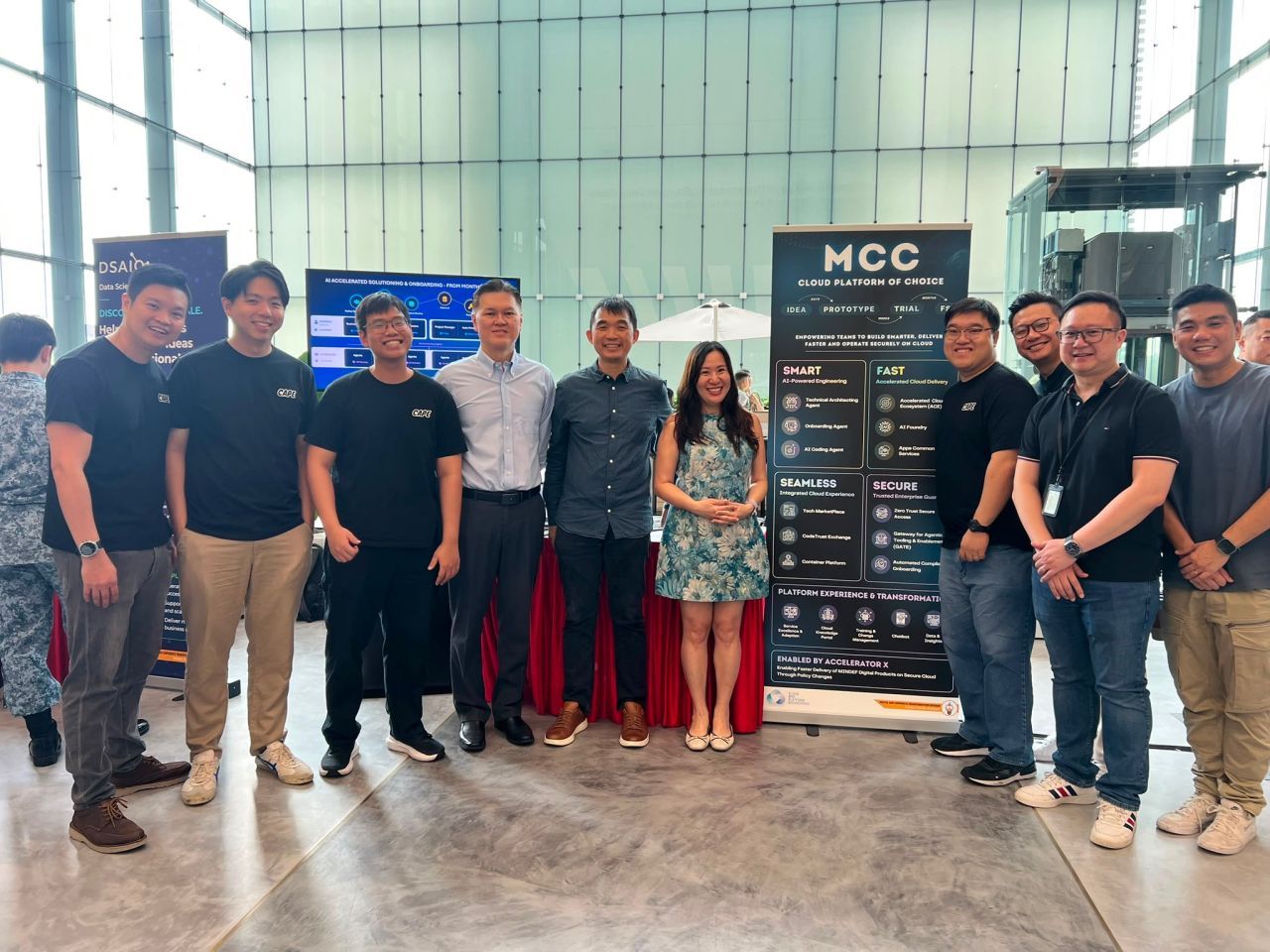
The Cloud and Platform Engineering (CAPE) team at Singapore's Defence Science and Technology Agency (DSTA). Image: DSTA
It used to take a few weeks for a new product team to get onboarded onto Singapore's defence tech agency's cloud platforms.
Today, it can take as little as a day and from there, an innovation can reach production stage within just three months.
The leap is a payoff from the unified platform engineering capability built by the Cloud and Platform Engineering (CAPE) team at Singapore's Defence Science and Technology Agency (DSTA).
Platform engineering is the discipline of designing and building platforms that enable self-service capabilities among developers.
Set up around one year ago under the agency's Digital Hub, CAPE is a roughly 85-strong team made up of engineers and specialists.
Adopting a “platform-as-a-product approach”, CAPE has been focusing on evolving its shared platforms and services to allow its developers to build faster and more securely.
-1788313335617.jpg)
These platforms serve users across the Ministry of Defence (MINDEF), Singapore Armed Forces (SAF), and DSTA.
Speaking to GovInsider, Koh Jin Hou, Director (Enterprise Cloud Platform Services) at DSTA’s Digital Hub, explains that the agency’s growing cloud footprint alongside the different processes, tools and workflows adopted by developers turned out to be an opportunity to synergise these capabilities.
“The next stage of our cloud journey required us to move beyond building individual capabilities towards a more integrated, product-oriented and developer-centric platform model,” he says.
Koh credits DSTA's cloud progress prior to CAPE's set-up for providing a strong foundation to conslidate its platform engineering capabilities.
The agency's cloud environments include the MINDEF Commercial Cloud, the on-premise cloud, as well as an upcoming air-gapped cloud partnership with Oracle.
Together, the environments have onboarded close to 100 product teams and supported around 1,000 developers, he says.
Experiment fast in sandbox, then deploy securely for field
CAPE's platform-as-a-product approach comes together in what Koh calls a "code low, deploy high" model.
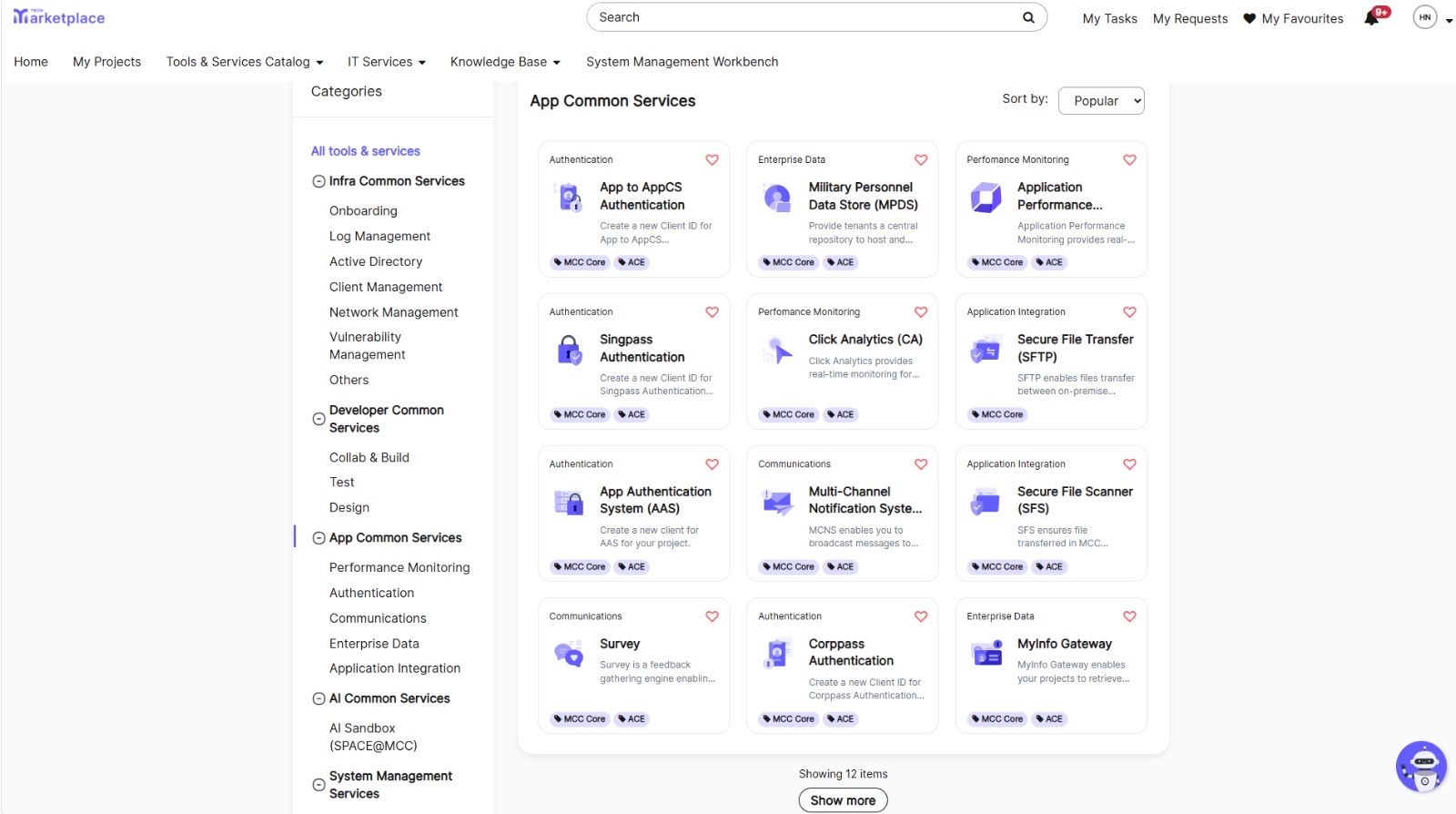
First on the commercial cloud, product teams can access frontier artificial intelligence (AI) models and Software-as-a-Service (SAAS) tools to generate code, check software quality, analyse security and automate engineering tasks.
The result, Koh says, is "much faster experimentation, prototyping and application development.”
Once a team's software and engineering patterns have been validated, the code moves through what Koh describes as "controlled data bridge mechanisms" into DSTA's on-premise environment which has been adapted to meet the requirements of mission-critical systems.
CAPE has also set up a platform experience team to support developers in deploying applications across hybrid environments.
“Instead of navigating multiple teams separately, projects now receive more coordinated guidance on architecture, deployment, security and operations,” he says.
CAPE is now responsible for the full stack of the cloud platform.
Instead of optimising individual components, the team chooses to focus its efforts on improving the end-to-end developer experience, including onboarding to continuous integration and deployment, monitoring and operations.
What resilience looks like in numbers
Koh highlights how adopting a unified approach does not only enable greater consistency in developer’s experience and practices to accelerate innovation, but also strengthens overall security and governance.
Both of which – innovation and security – are key priorities for the defence ecosystem.
To know whether that's actually working, CAPE measures its work focusing on three areas.
These include delivering an excellent platform experience, delivering cost-efficient and high-quality platform capabilities for its product teams, as well as achieving operational excellence through resilient and secure operations.
The metrics cover a range of operational and user-focused metrics and not just infrastructure uptime.
They include tenant satisfaction (CSAT) across onboarding, platform usage and support, alongside platform availability and reliability, and how consistently tenants can get their systems live within agreed timelines.
“These metrics also provide continuous feedback on where we need to improve the developer experience and platform capabilities,” Koh says.
A playbook beyond defence
Koh believes that many of CAPE’s design principles and implementation approaches are applicable to other sectors.
He sees the same platform engineering challenges playing out across large enterprise organisations more broadly.
For example, these organisations tend to have multiple business functions across HR, finance, logistics and operations, that require common platforms, shared engineering services, and consistent governance.
"The need to balance speed, security, standardisation and reusability is not unique to defence," Koh says.
He points again to DSTA's experience running a multi-cloud environment and commercial cloud deployments, which have surfaced insights for CAPE when it consolidated its platforms, self-service engineering capabilities, automation and developer enablement.
"Platform engineering is an evolving discipline, and many of the best practices emerge through collaboration across both the public and private sectors," Koh says.