
Singapore’s nursing-led innovation movement to better advocate for caregivers
Tan Tock Seng Hospital (TTSH)’s Dr Chan Ee Yuee and George Glass share more about developing the one-stop resource hub for caregivers, CarePal, and what it takes to seed an innovation movement in nursing.
-1762758439031.jpg)
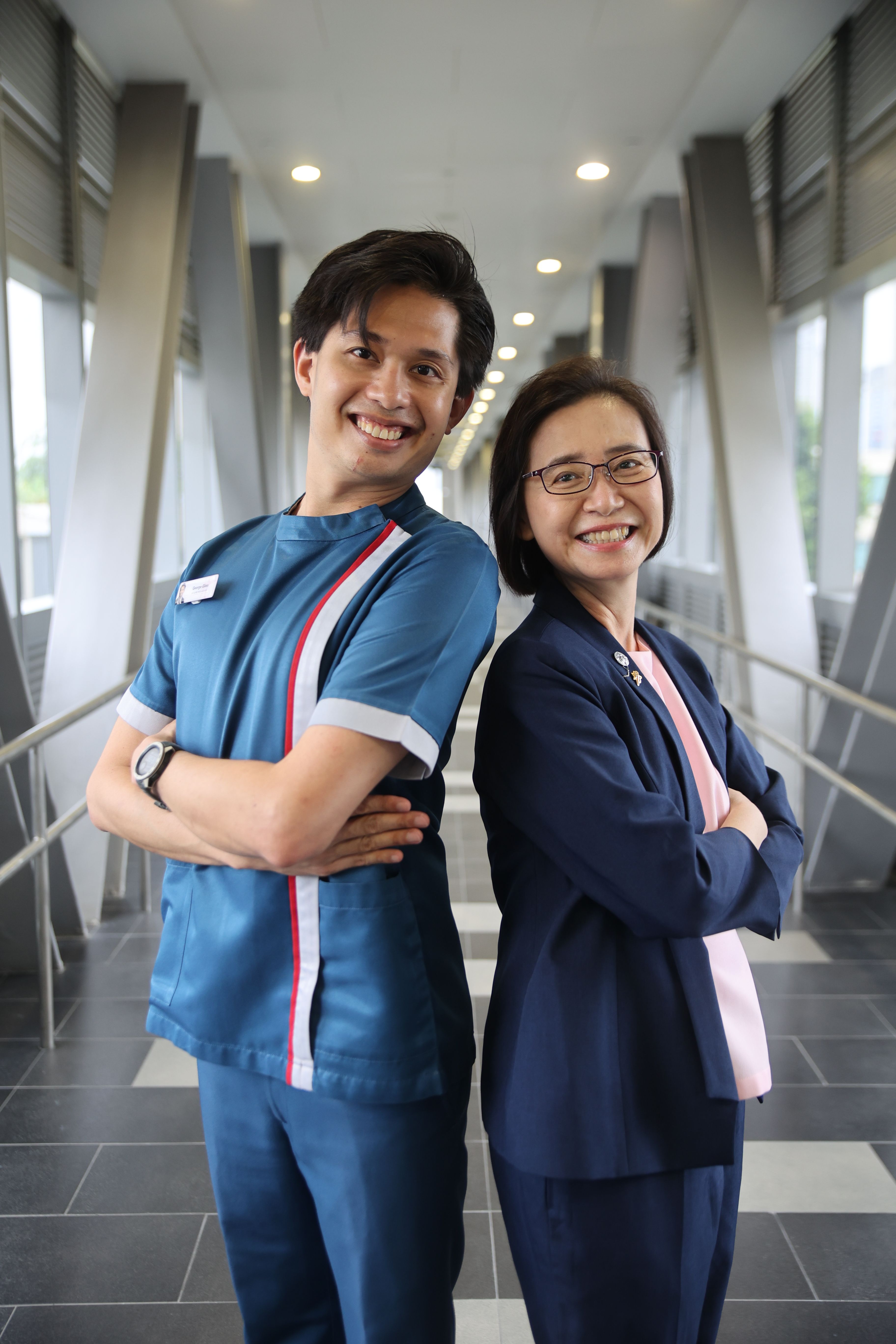
The Nursing Implementation, Translation, and Research Office (NITRO) team comprises of hybrid nurse clinician-researchers to drive the application of innovations in the clinical setting. Image: Tan Tock Seng Hospital (TTSH)
Nurses in a Singapore public hospital are stepping up from users of digital solutions to active innovators to better advocate for their patients and caregivers.
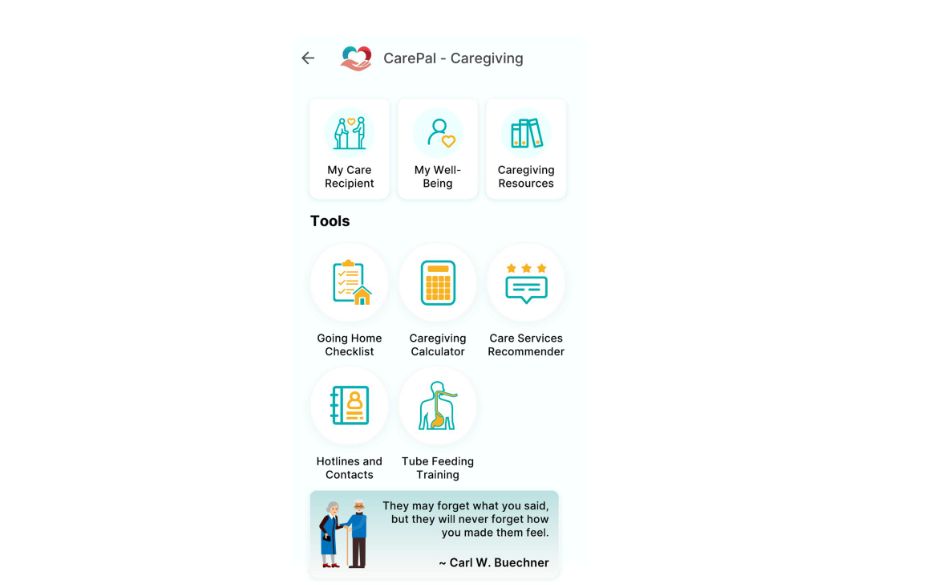
In September, the NHG Health mobile app integrated the CarePal mobile feature, which serves as a one-stop resource hub to support caregivers.
CarePal was launched by Tan Tock Seng Hospital (TTSH)’s Nursing Implementation, Translation, and Research Office (NITRO) team, as part of the Project Carer Matters 2 (PCM2.0) funded by the National Research Foundation (NRF).
The NITRO team comprises of hybrid nurse clinician-researchers to drive the application of innovations in the clinical setting.
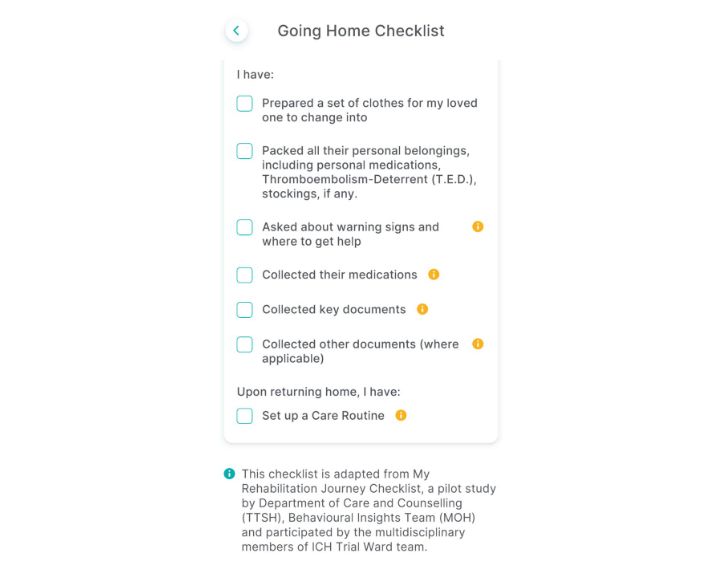
CarePal streamlines the process of managing a loved one’s care by centralising access to resources through a contact directory and a care service recommender, as well as critical tools like a caregiving calculator, discharge checklist, and a wellbeing assessment.
Caregivers can also customise a patient profile with condition-specific information.
Speaking to GovInsider, TTSH’s Senior Nurse Researcher George Glass shares that it was back in 2015 that NITRO first explored support for caregivers and started to engage more closely with this group.
The Covid-19 lockdown had pushed the team to quickly adapt their support model, he notes. Their digital efforts included shifting to virtual caregiving support and leveraging FormSG to successfully push out trusted resources.
TTSH’s Deputy Director of Nursing, Dr Chan Ee Yuee, highlights that PCM2.0 pivoted towards using technology to address the “multifaceted needs of the caregivers” and especially “when they leave the hospital [back home with their patients].”
Working on caregiver support within the constraints of the hospital system simply wouldn’t do, she notes.
The nursing perspective on innovation
In 2022, the NITRO team was involved in a few service designer-led sessions, which brought to the surface two issues that caregivers struggled with.
They were namely finding trusted information online and an information overload, Glass says.
Unlike traditional search engines where caregivers “must know what they are looking for”, he says, CarePal was designed around the caregiver’s activities to make it easier for them to find relevant information, serving as a proactive resource.
Following the caregiver’s journey has also allowed the team to design CarePal around the the caregiver's practical, real-world concerns, says Dr Chan.
Instead of only focusing on the patient’s disease management, the caregiver’s most pressing concerns centred around the patient’s physical care and activities of daily living.
The NITRO team had considered diverse perspectives from clinicians, allied health professionals, community partners, and caregivers. But the challenge was in the balancing act.
Besides being a user-friendly feature, CarePal had to include enough comprehensive information as requested by clinicians to properly support caregivers, without causing information overload for already stressed caregivers, Glass notes.
Glass cites the caregiving calculator as a co-creation alongside the occupational therapists and medical social workers.
The tool serves as an adjunct to clinical dialogue which allows for more informed decision-making by the caregiver, he explains.
CarePal is proving to be a win-win for both caregivers and healthcare professionals. When it launched in September, it saw around 1,400 users accessing the feature.
For healthcare professionals, Glass explains that the feature enhances efficiency by replacing bulky paper booklets with simple digital instructions and is now embedded directly into existing caregiver training programs.
Learning from previous innovators
Glass highlights that the current version of CarePal is in its sixth or seventh iteration, reflecting the importance of taking in user feedback to improve usability.
Listening in on the experience of other app teams within NHG Health, the NITRO team took a key lesson to establish “a common consensus from ground zero” between the clinicians and tech developers, he adds.
To overcome the communication gap between clinical needs and technical execution, the team engaged on a regular basis with the vendor team, which was the same team that built the NHG Health app.
By utilising flow charts and diagrams, the team could visually walk developers through the process, ensuring that they clearly understood the "skeleton" and "frame" of the app and the why behind the user experience (UX) design.
“What we’ve learnt through this process is communicating and scoping the clinical needs to technical teams, be it external vendors or internal teams at GovTech, in a way that ensures mutual understanding,” Glass explains.
The seamless information flows between apps, patients and caregivers can introduce complexities in privacy. When asked, Glass highlights that this is an ongoing, high-level challenge being addressed across the healthcare system, including the nursing team.
“It's not just collaborating on the tech development but also across the entire ecosystem,” he says.
While the team continues to collaborate on system-wide efforts to address privacy concerns, Glass reveals how the innovators tackled data sensitivity within CarePal's design.
Specifically on customising the patient’s profile to obtain personalised recommendations, Glass explains how the team effectively bypassed the need to obtain patient’s sensitive personal data to achieve utility for the caregivers.
Growing a nursing-led innovation movement
To empower nurses as researchers, Glass highlights the importance of providing platforms for innovation, actively fostering a ground-up research culture, and establishing support systems through further education and training programmes.
The NITRO team recently implemented a nursing research hackathon to source problem statements and research proposals directly from nurses.
The hackathon was centred around frailty management and mental health resilience, and around 100 nurses across 10 teams participated in the hackathon.
“What came out at the end was execution-ready projects, and they just need the green light from leadership,” he says.
Dr Chan highlights that the team also recently kickstarted a community of practice known as “Thinking Caps” co-led by junior nurses.
This platform brings nurses together to share best practices and research ideas, fostering a culture of mutual inspiration and project sharing.
“Research sometimes can be quite a lonely journey. We hope that the juniors don’t have to go through this, and that they are able to spark ideas from each other.
“We believe that when more people come together, they can cross pollinate [ideas] between one another, and everybody will be richer because of it,” she says.
To embed research-driven care, a bottom-up approach is important, she notes, by empowering and partnering the practitioners to champion the goal.