
Sito Li Kang, Tech Planning & Services Branch Transformation & Technology Division, Singapore Prisons, Singapore
By Sol Gonzalez
Meet the young public sector officials in the inaugural Young & Official Report 2026.
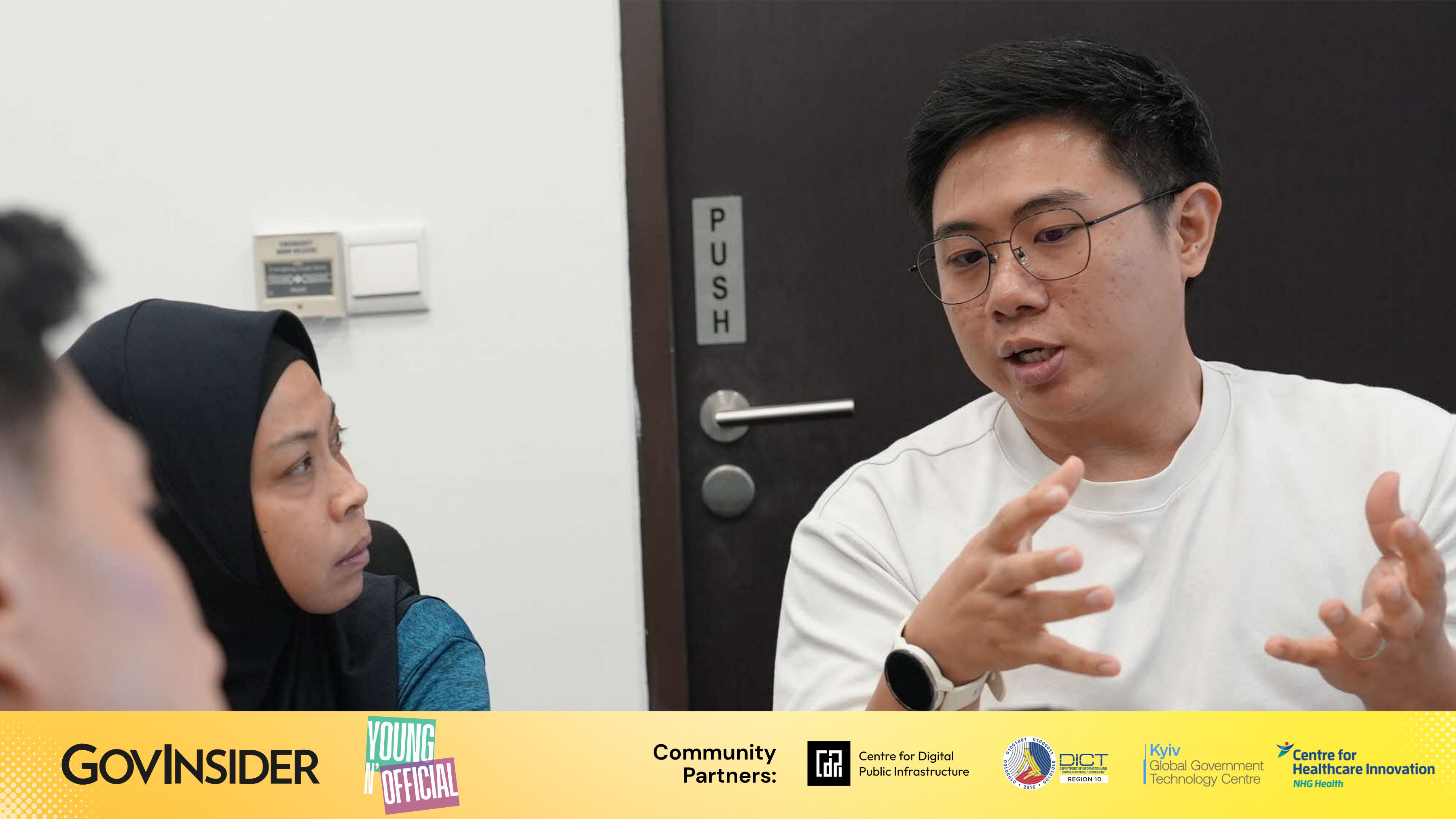
Sito Li Kang, Tech Planning & Services Branch Transformation & Technology Division, Singapore Prisons, Singapore. Image: Sito Li Kang.
1) What does public service mean to you? Can you share more about your role in the public sector?
Public service, to me, means contributing meaningfully to whichever unit I am posted to and driving positive change from within.
My journey began as a Correctional Officer, which gave me a grounded understanding of frontline operations, and the challenges staff face daily. That experience became the foundation for my next chapter — being posted to the Tech Branch, where I developed practical digital solutions to make my colleagues' lives easier.
Since then, I have focused on identifying pain points at the ground level or staff level and translating them into workable solutions, with the goal of making innovation something every officer can participate in, regardless of their technical background.
2) Tell us about a project you championed. What impact did it have on the community?
One key project I championed was transitioning from hardcopy-based practices to a fully digitalised solution for information transmission across multiple units.
Previously, sharing information relied heavily on physical paperwork — time-consuming, error-prone, and a burden on staff. I developed a digital solution by engaging respective units directly, understanding their pain points, and designing something practical for them.
The result was that multiple units moved away from paper-based workflows, freeing up valuable time and reducing the risk of lost or delayed information.
It showed that meaningful transformation does not always require large-scale overhauls — sometimes it starts with reimagining one inefficient process.
3) As a young professional, how has your unique background or perspective allowed you to identify a solution that others in your organisations might have overlooked?
My advantage comes from having experienced both sides — as a frontline user and as a solution developer. Having worked as a Correctional Officer before posted to the Tech Branch, I understand what it feels like to navigate inefficient processes on the ground, something a purely technical developer might not naturally have.
Rather than designing solutions based on assumptions, I prioritised listening — engaging with users to understand their real challenges before proposing anything. This, combined with growing up in a digital-native generation where experimenting and iterating feels natural, allowed me to bridge the gap between what users needed and what technology could offer.
4) What is your personal strategy for maintaining your creative energy when faced with bureaucracy?
My strategy is to focus on what is possible within the given boundaries, rather than being discouraged by what is not. I stay updated on the tools and capabilities available within my organisation so I can identify opportunities for improvement without waiting for policy changes.
I also remind myself that progress does not have to be perfect to be meaningful. If a solution reduces a colleague's workload by 50 per cent, that is already a win. And when I see a colleague genuinely relieved by something I helped build, that human impact is enough to keep me motivated.
5) If you had just one area to invest in to accelerate transformation in the public sector (regulation, technology, talent, etc.), which one would you choose and why?
I would invest in talent — specifically, developing people who can bridge the gap between technology and operations.
Technology is just a tool, and regulations create the framework, but it is people who determine whether transformation actually happens. In my experience, empowering even one person with the right digital skills creates a ripple effect across an entire unit. Investing in talent means upskilling existing officers who already understand the culture and processes — because when equipped with the right skills, they become powerful agents of change from within.
6) What is your greatest ambition as you grow in your public service career?
My greatest ambition is to build a lasting culture of innovation that goes beyond my own contributions. I want to empower colleagues to become citizen developers — not just using the tools I have built, but building their own simple solutions to address problems in their daily work.
The power of this lies in multiplication. If I train one colleague and they train two others, the reach grows exponentially. I hope to be a role model that proves innovation in the public sector is not reserved for those with technical backgrounds — it is for anyone willing to learn, try, and share.
7) What is a “universal value” that connects everyone in your department – from interns to directors – and how do you use that to drive collaboration?
The universal value that connects everyone in my department is teamwork. Regardless of rank or experience, no single person can move a project forward alone. An intern might spot a usability issue a senior officer has long overlooked, while a director provides strategic context that helps a ground-level idea scale.
Every perspective matters.
I use this value by ensuring the people most affected by a solution are involved in shaping it. Consulting users across different roles before finalising anything makes the difference between a solution that is technically correct and one that is genuinely useful. Celebrating shared wins, rather than individual ones, reinforces that collective ownership and keeps collaboration alive.
8) What is the best piece of advice you’ve got for the next generation of public servants?
Just get your hands on it and try. Technology can feel intimidating at first, especially for those without a technical background — but many tools today are designed to be accessible. You do not need to know how to code to improve a workflow.
Start small. Identify one repetitive or inefficient thing in your daily work and explore whether technology can help. Do not wait until you feel fully ready, because that moment rarely comes. The innovation journey does not begin with expertise — it begins with the courage to try.
9) What is a myth you wish to debunk about young public servants?
The myth I want to debunk is that public servants are confined to rigid job scopes with little room to grow beyond their assigned tasks. In my experience, that could not be further from the truth.
I started as a Correctional Officer and ended up contributing to digital transformation efforts that impacted multiple units — not because someone handed me the opportunity, but because I chose not to limit myself. The public sector is full of untapped potential. My hope is that more young officers see their roles not as ceilings, but as launching pads.
10) Write a letter to your future self in 2035.
Dear future me,
I hope you are reading this with a sense of pride — not just in what you have accomplished, but in the person, you have become along the way.
My wish for you is that you kept pushing forward, even when things got difficult, and that you never stopped learning — not just about technology, but about people, leadership, and what it truly means to serve.
Remember that the goal was never just to build good solutions. It was to build a better version of yourself, one that could help others grow alongside you. I hope you have stayed humble, remained curious, and held onto the belief that every small contribution matters.
Most importantly, I hope you are still the kind of person who shows up — not because it is required, but because you genuinely care.
Keep growing. Keep giving. Never forget where you started.