
South Africa's DPI journey is a masterclass in agile government
The government is prioritising service redesign to ensure digital public infrastructure’s potential translates into practical solutions driven by citizen needs, says the Digital Services Unit (DSU)’s Richard Gevers.
Digital Services Unit (DSU)’s Richard Gevers believes that DPI will become the defining moment to drive a change culture in his government. Image: MyMzansi
Housed directly under the South African Presidency, the new Digital Services Unit (DSU) is a four-person team of former private sector and civic techies that aims to transform the government culture.
Launched in May this year, DSU reports to an interdepartmental working group tasked with the implementation of South Africa's digital transformation roadmap.
Speaking to GovInsider, DSU’s Head of Service Design and Delivery, Richard Gevers, shares that the team at DSU has big ambitions to rebuild the government as a platform and fundamentally change how services are designed.
The roadmap is centred around the government’s five-year plan to build out the country’s digital public infrastructure (DPI) elements, and utilise these to improve government services (for example, enabling a life event approach to service delivery).
Instead of simply pursuing the latest technologies or “the thing that will last for five years,” Gevers believes that DPI will become the defining moment to drive a change culture in his government.
The “next-generation government,” according to him, entails shifting the government’s role from a direct service operator to a platform custodian, and embracing an agile and user-centric approach that focuses on delivering measurable public impact.
To subscribe to the GovInsider bulletin, click here.
Where UX meets DPI
The conversation around DPI is typically limited to the technical stack (digital ID, digital payments, data exchange systems), but the government should instead start with service design, says Gevers.
“If we were to just engage in the supply side of DPI – and not look at what the needs are – I don’t think we are going to have a catalytic impact that ultimately ends up in the livelihoods of people in South Africa,” he explains.
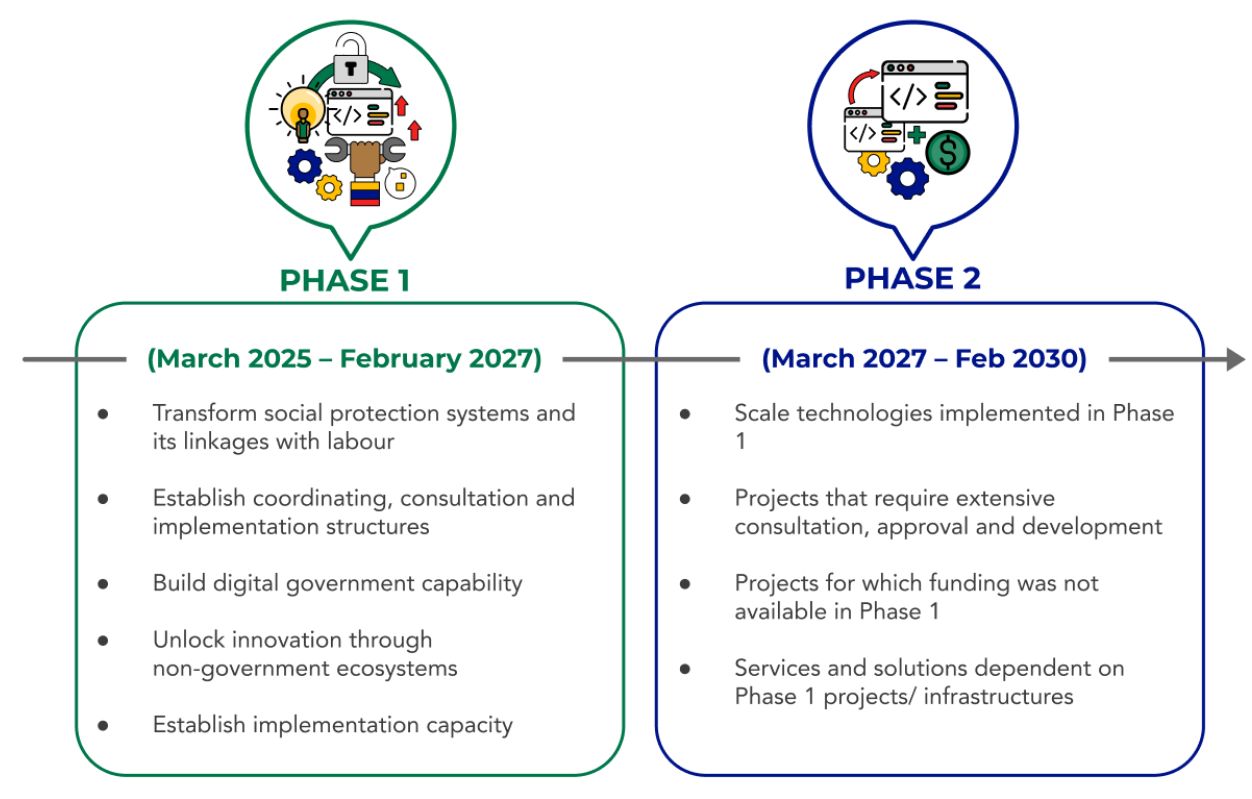
By prioritising service redesign and capability building, the government ensures the adoption and impact of DPI, guaranteeing that technology is driven by real citizen demand.
Instead of having to build and run every single service themselves, the government’s role is increasingly shifting to one that democratises the space for diverse partners to innovate and deliver services, he notes.
Simultaneously, citizens are evolving from passive recipients to actively involved partners who design, deliver, and co-create public services alongside their governments.
Gevers admits referencing Richard Pope’s Platformland as he advocates for building government as a platform.
The core, underlying infrastructure, tools, and standards are provided by the government, creating a platform on which the private sector and other groups can innovate and deploy new solutions.
This shift moves beyond a whole-of-government approach to create an all-of-society approach, fostering broader economic development built upon open and reliable public infrastructure, he explains.
Building ‘agile squads’ in the government
Importing lessons from private sector tech, Gevers highlights the importance of adopting an agile, implementation-focused approach to deliver tangible results quickly.
“When you’re talking about agility, it’s about committing to outcomes and impact, not activities. Agility allows you to keep your north star as an impact, which is changing someone’s life for the better,” he explains.

“The way the government is set up is to report these activities, whether anyone’s lives changed or not,” he explains.
This helps agencies avoid getting stuck in lengthy processes that often fail to deliver impact.
For example, despite enthusiasm across South Africa’s roughly 40 ministries, the sheer scale of the transformation requires massive effort that spans national, provincial and local government levels.
Additionally, civil servants who work with decades-old systems frequently experience anxiety about change, he says.
To win over the sceptics, the team must “deliver fast, deliver well and show the work in the open,” he shares.
This is why DSU’s strategy has prioritised high-impact needs, like employment, education and social protection, and fast results to generate interest and support in the population.
Additionally, Gevers outlines the DSU’s plan to build “agile squads” in other agencies.
These are small, multi-disciplinary teams that are made up of DSU staff, departmental teams and partner developers who will integrate essential skills like product ownership, service design and user experience (UX) design in problem solving.
Through two-week sprints, these teams will focus on delivering pilot use cases on high-impact problems.
By using the Presidency’s backing to create “agile squads,” this model helps build the agency’s capacities by embedding agency staff within these squads, as well as empower internal champions to lead transformation, he says.
Gevers notes the eventual goal is to make government agencies the heroes, rather than a designated digital transformation unit.
“The agile squad is really just an approach,” he says, highlighting that the necessary roles can be implemented anywhere, not just within the DSU.
High-impact DPI use cases
The DSU exists to not only consolidate internal and external resources for capacity building and implementation of the digital government, but to also coordinate efforts across agencies, says Gevers.
He highlights that the Covid-19 pandemic dramatically exposed the challenges government's digital systems: fragmented data, disparate services and siloed agencies.
This fragmentation prevented the government from easily validating citizen identities or remotely delivering life-saving grants.
Gevers shares a few examples of how DSU adopts an agile and collaborative approach with DPI to tackle major national challenges by focusing on key use cases.
DSU is working with the social protection agency (SASSA) to tackle significant fraud and leakage in social grants by using technology to detect deepfakes, verify the recipient’s identity and ensure proof of life authentication.
DSU is also developing the government’s unified service platform, a “single front door” as he calls it, known as the MyMzansi.
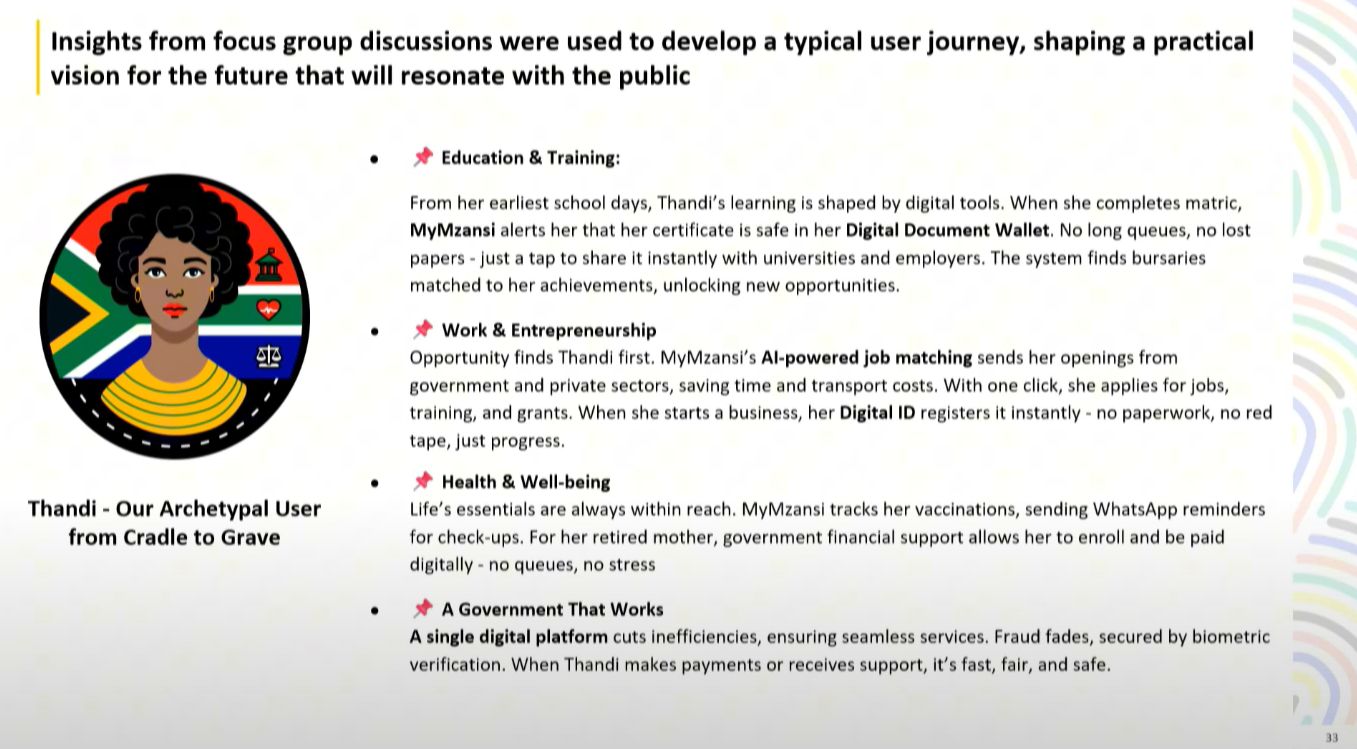
The team is focusing on the digitalisation of the driver’s licence and renewal process as the demographic of these users is generally more digitally savvy.
The system integrates a secure payment gateway and accepts a QR code from an optometrist to verify the eye test. The digital licence credential is then instantly created.
Finally, DSU is collaborating with the Department of Employment and Labour (DEL) to not only digitise school certificates, but also consolidate resources around employment into the MyMzansi app.
The app will integrate the final school certificate, known as matric, and also use machine learning to automatically link job seekers to relevant opportunities, bursaries and further education.
DSU is currently exploring integrating SA Youth Harambee, a non-profit with extensive experience building solutions and innovations that assist in solving youth unemployment, into the MyMzansi app as well.
These use cases rely on building public infrastructure like DPI, “agile squads” and collaboration between agencies as well as non-government stakeholders, says Gevers.
“If it was just us, we obviously could have never achieved this sort of scale.
“But with the National Treasury, the Reserve Bank, Department of Home Affairs, Sassa, and more, all these agencies coming together is sort of an early version of a government digital service that is created,” he says.